
Drosophila pseudoobscura
Drosophila pseudoobscura
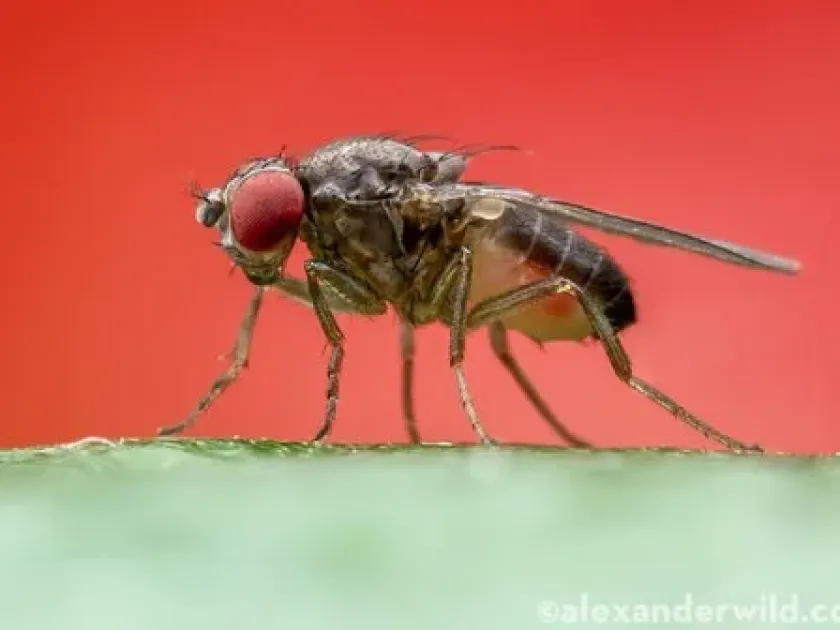
Description
How to identify
Drosophila pseudoobscura is a species of small flies belonging to the Drosophilidae family, widely known for its significant role in genetic research, but also recognized as a minor agricultural pest.
Adult flies are typical in appearance for the genus, measuring about 2 to 3 millimeters in length, with light brown bodies and distinct reddish eyes that are characteristic of most fruit flies.
Systematically, this species is classified under the order Diptera. While they are not as aggressive as some invasive species, they are highly adaptable and thrive in environments where organic matter is readily available.
The larvae are small, legless, and white, featuring a specialized mouth structure that allows them to feed efficiently on fermenting or decaying organic tissues.
These flies possess a very high reproductive potential, allowing them to complete multiple life cycles in a short period if environmental conditions, particularly temperature, remain favorable.
What it damages
This species primarily acts as a secondary pest, meaning it usually colonizes fruits that have already been damaged by mechanical issues, weather, or other primary pests.
It impacts a variety of horticultural crops, including peaches, plums, apples, pears, and various berry crops, particularly when these fruits are overripe or have split skin.
The larvae bore into the fruit tissue, causing the flesh to degrade quickly. Their feeding activity is often accompanied by the introduction of yeast and bacteria, which accelerate rot.
Vegetable crops, such as tomatoes and peppers, are also susceptible if they show signs of cracking or physical injury, which creates entry points for the adult flies to lay eggs.
Significant economic damage occurs primarily in storage facilities and packing houses, where infested fruit can quickly spoil, leading to substantial losses and quality degradation.
When it appears
The activity of these flies usually peaks during the harvest season, when temperatures are consistently warm, generally ranging between 18 and 25 degrees Celsius.
Populations tend to increase rapidly in late summer and early autumn, corresponding with the availability of ripe and fallen fruit in orchards and vineyards.
In temperature-controlled storage facilities, Drosophila pseudoobscura can remain active throughout the year, provided there is a constant supply of organic matter for them to breed.
Their movement is highly influenced by the presence of fermentation odors; thus, they are most prevalent around cull piles or areas with significant accumulations of organic waste.
Overwintering typically takes place in sheltered locations, such as protected crevices, leaf litter, or indoors, where the insects can survive the cooler temperatures until spring.
Signs of infestation
The most obvious indicator of a problem is the presence of swarms of small flies hovering near ripe fruit, especially fruit that is showing signs of bruising or splitting.
Infested produce often feels soft or mushy to the touch. Upon closer inspection, one may notice tiny puncture wounds on the skin where the female has deposited her eggs.
A sharp, vinegary smell, characteristic of fermentation, is a strong signal that the fruit has been colonized by these insects and associated microbes.
- Presence of adults flying near harvested crops.
- Soft spots on the fruit surface.
- Small larvae visible in the fruit pulp.
- Vinegar-like odor in the storage room.
Infested produce loses its structural integrity rapidly, making it completely unsalable and unsuitable for consumer use due to the rapid onset of rot.
Control measures
Sanitation is the cornerstone of control: it is essential to remove fallen fruit from the orchard floor and clear all rotting organic waste from packing areas.
Using traps filled with attractants such as cider vinegar or fruit juice is an effective way to monitor and reduce the number of adult flies in the vicinity of the crops.
Maintaining crop health and preventing mechanical injury to fruits during harvesting and transportation are crucial steps in limiting the entry of this pest.
In storage facilities, keeping temperatures as low as possible and ensuring good ventilation helps to inhibit the development of the larvae and reduce adult activity.
Chemical control is generally discouraged in favor of preventative measures and physical traps, given the sensitive nature of the produce and the secondary role of this specific fly.
Taxonomy
- Latin name
- Drosophila pseudoobscura
- Order
- Diptera (flies)
- Family
- Drosophilidae
- EPPO code
- DROSPS
Discussion
No discussions yet — be the first.