
Fruit fly
Drosophila melanogaster
Description
How to identify
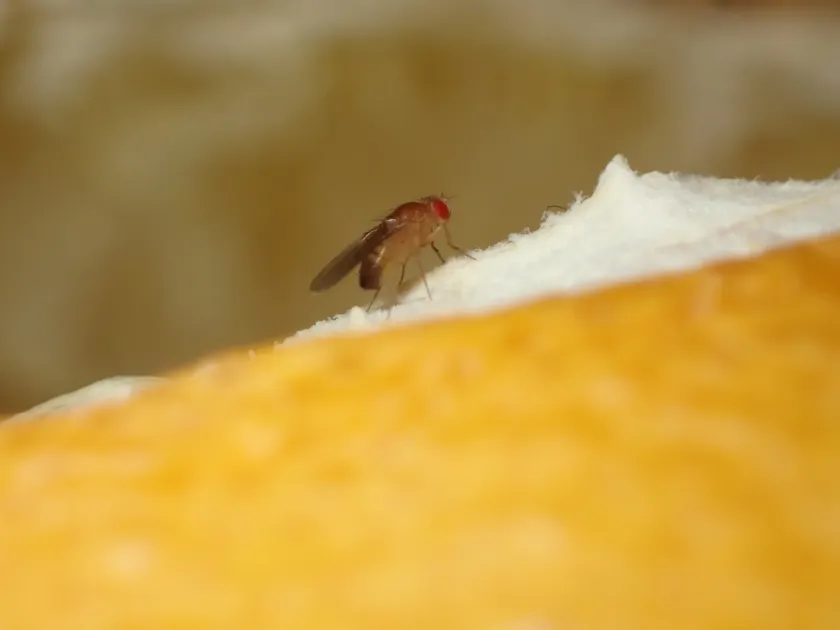
The fruit fly (Drosophila melanogaster) is a small insect belonging to the order Diptera and the family Drosophilidae. These flies are characterized by their small size, typically 2–3 mm in length, and their distinctive red eyes.
The biological life cycle of this species is remarkably short. Under favorable temperature conditions (around 25°C), the development from egg to adult occurs within just 8 to 10 days, allowing for rapid population growth.
Adult flies are highly attracted to the scent of fermenting plant material, including overripe fruits and vegetables. They possess specialized sensory organs to detect low concentrations of ethanol and acetic acid.
The larvae are small, legless, and white, measuring about 3–4 mm when fully mature. They reside within the fruit flesh, feeding on organic matter, yeasts, and bacteria present in the decaying material.
Due to their high reproductive rate and short generation time, these insects can quickly overwhelm a garden or orchard if conditions, such as high humidity and available decaying fruit, are present.
What it damages
Fruit flies primarily damage a wide array of fruits and vegetables, including strawberries, raspberries, grapes, cherries, and peaches. They prefer thin-skinned fruits that are approaching maturity or have already begun to rot.
In greenhouses, they frequently attack tomatoes and peppers that have suffered mechanical damage or have started to soften, causing localized breakdown of the fruit tissues.
The damage caused by larvae is direct: they tunnel through the fruit tissue, making it mushy and inedible. This renders the crop completely unsuitable for human consumption or commercial sale.
Beyond physical consumption, the larvae introduce pathogens into the fruit. This transmission of fungi and acetic acid bacteria accelerates the decomposition process, causing the fruit to turn into a foul-smelling liquid mass.
Economically, fruit flies cause significant losses in post-harvest storage. Once a single fruit in a crate is infested, the infestation can spread rapidly to the entire stock within a few days.
Signs of infestation
The most obvious sign of an infestation is the presence of swarms of small flies hovering around fruit trees, berry patches, or compost piles, especially during warm weather.
Upon inspecting the fruit, look for small punctures or tiny indentations on the surface, which are the sites where the female fly has deposited her eggs.
Soft, watery patches on the fruit's surface are often indicative of larval feeding underneath. If you open such a fruit, you will likely find clusters of tiny, white, moving larvae.
A strong, vinegar-like or fermented odor emitting from the fruit or the storage area is a classic indicator that fruit fly activity has reached an advanced stage of colonization.
The sudden development of mold or visible decay spots on previously healthy-looking fruit is also a sign that the flies have introduced micro-organisms during their egg-laying process.
Control measures
Sanitation is the most effective management strategy. It is essential to remove all fallen fruit from the ground and discard or compost overripe produce before it attracts fruit fly populations.
Regular and timely harvesting is critical. Fruit should be picked as soon as it reaches maturity to avoid leaving a food source available for the insects in the garden environment.
Traps are very effective for reducing adult fly numbers. Homemade traps consisting of apple cider vinegar, a piece of banana, or wine in a jar with a funnel lid work excellently to capture the flies.
Maintaining proper hygiene in storage areas is crucial. Ensure that packing materials and crates are clean and dry, as residual fruit juice can become a breeding ground for future generations.
- Promptly dispose of damaged or rotting produce.
- Use fine-mesh netting to cover sensitive berries.
- Keep compost bins tightly sealed and away from the orchard.
- Monitor fruit regularly during the peak ripening season.
Taxonomy
- Latin name
- Drosophila melanogaster
- Order
- Diptera (flies)
- Family
- Drosophilidae
- EPPO code
- DROSME
Discussion
No discussions yet — be the first.