
Drosophila immigrans
Drosophila immigrans
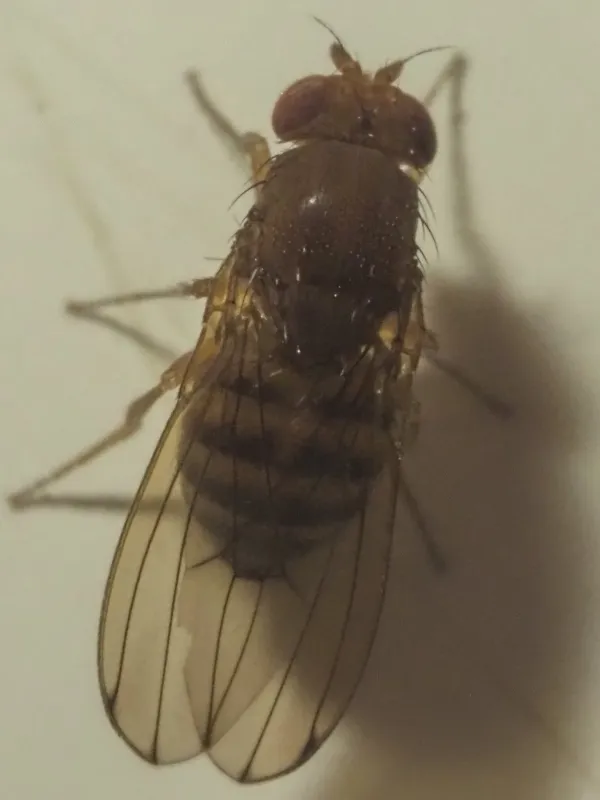
Description
How to identify
Drosophila immigrans belongs to the order Diptera and the family Drosophilidae. It is a small fly, typically measuring between 2.5 and 3.5 millimeters in length.
Adult flies possess a yellowish-brown body with distinct red eyes. The wing structure and specific body markings distinguish this species from the common vinegar fly, Drosophila melanogaster.
The larvae are small, legless, white organisms reaching up to 4–5 millimeters. They feed internally within fruit, moving through developmental stages until they reach the pupal stage.
The life cycle is temperature-dependent. Under optimal conditions, the transition from egg to adult takes approximately 10 to 12 days, allowing for rapid population growth.
This species is highly invasive and cosmopolitan, showing remarkable adaptation to diverse environments, including open fields, greenhouses, and commercial storage facilities.
What it damages
Drosophila immigrans targets a wide variety of fruit and vegetable crops, particularly those that are ripe, overripe, or physically damaged, providing easy access to the interior.
Common hosts include tomatoes, strawberries, raspberries, apples, peaches, and grapes. The flies are attracted to the fermentation odors emitted by decaying or damaged tissues.
In commercial settings, such as warehouses or processing plants, this pest can cause significant economic losses by infesting stored produce and spreading rapidly through the stock.
The feeding activity of the larvae destroys the texture of the fruit. Furthermore, the flies are vectors for yeasts and bacteria, which cause secondary infections and rapid rot.
- Overripe tomatoes in the field or warehouse.
- Berries with minor skin cracks or punctures.
- Stored stone fruits exposed to warm, humid conditions.
Signs of infestation
The first sign of infestation is an increased presence of small flies hovering around harvest sites or storage areas, especially during warmer parts of the day or evening.
Careful inspection of fruit surfaces reveals tiny punctures or "stings" where females have laid eggs. The tissue surrounding these punctures often becomes soft and discolored.
Internally, the fruit texture degrades into a mushy, fermented mass. Upon breaking open the fruit, one can observe the presence of white larvae tunneling through the pulp.
A distinct, sharp, acidic odor of fermentation emanates from infected fruits, serving as a clear indicator of heavy infestation and active biological decay.
Presence of yeast growth on the fruit surface, appearing as soft, darkened, or moldy patches, is a late-stage symptom indicating that the fly larvae have compromised the fruit's integrity.
Control measures
Sanitation is the most critical control method. Removing fallen fruit, crop debris, and overripe produce from fields and storage areas eliminates the primary breeding habitats.
Maintaining cold chain integrity and keeping storage temperatures low significantly suppresses the development rate of larvae and limits the spread of the population.
Sticky traps baited with fermenting attractants, such as apple cider vinegar or wine, are highly effective for monitoring fly activity and reducing the number of breeding adults.
Physical barriers, such as fine-mesh screens on ventilation systems in packing houses, prevent flies from entering and infesting the clean produce stored inside.
Integrated pest management strategies focus on preventing physical damage to fruits during harvest and transportation, as intact skins are a significant deterrent to oviposition.
Taxonomy
- Latin name
- Drosophila immigrans
- Order
- Diptera (flies)
- Family
- Drosophilidae
- EPPO code
- DROSIM
Discussion
No discussions yet — be the first.