
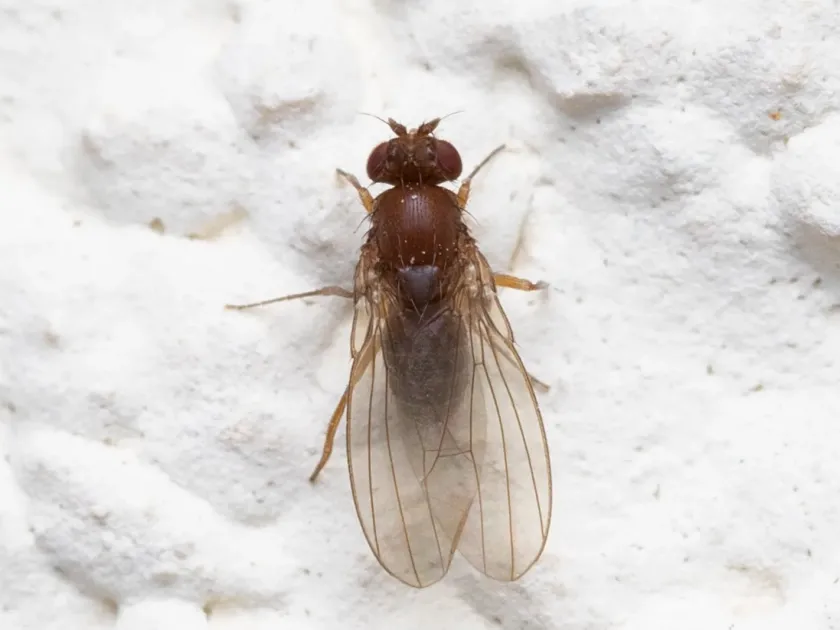
Dark-winged fungus gnat (Drosophila funebris)
Drosophila funebris
Description
How to identify
Drosophila funebris, commonly known as the dark-winged fruit fly, is a dipteran insect belonging to the Drosophilidae family. These flies are small, typically measuring 3 mm in length, and are easily identified by their reddish eyes and brownish thorax.
The life cycle of this species includes eggs, larvae, pupae, and adults. Each stage is strictly linked to decaying organic matter, which serves as both food and a breeding ground for the population.
Unlike other fruit fly species, Drosophila funebris is often found in damp indoor environments and decaying plant materials, showing a preference for specific types of fermentation.
Adult females are highly effective at locating suitable sites for oviposition, laying eggs on the surface of ripening or slightly damaged fruits and vegetables.
The rapid life cycle allows for multiple generations per year, making this insect a persistent challenge in environments where organic waste management is suboptimal.
What it damages
This pest primarily damages a variety of crops, including tomatoes, cucumbers, strawberries, and various fruit trees, especially when the produce is overripe or already damaged.
Damage is caused by the larvae, which burrow into the fruit tissue, feeding on the pulp and juice. This behavior destroys the structural integrity of the produce.
By breaking the skin of the fruit, the larvae facilitate the entry of secondary pathogens, such as bacteria and molds, which often cause much greater damage than the fly itself.
In greenhouses and storage facilities, this fly can lead to significant economic losses, as infested produce becomes unsightly and unmarketable within a short period.
The presence of these pests reduces the shelf life of harvested vegetables and fruits, often requiring the discarding of entire batches in severe cases.
When it appears
The activity of Drosophila funebris begins during the warmer months, typically from late spring through early autumn, when average temperatures remain above 15°C.
Populations tend to reach their peak in late summer, coinciding with the harvest season and the accumulation of decaying plant material in the fields and gardens.
Under favorable conditions, such as heated greenhouses or warehouses with high humidity, the species can remain active and continue its life cycle throughout the year.
Development from egg to adult can take as little as 10 days, leading to exponential population growth if preventative measures are not implemented during the peak season.
As temperatures drop in late autumn, the adult population diminishes, but the insects often seek refuge in sheltered, warmer environments to survive the winter.
Signs of infestation
The most noticeable sign of an infestation is the presence of adult flies hovering around ripening produce or piles of organic waste, accompanied by a faint, acidic odor.
Infested fruits often show localized soft spots or depressions, which may be covered with mold or bacterial slime if the larvae have been feeding for an extended period.
When the fruit is cut open, tiny, white, legless larvae are visible, often clustered within the tunnels created during their feeding process.
- Presence of adult flies near fruit storage areas.
- Soft, sunken spots on the skin of fruits and vegetables.
- Signs of fermentation or molding on otherwise healthy produce.
- Presence of larvae or pupae in damp soil or decaying plant matter.
Monitoring for these signs should be a daily routine in storage facilities to prevent the rapid spread of the infestation to healthy produce.
Control measures
The most effective strategy for managing this pest is strict sanitation, which involves the prompt removal of all fallen, decaying, or overripe produce from the fields and storage areas.
In storage facilities, maintaining low humidity and temperatures below 5°C is crucial to suppress the breeding activity of the flies.
Yellow sticky traps are highly recommended for monitoring and mass-trapping adult flies, providing a non-chemical method to keep population numbers in check.
When starting new crops, ensure that the soil or growing medium is sterile and free from partially decomposed organic matter, which can attract flies to young plants.
If chemical intervention becomes necessary, utilize biological insecticides or specific baits that target larval stages while minimizing the risk to beneficial insects and the environment.
Taxonomy
- Latin name
- Drosophila funebris
- Order
- Diptera (flies)
- Family
- Drosophilidae
- EPPO code
- DROSFU
Discussion
No discussions yet — be the first.