
Drosophila busckii
Drosophila busckii
Description
How to identify
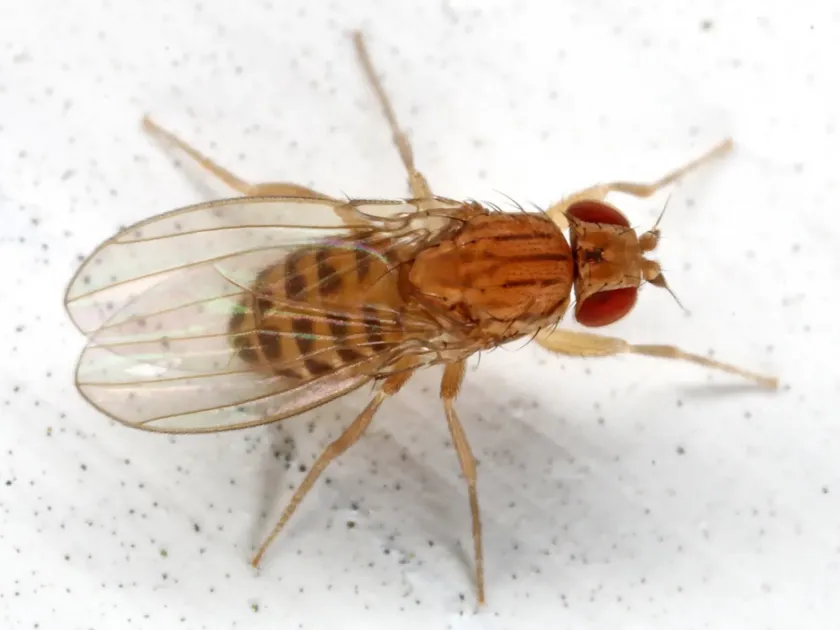
Drosophila busckii is a small fly belonging to the order Diptera and the family Drosophilidae. These insects typically measure 2 to 3 mm in length and exhibit a distinct yellowish-brown body coloration.
Experts identify this species by observing specific dark, stripe-like markings on the thorax, which distinguish it from other related fruit flies. They possess bright red eyes and transparent wings with characteristic venation.
The larvae are white to yellowish, legless, and follow a typical fly development cycle. They undergo three larval instars, actively consuming decaying plant matter or damaged fruit tissues.
The life cycle is closely linked to the decomposition processes of organic material. Development speed is highly dependent on ambient temperature and moisture levels, leading to rapid population growth in summer.
They are synanthropic organisms, often thriving in environments where harvested produce is handled, stored, or processed, taking advantage of even minor nutritional sources.
What it damages
This species is a polyphagous pest that affects a variety of crops, including tomatoes, potatoes, cucumbers, and onion varieties. The damage is most severe during the storage and transit phases.
Drosophila busckii does not usually attack healthy, intact fruit. It primarily targets produce that has sustained mechanical damage, growth cracks, or initial fungal infections.
In greenhouses and warehouses, they can breed rapidly on decaying debris or waste, subsequently migrating to healthy marketable produce. This leads to significant post-harvest losses.
Beyond physical consumption of tissues, they act as vectors for various bacteria and fungi. They transfer pathogens on their bodies, which accelerates fruit rotting and spoilage.
Once a fruit is infested, the internal structure begins to break down, liquefying the tissue and rendering the entire produce unsellable or unsuitable for processing.
Signs of infestation
The most immediate indicator of an infestation is the presence of numerous small flies swarming around storage containers, produce crates, or damaged garden crops.
Close inspection of affected produce reveals small entry points caused by larvae. Internally, the fruit shows tunnels filled with frass, causing tissue softening and discoloration.
A distinctive sour or fermented odor is often associated with the infestation, caused by the microbial activity facilitated by the presence of the fly larvae.
Sticky residues or oozing juice on the surface of the fruit are common signs, often attracting further pests and secondary infections. Over time, the affected areas show mold growth.
Puparia, which are the hardened outer cases of the pupal stage, can often be found attached to the surface of the fruit or near the storage areas, confirming the fly's reproductive activity.
Control measures
Sanitation is the cornerstone of control. Removing all rotting fruit, vegetable scraps, and garden waste is essential to eliminate the substrates required for fly breeding.
In storage facilities, maintaining cool temperatures and adequate airflow is critical, as these conditions significantly slow down the insect's metabolism and developmental rate.
Yellow sticky traps are an effective tool for monitoring and reducing adult fly populations. Placing these traps in strategic locations helps keep the population below the damage threshold.
Installing fine-mesh screens on windows and ventilation systems in greenhouses or storage sheds acts as a physical barrier to prevent the flies from entering.
Chemical control via insecticides is typically reserved for severe infestations in storage areas and must be performed in strict accordance with safety regulations to ensure food safety.
Taxonomy
- Latin name
- Drosophila busckii
- Order
- Diptera (flies)
- Family
- Drosophilidae
- EPPO code
- DROSBU
Discussion
No discussions yet — be the first.