
Dromius quadrimaculatus
Dromius quadrimaculatus
Description
How to identify
Dromius quadrimaculatus belongs to the ground beetle family (Carabidae) within the order Coleoptera.
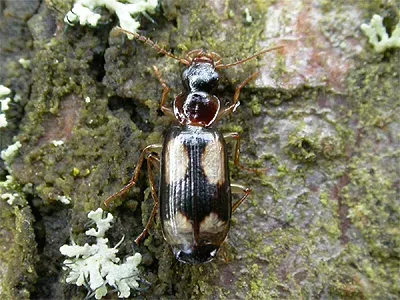
These are small beetles, typically measuring between 5 and 7 millimeters in length, characterized by their flattened body shape.
The name reflects their distinctive appearance, featuring four dark spots on their elytra, which are easily visible upon close inspection.
They possess a shiny surface and a pronotum that is generally lighter in color compared to their wing cases.
Unlike ground-dwelling carabids, this species is specialized for an arboreal lifestyle, spending most of its time in tree canopies.
What it damages
Dromius quadrimaculatus is not an agricultural pest; it is a beneficial predatory insect that helps manage garden ecosystems.
As an entomophagous predator, it feeds on small invertebrates, including aphids and larvae of various pest insects found on tree trunks.
The beetle lacks the mouthparts necessary for feeding on plant tissues, meaning it cannot cause damage to crops, fruits, or leaves.
Its presence is highly desirable in orchards and gardens, as it contributes to the natural regulation of harmful insect populations.
Misidentifying this beetle as a pest could lead to unnecessary and harmful use of insecticides in home gardens.
When it appears
Adult beetles become active in early spring, emerging from hibernation as soon as weather conditions become favorable.
They are active throughout the summer, often patrolling the bark and branches of trees in search of prey.
The life cycle undergoes complete metamorphosis, including egg, larval, pupal, and adult stages, ensuring the species survives seasonal changes.
By late summer and autumn, adult beetles seek refuge under loose bark or in deep crevices to survive the winter months.
The peak activity of the new generation typically coincides with the height of the summer season when food sources are abundant.
Control measures
No control measures are necessary for Dromius quadrimaculatus, as it provides valuable biological pest control services.
Gardeners should avoid the broad use of contact insecticides to protect this and other beneficial predatory insects.
Maintaining a balanced garden environment with minimal chemical intervention is the best strategy for supporting predator populations.
Preserving natural habitats like older trees or wooden structures allows these beetles to thrive and manage pest levels naturally.
Focusing on integrated pest management (IPM) practices ensures that beneficial insects remain a part of the garden's ecosystem.
Taxonomy
- Latin name
- Dromius quadrimaculatus
- Order
- Coleoptera (beetles)
- Family
- Carabidae
- EPPO code
- DRMUQU
Discussion
No discussions yet — be the first.