
Dromius
Dromius
Description
How to identify
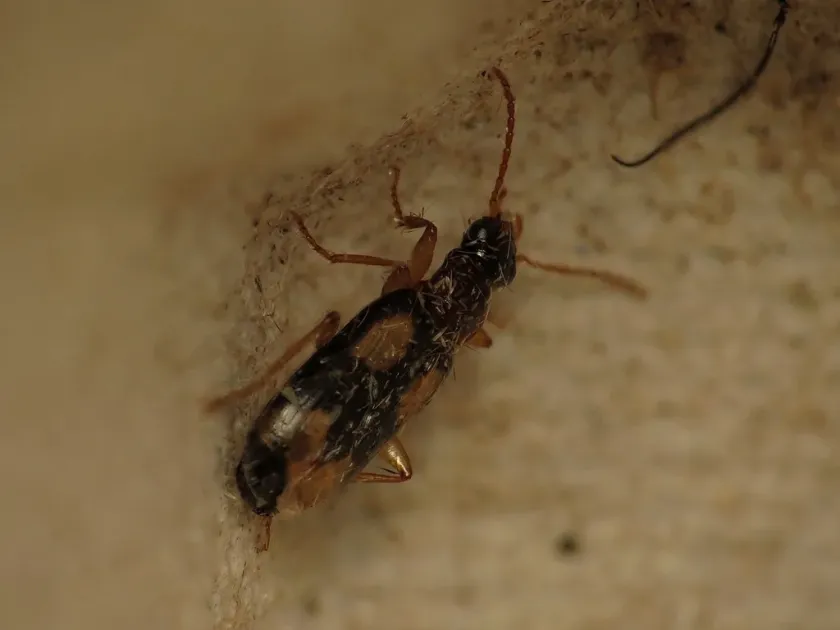
Dromius is a genus of beetles belonging to the Carabidae family, commonly known as ground beetles. These insects are distinguished by their flattened bodies, an adaptation that allows them to live under bark and in tight crevices.
The appearance of these beetles varies, usually ranging from dark brown to black, sometimes displaying metallic reflections or faint patterns on their elytra.
Unlike many ground-dwelling carabids, Dromius species are often found on trees, shrubs, and other vegetation, where they move with remarkable speed to catch prey.
Systematically, this genus belongs to the subfamily Harpalinae. While they are technically part of the ground beetle family, their ecological niche is specialized toward arboreal life.
Identification often requires careful inspection of the pronotum and wing covers, as several species within the genus share similar morphological traits.
What it damages
Dromius beetles are not crop pests; rather, they are highly beneficial predators that contribute to the natural suppression of harmful insects in agricultural and garden ecosystems.
Their diet consists primarily of small soft-bodied insects, including aphids, spider mites, and the larvae of various leaf-eating pests, making them natural biological control agents.
Reports of Dromius causing damage to plant tissue are extremely rare and generally considered incidental or non-existent in standard agricultural practices.
Therefore, their presence in a garden or field is a positive indicator of a balanced ecosystem capable of managing pest populations without excessive chemical intervention.
Their role in the food chain involves actively hunting and reducing the density of phytophagous insects, thus protecting crop health throughout the growing season.
When it appears
The activity period for Dromius typically begins in early spring, as temperatures rise, signaling the end of their winter dormancy phase.
Adults are most active during the late spring and summer months when they engage in foraging for prey and reproduction to sustain their population.
They overwinter as adults, finding refuge in sheltered areas such as beneath loose bark, in leaf litter, or within hollow stems to survive the cold season.
The life cycle is generally completed in one generation per year, allowing them to remain well-adapted to the seasonal cycles of their host environments.
As autumn approaches and temperatures drop, these beetles seek out their overwintering sites, remaining inactive until the following spring.
Signs of infestation
There are no specific signs of "infestation" or damage associated with Dromius, as they are not pests that consume plant parts or cause structural injury.
An abundance of Dromius beetles on your plants should be interpreted as a sign of potential pest activity, as the beetles are drawn to where their prey is located.
Visual observation is the only way to detect them; look closely at bark crevices, branches, and leaf undersides during the morning or evening hours.
Because they are highly mobile, they are easily overlooked. Finding them should reassure a gardener that a natural biological control population is present.
No specific excretions or symptoms of plant disease are produced by these insects, reinforcing their classification as beneficial predators rather than pests.
Control measures
Control measures against Dromius are not recommended, as they perform a valuable service to the gardener by consuming harmful insects throughout the growing season.
To support these beneficial beetles, it is advised to minimize the use of broad-spectrum insecticides, which would eliminate these natural allies along with the pests.
Focus on maintaining diverse landscape features, such as hedgerows and leaf mulch, which provide the essential habitat required for their survival and reproduction.
Implementing Integrated Pest Management (IPM) practices will naturally protect and encourage populations of Dromius to thrive in your garden.
- Avoid the use of non-selective chemical pesticides.
- Provide natural winter shelter like deadwood and organic mulch.
- Monitor pest levels to see if biological control is sufficient before intervening.
Taxonomy
- Latin name
- Dromius
- Order
- Coleoptera (beetles)
- Family
- Carabidae
- EPPO code
- DRMUSP
Discussion
No discussions yet — be the first.