
Dreyfusia
Dreyfusia
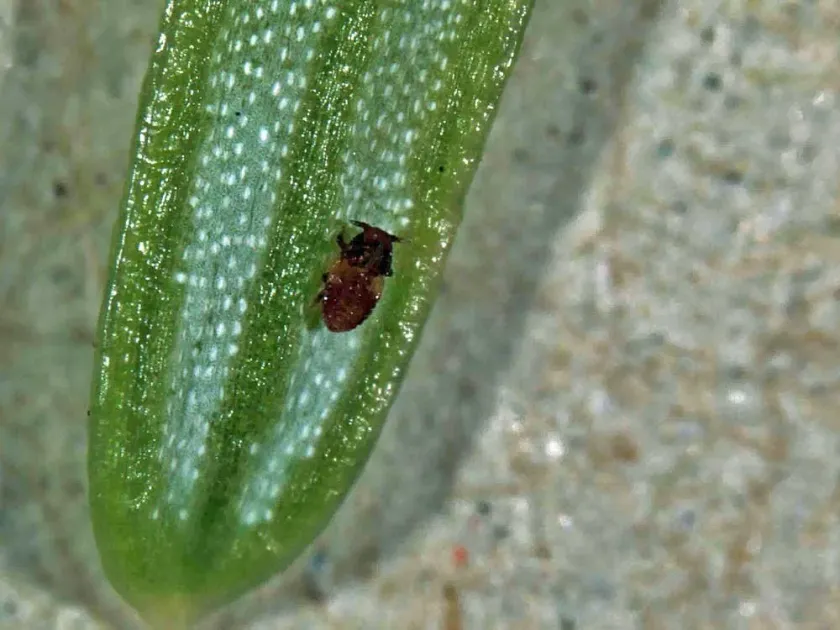
Description
How to identify
Dreyfusia (genus Dreyfusia) belongs to the family Adelgidae, order Hemiptera. These tiny insects, which resemble aphids, lead a cryptic lifestyle, often hiding under a layer of their own white, waxy secretion.
The adult body has an oval shape, and the color varies from dark brown to almost black. During its development, the insect goes through several stages, including eggs, several larval instars, and winged or wingless mature individuals.
An important biological feature is the presence of life cycles that may involve host alternation between a primary host (spruce) and a secondary host (fir). Depending on the species, Dreyfusia can reproduce parthenogenetically, which accelerates population growth.
Primarily, early-instar larvae overwinter by hiding in bark crevices or at the base of buds. In spring, with the arrival of warmer temperatures, they begin feeding actively on plant sap, which triggers the weakening of the tree.
The spread of the pest occurs both through natural means (wind, birds) and via the transportation of infested nursery stock that has not undergone proper phytosanitary inspection.
What it damages
The primary hosts for Dreyfusia are various species of fir (Abies) and spruce (Picea). The pest sucks sap from needles, shoots, and the bark of branches, which leads to metabolic disruptions within the plant tissues.
Damaged areas are exposed to the insect's toxic salivary enzymes, which cause needle deformation, premature needle drop, and the gradual drying of individual branches or the entire crown.
During massive outbreaks, the pest creates dense colonies that can lead to critical weakening of the tree, making it highly susceptible to secondary pests such as bark beetles or wood-decaying fungi.
In ornamental conifer nurseries, Dreyfusia poses a significant threat, as even minor damage reduces the aesthetic value and commercial quality of the seedlings, making them unsuitable for sale.
Prolonged infestation leads to the development of necroses on the trunk, distortion of shoots, and an overall reduction in growth rates, which can eventually cause the death of young or stressed plants.
Signs of infestation
The first and most noticeable sign of infestation is the appearance of white, cotton-like waxy fluff on the needles, twigs, and at the base of buds, produced by the larvae.
The needles of infested trees begin to turn yellow, lose their natural luster and healthy green color, and gradually take on a chlorotic or brown appearance.
Pathological distortion of young shoots and their shortening are observed, which disrupts the natural architecture of the crown and gives the plant an unhealthy appearance.
Upon closer inspection of the bark, one can notice clusters of insects in the folds and nodes, especially where needles attach to branches, where they are actively feeding.
- Appearance of woolly, frost-like wax on the plant.
- Premature needle fall.
- Deformation of current-year growth.
- Gradual dieback of terminal shoots.
Control measures
To combat Dreyfusia, a comprehensive approach is required, starting with a thorough inspection of planting material before purchase and installation in the garden.
Effective protection measures include insecticide treatments applied in early spring before bud break or during the period when larvae emerge from hibernation, as they are most vulnerable at this stage.
Systemic insecticides based on imidacloprid or acetamiprid have proven effective, as they penetrate plant tissues and affect the pest during its feeding process.
Good horticultural practices include regular sanitary pruning of infested branches, maintaining plant vigor through proper irrigation and fertilization, and avoiding overcrowded plantings.
The use of biological control agents, such as promoting natural predators (ladybugs, lacewings), can significantly reduce pest population levels in home gardens without the need for harsh chemicals.
Taxonomy
- Latin name
- Dreyfusia
- Order
- Hemiptera (bugs, aphids, leafhoppers)
- Family
- Adelgidae
- EPPO code
- DREYSP
Discussion
No discussions yet — be the first.