
Florida false spider mite
Dolichotetranychus floridanus
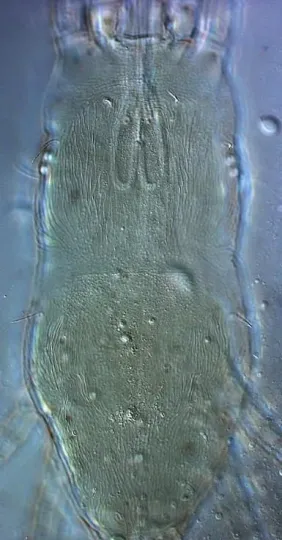
Description
How to identify
The Florida false spider mite (Dolichotetranychus floridanus) is a member of the Tenuipalpidae family, commonly known as flat mites. Unlike typical spider mites, they do not produce significant amounts of webbing, making their detection more challenging.
Adult mites are extremely small, reaching only about 0.3 mm in length. Their bodies are pale or reddish in color, allowing them to blend in with the tissue of host plants and remain unnoticed without magnification.
The life cycle consists of egg, larva, protonymph, deutonymph, and adult stages. Under optimal tropical or greenhouse conditions, the entire life cycle can be completed in approximately 10 to 14 days.
These mites typically inhabit protected areas of the plant, such as leaf axils, basal portions of leaves, and scales of fruits. These micro-habitats provide protection from environmental changes and many topical insecticide applications.
Dissemination occurs primarily through the trade of infested planting material. They can also be spread by wind, irrigation water, or mechanical transfer via contaminated farm equipment and workers' clothing.
What it damages
The primary host plant for this pest is the pineapple (Ananas comosus). The mites feed by piercing plant tissues and extracting cell sap, which leads to significant physiological stress for the plant.
Feeding damage results in chlorotic and necrotic spots on leaves. As the infestation progresses, these spots coalesce, causing the leaf tissue to brown, dry out, and eventually become deformed.
When the mites infest the fruit or the flower stalk, they cause disfigurement and physical damage to the fruit surface. This significantly reduces the marketability of the product, often leading to total crop loss in severe cases.
Beyond direct damage, the feeding wounds create entry points for secondary pathogens, such as fungi and bacteria, which can trigger rot and cause rapid deterioration of the plant's health.
In high-density commercial plantations, the cumulative effect of reduced photosynthesis and secondary infections leads to stunted plant growth and drastically reduced yields.
Signs of infestation
The earliest symptom is often the discoloration of the leaf base, which turns a yellowish-brown. Close inspection with a hand lens will reveal small, pale mite colonies clustered in the leaf axils.
A characteristic sign of infestation is the development of a "sunburn" appearance or dry, necrotic patches on the plant tissue where the mites have been feeding. Leaves may lose their natural green color and begin to twist or curl.
The absence of fine webbing is a key diagnostic clue for distinguishing this species from common spider mites. Instead, the presence of cast skins (exuviae) is a reliable indicator that an active population is present.
On infested fruits, the damage manifests as corky, brownish patches or rough skin textures. This physical degradation is usually observed once the mite population has reached a high density.
Agronomists should prioritize routine monitoring of the lower leaf bases, as these areas often remain infested long before the damage becomes visible on the upper canopy of the pineapple plant.
Control measures
The most critical control measure is the use of pest-free planting material. Quarantine and inspection programs are essential to prevent the introduction of this mite into new cultivation areas.
Systemic acaricides are preferred for chemical control because they can reach the mites hiding deep within the plant's tight leaf axils, whereas contact sprays often prove ineffective against protected populations.
Biological control using predatory mites from the Phytoseiidae family has shown promise in reducing mite populations in integrated pest management programs.
Maintaining proper plantation hygiene, including the removal of heavily infested plants and regular disinfection of tools, significantly reduces the spread of the pest within the field.
- Implement rigorous phytosanitary monitoring schedules.
- Rotate different classes of acaricides to delay resistance development.
- Ensure adequate irrigation to avoid heat-stress-related susceptibility.
- Train staff to recognize early symptoms of infestation.
Taxonomy
- Latin name
- Dolichotetranychus floridanus
- Order
- Mites
- Family
- Tenuipalpidae
- EPPO code
- DOLCFL
Discussion
No discussions yet — be the first.