
Flat mite Dolichotetranychus
Dolichotetranychus carnea
Description
How to identify
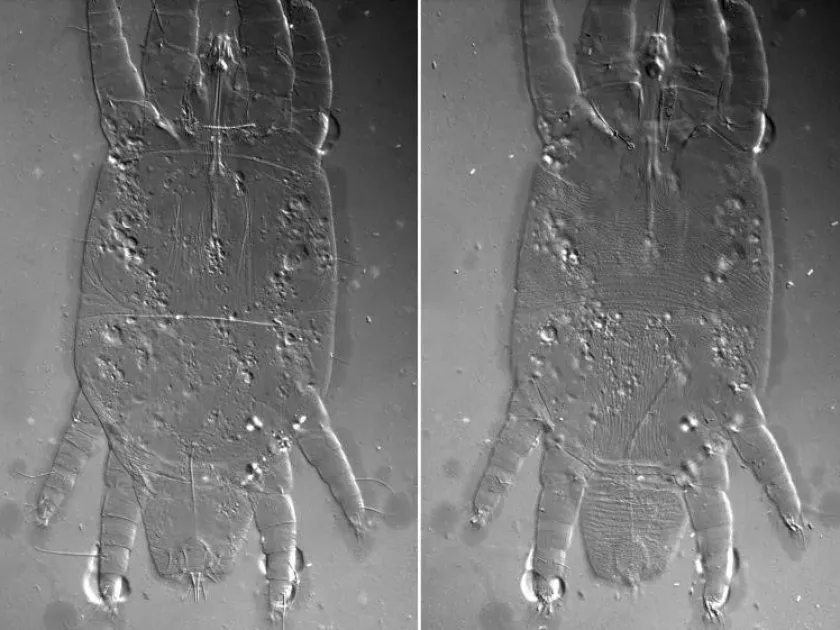
The flat mite Dolichotetranychus carnea belongs to the family Tenuipalpidae. These mites are characterized by a dorsoventrally flattened body shape, which enables them to reside in narrow spaces such as leaf sheaths, crevices, and plant buds that are inaccessible to other species.
Adult mites usually exhibit a light red or pinkish hue. Due to their minute size, they are extremely difficult to detect with the naked eye, requiring the use of a magnifying glass or a stereomicroscope to confirm their presence on the host plant.
The life cycle of this pest progresses through several developmental stages, including egg, larva, protonymph, deutonymph, and adult. They feed exclusively on plant sap by piercing the epidermal cells with their specialized stylet-like mouthparts.
Biological activity is significantly heightened during periods of dry and hot weather. These conditions promote rapid reproduction rates, allowing the mite population to reach high densities on localized parts of the host plant within a very short timeframe.
Taxonomically, they are part of the order Trombidiformes. Their population strategy focuses on intensive colonization of a specific plant segment, which is why their damage is often highly concentrated rather than dispersed across the entire plant foliage.
What it damages
This mite is known to infest various ornamental plants and grass species. By residing in protected areas like leaf bases and folded margins, it causes localized injury that stunts the growth of the affected parts of the plant.
Signs of infestation
Common signs of an infestation include chlorotic spots on the leaves, curling, and abnormal deformation. As the mites feed, the destroyed cells lead to the formation of necrotic areas that can eventually cause the entire leaf to wilt and dry out.
Unlike common spider mites, this species does not produce silk webbing. This makes early detection more difficult for gardeners, who may mistake the symptoms for nutrient deficiencies or fungal infections if they do not inspect the leaf bases closely.
Control measures
Management requires the application of effective acaricides that have specific efficacy against Tenuipalpidae. Products containing active ingredients such as abamectin or spirodiclofen are often recommended for achieving control in both nursery and garden settings.
Thorough coverage is critical; spraying must reach the leaf axils and other hiding spots where the mites reside. Additionally, implementing strict sanitary measures, such as removing heavily infested plant debris, significantly reduces the overwintering population.
Taxonomy
- Latin name
- Dolichotetranychus carnea
- Order
- Mites
- Family
- Tenuipalpidae
- EPPO code
- SITECA
Discussion
No discussions yet — be the first.