
Dolichotetranychus
Dolichotetranychus
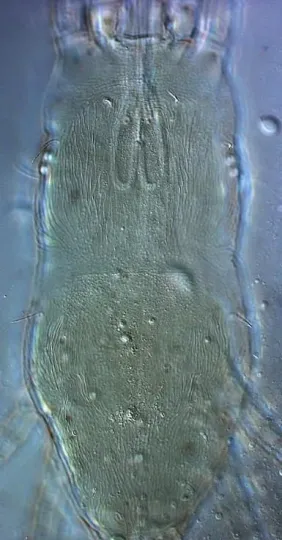
Description
How to identify
Dolichotetranychus is a genus of flat mites belonging to the family Tenuipalpidae. These mites are microscopic in size, possessing a flattened, elongated body that allows them to thrive in narrow spaces on the host plant.
Their life cycle progresses through several stages including eggs, larvae, protonymphs, deutonymphs, and adults. They are typically found in sheltered areas such as leaf sheaths, where microclimate conditions are stable and favorable.
The mites are generally slow-moving and tend to aggregate in colonies. Because of their small size and cryptic behavior, they are often overlooked until significant population density is reached.
Accurate identification usually requires microscopic analysis of their morphological features, such as the arrangement of setae on the dorsal side of the body, which distinguishes them from other related species.
These pests can be spread across fields via wind or contaminated agricultural machinery, making proactive scouting essential for large-scale crop management.
What it damages
Dolichotetranychus mites are known to infest various cereal crops, including wheat and barley. They feed by inserting their stylets into plant tissues to extract sap, directly affecting the plant's health.
Feeding leads to the disruption of normal metabolic processes within the plant. As the mites feed, they may cause localized necrosis and chlorosis, which hinders the plant's ability to perform photosynthesis.
The damage often manifests as yellowing, streaking, or curling of the leaves. Severe infestations can significantly stunt plant development and reduce the overall vigor of the crop during critical growth phases.
Beyond direct feeding damage, these mites are often implicated in the transmission of viral pathogens, which can exacerbate yield losses and deteriorate the quality of the harvested grain.
Yield reduction is usually measured by decreased kernel weight and uneven development of the heads, leading to significant economic losses for farmers if left untreated.
Signs of infestation
The earliest signs of an infestation include stunted plant growth and a general lack of vitality. Affected plants may show uneven development compared to healthy neighbors in the field.
Observation of the leaf base or sheath areas often reveals the presence of the mites, which may look like fine, dust-like particles. In many cases, these colonies are found protected within the crevices of the plant.
Discoloration, such as light-colored spots or stripes on leaves, is a common symptom. As the infestation progresses, leaves may start to yellow, wither, or dry out prematurely at the base.
In cases of high infestation, the formation of the ear may be compromised, resulting in shriveled grains. These signs are often mistaken for nutrient deficiencies or drought stress, making proper diagnostic assessment vital.
Professional scouting involves checking plant samples in the field using a handheld magnifying glass to confirm the presence of mites before deciding on control measures.
Control measures
Chemical control is the primary method for managing large infestations. The application of systemic acaricides is required to reach mites protected within the tight leaf sheaths of the plants.
Integrated Pest Management (IPM) practices, including crop rotation and the destruction of grassy weeds, are essential for reducing the carry-over of pest populations from season to season.
Maintaining balanced soil fertility and proper irrigation helps keep crops vigorous, which can improve their resilience against mite feeding damage and prevent explosive population growth.
Regular monitoring of field edges and hotspots allows for early intervention. Localized treatments are often sufficient if the infestation is caught before it spreads across the entire field.
Biological control methods, involving the use of naturally occurring predatory mites or entomopathogenic fungi, are being researched as sustainable alternatives to traditional synthetic chemical applications.
Taxonomy
- Latin name
- Dolichotetranychus
- Order
- Mites
- Family
- Tenuipalpidae
- EPPO code
- DOLCSP
Discussion
No discussions yet — be the first.