
Northern walking stick
Diapheromera
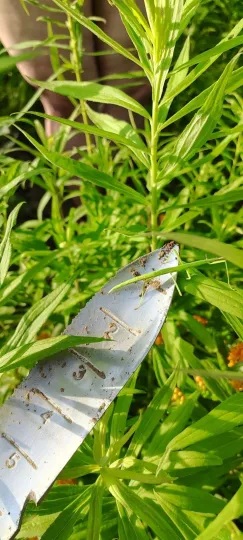
Description
How to identify
The Northern walking stick (Diapheromera femorata) belongs to the order Phasmatodea and the family Diapheromeridae. These insects are masters of camouflage, possessing elongated bodies that resemble twigs.
Adult insects typically measure between 7 and 10 centimeters in length. Their coloration ranges from green to brown, providing effective concealment against the bark and foliage of their host trees.
Their life cycle consists of incomplete metamorphosis, progressing through egg, nymph, and adult stages. In northern regions, they usually complete one generation per year.
Eggs overwinter in the leaf litter on the forest floor. This adaptation protects the developing embryos from harsh winter temperatures and allows them to emerge when spring conditions are optimal.
Females are generally larger and more robust than males, as they have evolved to support the production and deposition of numerous eggs into the forest substrate.
What it damages
These insects primarily feed on deciduous trees, with a strong preference for oak species, basswood, cherry, and other hardwoods found in North American forests.
During outbreaks, Northern walking sticks can cause significant defoliation, sometimes stripping entire trees of their foliage, which stresses the plants considerably.
Repeated or severe defoliation weakens the host trees, making them susceptible to secondary attacks by wood-boring insects and various fungal pathogens.
From a forestry management perspective, persistent infestations can lead to decreased timber production and loss of vigor in hardwood stands.
While primarily a forest pest, they can occasionally move into ornamental plantings or orchards adjacent to wooded areas, causing localized aesthetic and economic damage.
When it appears
Nymphs typically emerge in late spring or early summer, coinciding with the development of new foliage on the trees which serves as their primary food source.
The nymphal stage lasts throughout the summer months as the insects grow and undergo a series of molts before reaching maturity.
Adult walking sticks are most active from mid-summer through early autumn. This is the peak period for mating and egg-laying activities.
The life cycle concludes with the onset of autumn frosts, which kill off the adult population, leaving only the eggs to persist through the winter.
As the population depends entirely on the overwintering eggs, the success of the following year's generation is strongly linked to the environmental conditions during the preceding winter.
Signs of infestation
The earliest signs of infestation are ragged leaf margins, as nymphs begin feeding on the edges of leaves rather than consuming them whole from the start.
A heavy infestation is often accompanied by a distinct sound resembling light rain falling through the canopy, caused by the constant dropping of insect frass.
Large quantities of frass accumulating on the forest floor beneath the trees serve as a reliable indicator that the canopy is heavily infested with walking sticks.
Due to their excellent crypsis, detecting the insects visually is challenging. The most effective diagnostic method is shaking tree branches over a white sheet to dislodge them.
Widespread thinning of the canopy or complete stripping of leaves in mid-summer is a clear symptom of a severe outbreak requiring management intervention.
Control measures
Biological control methods are preferred, using entomopathogenic fungi or bacteria that target the insect population without harming beneficial wildlife.
Chemical control via aerial or ground spraying is generally reserved for extreme outbreaks where the health of large, valuable forest tracts is at risk.
Cultural practices, such as clearing leaf litter or controlled burning in small, localized infestation areas, can reduce the number of overwintering eggs.
Enhancing habitat for insectivorous birds and small mammals can provide natural regulation of walking stick populations, preventing major surges in numbers.
Regular monitoring through the use of light traps and canopy sampling helps foresters identify hotspots early, allowing for timely and localized management responses.
Taxonomy
- Latin name
- Diapheromera
- Family
- Phasmatidae
- EPPO code
- DIAHSP
Discussion
No discussions yet — be the first.