
Indian stick insect
Carausius morosus
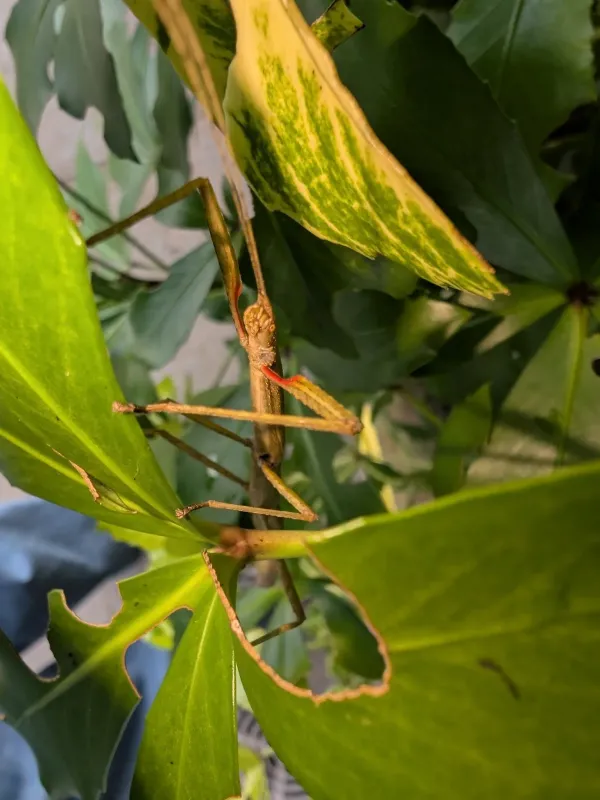
Description
How to identify
The Indian stick insect (Carausius morosus) belongs to the order Phasmatodea and the family Lonchodidae. It is a well-known master of camouflage, evolving to mimic the appearance of dry twigs.
Adult specimens measure between 7 and 10 cm in length. Their bodies are elongated and typically brown, gray, or greenish, blending perfectly with plant stems.
This species is primarily parthenogenetic, meaning females can lay fertile eggs without mating, allowing for rapid population growth in favorable conditions.
The insect undergoes incomplete metamorphosis. Nymphs look like miniature versions of the adults immediately upon hatching, feeding on plants right away.
Due to their nocturnal habits and camouflage, Indian stick insects are often overlooked until their feeding damage becomes significant.
What it damages
This pest is a polyphagous insect that feeds on a wide range of plants, particularly in greenhouses, conservatories, and indoor garden settings.
They consume the leaves of various plants, including ivy, tradescantia, lettuce, and numerous ornamentals, often causing severe defoliation.
By consuming leaf tissue, they reduce the plant's surface area available for photosynthesis, leading to stunted growth and weakened vitality.
The feeding wounds left behind serve as entry points for various pathogens, potentially leading to secondary fungal or bacterial infections.
In cases of heavy infestation, the cumulative damage can result in the total destruction of the plant's decorative or productive value.
Signs of infestation
The most prominent sign is the appearance of jagged or notched edges on leaves, indicating that the plant is being eaten by a chewing insect.
Small, cylindrical fecal droppings (frass) found on the soil surface or surrounding pots are clear indicators of a stick insect presence.
The presence of tiny, seed-like objects in the soil, which are actually eggs, is a sign that the infestation is well-established.
Plants may show reduced vigor, yellowing leaves, or uneven growth patterns, especially when a significant population is present.
During the night, using a flashlight to inspect stems can reveal the insects, which remain motionless during the day to avoid detection.
Control measures
Hand-picking and manual removal remain the most reliable methods for controlling stick insects in private collections or small greenhouse settings.
Regular inspection of plants, particularly in the evening, helps identify and remove individuals before they can reproduce.
In larger facilities, targeted use of insecticides labeled for greenhouse use can be effective, provided that safety guidelines are strictly followed.
Sanitation practices, such as removing debris and disinfecting soil, are crucial to prevent the survival of eggs and nymphs in the growing medium.
Biological control options, including the use of entomopathogenic fungi, can be employed as part of an integrated pest management (IPM) strategy.
Taxonomy
- Latin name
- Carausius morosus
- Family
- Phasmatidae
- EPPO code
- CAAUMO
Discussion
No discussions yet — be the first.