
Two-striped walking stick
Anisomorpha buprestoides
Description
How to identify
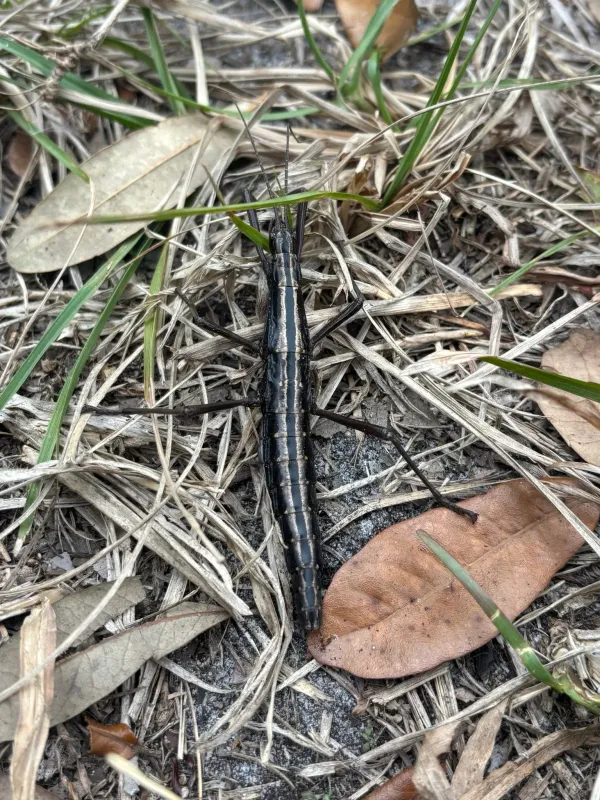
The Two-striped walking stick (Anisomorpha buprestoides) is a member of the Phasmatodea order and the Pseudophasmatidae family. These insects are easily recognized by their elongated, stick-like body structure.
Adults typically feature a dark base color, ranging from brown to black, with two distinct, lighter longitudinal stripes running the length of their bodies.
The species exhibits sexual dimorphism, with males being significantly smaller than females, often hitching a ride on the female's back during mating season.
A notable defense mechanism of this species is its ability to spray a defensive chemical secretion from glands located on its thorax, which can cause irritation to human eyes.
As nocturnal creatures, they spend most of the day hiding on stems and leaves, making them quite difficult to spot unless specifically searching for them.
What it damages
This species is a polyphagous feeder, meaning it consumes foliage from a wide variety of woody plants, shrubs, and ornamental trees.
Commonly affected host plants include oak trees, citrus species, magnolia, hibiscus, and various other broad-leaved decorative shrubs.
Feeding activity is characterized by irregular chewing patterns along the leaf margins, which can escalate to near-total defoliation during heavy infestations.
While mature trees can usually withstand some level of herbivory, young saplings are particularly vulnerable to growth stuntedness due to the loss of photosynthetic area.
In nursery settings, the presence of these insects can significantly impact the marketability of ornamental plants due to the aesthetic damage to the leaves.
When it appears
The life cycle of Anisomorpha buprestoides is generally synchronized with the warmer months of the year, spanning from late spring to early autumn.
Development involves hemimetabolous metamorphosis, passing through egg, several nymphal instars, and finally the adult stage.
Eggs are typically deposited in the soil or leaf litter, where they remain until the following spring, ensuring the species survives winter conditions.
The population reaches its peak density in mid-to-late summer, when nymphs mature and adult mating activity is at its highest.
Environmental factors like temperature and moisture levels are crucial for successful egg hatching and the survival rate of the nymphs.
Signs of infestation
The most reliable sign of an infestation is the presence of uneven, chewed leaf edges and damaged foliage patterns across the canopy of a host plant.
Frass (insect excrement) accumulation on the ground beneath infested shrubs or trees is a clear indicator that a colony is actively feeding above.
Close observation of the branches, especially during the early morning or evening hours, often reveals the presence of adult insects resting against the twigs.
A pungent, chemical odor emanating from a plant is a strong warning sign that the walking sticks have been disturbed and are releasing their defensive spray.
Finding smaller, less distinctly marked individuals indicates the presence of nymphs, which suggests active reproduction and an ongoing pest issue.
Control measures
In home gardens, manual collection and removal of the insects is often the most practical and environmentally friendly method of control.
For larger infestations, broad-spectrum contact insecticides labeled for use on ornamental plants can be effective in reducing the insect population.
Sanitation practices, such as raking and destroying leaf litter in the fall, can help reduce the number of overwintering eggs in the immediate area.
When handling these insects, it is strongly advised to wear protective gloves and safety glasses to prevent contact with their defensive chemical secretions.
Maintaining plant health through adequate irrigation and nutrient management improves the natural resilience of the plants against pest-induced foliage loss.
Taxonomy
- Latin name
- Anisomorpha buprestoides
- Family
- Phasmatidae
- EPPO code
- ANIOBU
Discussion
No discussions yet — be the first.