
Diachromus germanus
Diachromus germanus
Description
How to identify
Diachromus germanus is a species of ground beetle (Carabidae) that stands out due to its unusual feeding habits compared to its predatory relatives.
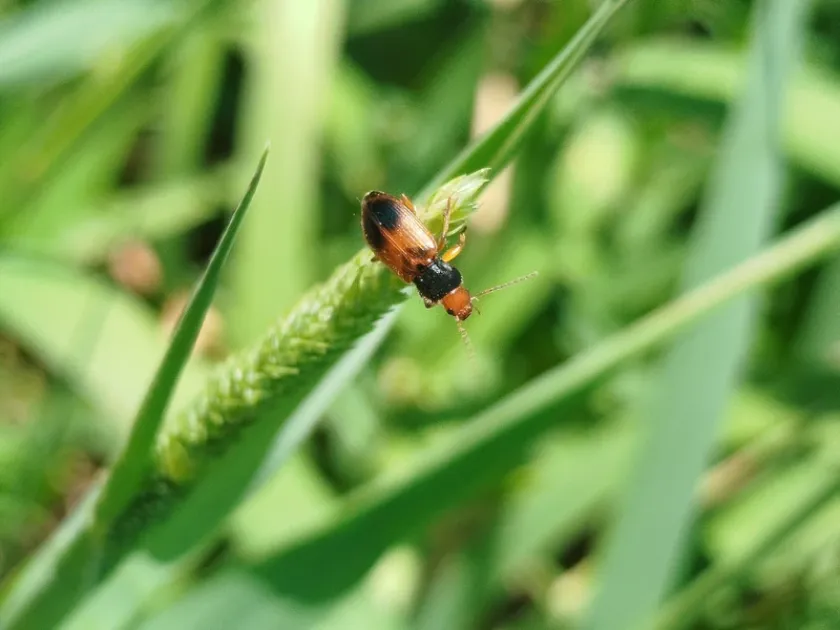
Adult beetles typically measure between 7 and 9 millimeters in length and possess a distinct, colorful appearance that aids in field identification.
The pronotum is characterized by a bright reddish-orange color, while the elytra exhibit a metallic blue-black hue with a noticeable yellowish margin.
The head and antennae are dark, contrasting sharply with the vivid coloration of the body, which is elongated and oval-shaped.
Unlike most Carabidae that act as biological control agents, this specific beetle species is known for its herbivorous behavior, causing damage to agricultural crops.
What it damages
The primary damage is caused by adult beetles, which feed directly on the developing seeds of various agricultural crops, particularly cereals.
During the grain-filling stage, these beetles consume the soft kernels, which can significantly reduce both the yield and the overall quality of the harvest.
In addition to small grains, Diachromus germanus is known to attack sunflower crops, feeding on the seeds within the flower heads during maturation.
Severe infestations lead to localized damage that disrupts crop development and can promote the entry of secondary pathogens or molds.
The economic impact is measured by the reduction in the thousand-kernel weight and potential loss of market-grade standard for the affected grain.
When it appears
The activity of Diachromus germanus typically commences in the spring when temperatures consistently rise to favorable levels for emergence.
Peak presence of the adults in fields usually coincides with the critical grain-filling period, as the crop provides an abundant nutritional resource.
During the warmer summer months, the beetles are notably active at night, moving across fields and potentially migrating to adjacent areas.
The life cycle involves larval stages developing within the soil, though the adult stage is the primary concern for farmers regarding visible crop injury.
As the season nears its end and temperatures drop, adults seek shelter beneath plant debris or in the upper soil layers to overwinter successfully.
Signs of infestation
A primary indicator of infestation is the presence of hollowed-out grain husks found on spikes or within sunflower seed heads upon inspection.
Visual confirmation can be achieved by checking field margins during the early morning hours, as beetles are often found on stems or the soil surface.
Damage patterns caused by this beetle are distinct from those caused by rodents or birds, as they leave small, precise entry points in the seeds.
The use of light traps at night can confirm the presence and density of the adult beetle population within a specific field sector.
Small quantities of frass found at the base of affected plants can also serve as a diagnostic sign during field scouting procedures.
Control measures
Cultural practices, such as thorough autumn plowing, are highly effective in disrupting the overwintering sites of the beetle and reducing its population density.
Maintaining clean fields by eliminating weeds and crop residues removes secondary food sources and shelters that support the beetle's survival.
When monitoring indicates that the economic injury level has been exceeded, targeted applications of approved insecticides are necessary.
Integrated pest management strategies should include regular field scouting and the use of pheromone or light traps to determine optimal treatment windows.
Strategic crop rotation and spatial separation from previously infested areas help in minimizing the risk of re-infestation for subsequent planting seasons.
Taxonomy
- Latin name
- Diachromus germanus
- Order
- Coleoptera (beetles)
- Family
- Carabidae
- EPPO code
- DIAKGE
Discussion
No discussions yet — be the first.