
Human botfly
Dermatobia cyaniventris
Description
How to identify
The human botfly, scientifically known as Dermatobia hominis, belongs to the order Diptera and the family Oestridae. It is a parasitic insect that does not consume or damage any plant species.
The adult fly has a distinctive lifecycle where it utilizes phoresy, attaching its eggs to the bodies of other blood-sucking insects like mosquitoes or stable flies, which then transport the larvae to a mammalian host.
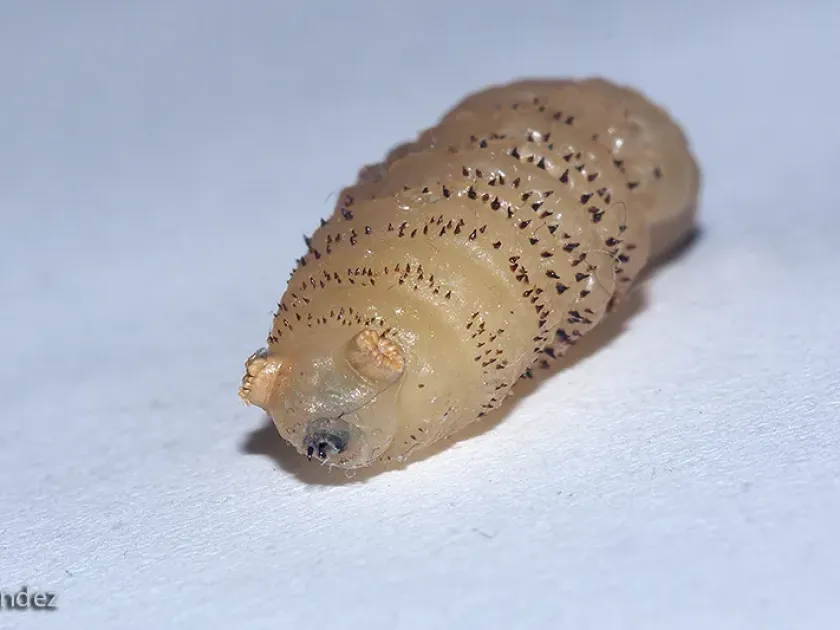
The larvae are specialized obligate parasites equipped with rows of spines that anchor them securely within the subcutaneous tissues of their host during the developmental phase.
The lifecycle consists of several stages: the egg stage carried by a vector, larval stages within the host, and a pupal stage that takes place in the soil environment.
In terms of taxonomy, it is strictly classified as a medical and veterinary pest, causing cutaneous myiasis in humans, cattle, and various wild mammals.
What it damages
It is critical to note that the human botfly is not an agricultural pest. It does not feed on vegetation, and it has no negative impact on crop yields, growth patterns, or fruit production.
Any agricultural damage associated with this insect is non-existent. Farmers do not need to monitor crops for signs of this fly, as it has no biological interest in botanical life.
The damage caused by this insect is entirely physiological. The larvae burrow into the skin of hosts, creating painful furunculoid lesions that require medical or veterinary intervention.
In the context of livestock farming, the botfly causes economic losses due to the distress of animals, weight loss, and the resulting damage to hides, which lowers their commercial value.
Thus, this object remains completely outside the scope of agronomic pest management and integrated plant protection protocols.
Control measures
Because the human botfly does not impact plant health, typical field-wide insecticide applications for crop protection are completely inappropriate and ineffective against this species.
Management strategies are focused exclusively on animal health and veterinary care. Protecting livestock from the vectors that carry botfly eggs is the primary method of control.
Veterinary practitioners use systemic antiparasitic treatments to eliminate larvae from affected animals, ensuring the health of the herd and preventing economic losses.
Public health measures, such as using repellents and protective clothing, are recommended for workers in endemic areas to prevent the accidental transmission of larvae.
- Regular veterinary inspection and treatment of livestock.
- Management of stable fly and mosquito populations in farm areas.
- Application of repellents on skin and clothing in high-risk zones.
Taxonomy
- Latin name
- Dermatobia cyaniventris
- Order
- Diptera (flies)
- Family
- Cuterebridae
- EPPO code
- DEMTCY
Discussion
No discussions yet — be the first.