
Human botfly
Dermatobia
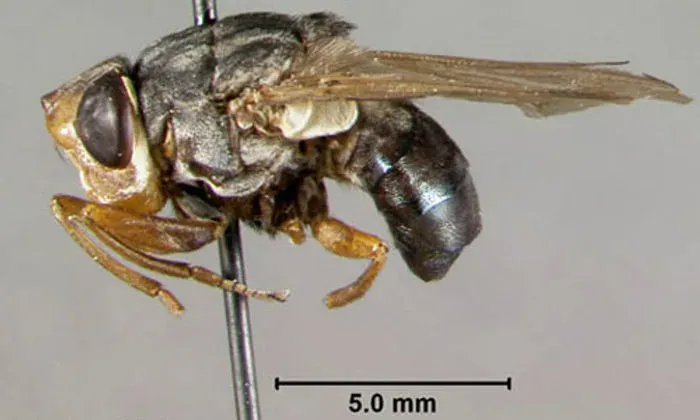
Description
How to identify
The human botfly (Dermatobia hominis) is a species of fly in the family Oestridae. It is strictly a parasitic organism and is not a pest of agricultural or horticultural crops.
Adult flies are large, robust insects resembling bumblebees, with a metallic blue or yellowish coloration. They are rarely seen, as the adult stage is short-lived and non-feeding.
The life cycle is distinct: females capture other flying insects, such as mosquitoes or houseflies, and attach their eggs to their bodies. When the carrier insect lands on a mammal, the larvae hatch and burrow into the host.
Once inside, the larva creates a pocket under the skin where it grows and develops for several weeks, feeding on host tissues.
Upon maturity, the larva exits the host, drops to the ground, and undergoes pupation in the soil, emerging later as an adult fly to begin the cycle again.
What it damages
The human botfly causes no damage to plants, vegetables, or crops. There is no agricultural significance regarding plant production, as the species does not interact with botanical tissues.
In the agricultural sector, the botfly is exclusively considered a veterinary pest. It causes a condition known as myiasis, which affects the health and comfort of livestock.
The primary economic impact stems from reduced productivity in beef and dairy cattle, as infested animals experience significant stress, pain, and immune system strain.
In addition to health impacts, the quality of livestock hides is compromised by the holes left by the larvae, which significantly reduces their value in the leather industry.
The presence of botfly larvae also increases the risk of secondary infections and abscesses, necessitating veterinary intervention and increased healthcare costs.
Signs of infestation
The most visible sign of infestation is the development of a tender, swollen lump on the skin, which resembles a boil or furuncle.
Animals may exhibit constant restlessness, frequent scratching, or rubbing against objects in an attempt to alleviate the irritation caused by the larvae.
A small breathing hole can often be observed in the center of the swelling, through which the larva gains access to oxygen.
In many cases, there is noticeable discharge from the wound, and the surrounding skin may be inflamed, hot, and painful to the touch.
Severe infestations in young livestock can lead to anemia, poor weight gain, and an overall dull coat, signalling chronic stress.
Control measures
Control strategies for the botfly are entirely within the realm of veterinary medicine, as there is no need for crop-based pest management strategies.
- Systemic antiparasitic treatments, such as ivermectin, are highly effective in killing larvae during the development phase.
- Application of topical insecticides or repellents on livestock to discourage carrier insects from landing.
- Proper pasture management to reduce the populations of mosquitoes and other flies that serve as egg-carriers.
- Regular inspection of the herd, especially in endemic regions, to identify and treat early stages of infestation.
- Quarantine and individual treatment of heavily infested animals to prevent further spread within the herd.
Standard plant protection products used in field agriculture are ineffective against this pest and should not be used as a method of control.
Taxonomy
- Latin name
- Dermatobia
- Order
- Diptera (flies)
- Family
- Cuterebridae
- EPPO code
- DEMTSP
Discussion
No discussions yet — be the first.