
Gray botfly
Cuterebra grisea
Description
How to identify
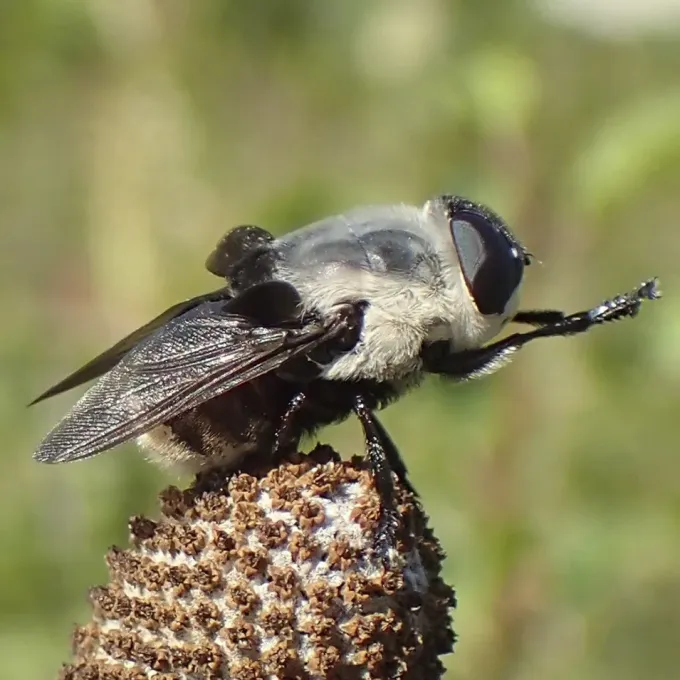
The Gray botfly (scientific name: Cuterebra grisea) is a member of the Oestridae family. Adult flies are robust, hairy insects that resemble bees or bumblebees in appearance. Because they lack functional mouthparts, adults do not feed and live only for a short time to reproduce.
The primary concern regarding this species is its larval stage. The larvae are barrel-shaped and covered with small, backward-pointing spines that anchor them securely within the host's skin. As they mature, they grow significantly in size, often becoming quite noticeable.
Systematically, this insect is categorized as a parasitic dipteran. It is highly host-specific, primarily targeting small mammals such as rabbits, rodents, and occasionally domestic animals, inducing a condition known as cutaneous myiasis.
The life cycle involves the female laying eggs in locations frequented by hosts, such as burrow entrances or along trails. Upon contact with the host's body heat, the larvae hatch and actively seek a point of entry to burrow into the skin.
Identification is usually confirmed by the presence of a breathing hole in a skin swelling. The larva keeps its posterior end aligned with this opening to breathe, which is a diagnostic feature for veterinarians identifying the infestation.
What it damages
The main form of damage is the development of subcutaneous abscesses. As the larva grows, it creates a pocket in the host's tissue, which leads to inflammation, swelling, and localized pain. This is commonly referred to as a "warble."
In animal husbandry, especially in rabbitries, Cuterebra grisea can cause significant economic losses. Infested animals often exhibit reduced appetite, weight loss, and general lethargy, which hampers their growth and overall development.
Secondary infections are a frequent complication. When a larva is present, it creates an open wound that becomes a gateway for bacteria, leading to deeper infections or even systemic issues if left untreated for an extended period.
While these flies are a natural part of wildlife ecosystems, they can be problematic in managed environments. High density of host animals in close quarters increases the likelihood of infestations spreading throughout the population.
Damage to the hide or skin of the host is permanent during the infestation period. If a larva is located in sensitive areas, such as the face or near major organs, the health risks to the animal increase significantly.
When it appears
Adult botflies are active during the warmer summer months. This is when mating occurs and females scout for suitable locations to deposit their eggs, ensuring the next generation is positioned for successful host infection.
Infestations in animals typically peak in late summer and early autumn. This timing coincides with the maximum presence of first-instar larvae waiting for a suitable host to pass by.
The duration of the larval stage within the host can vary, usually lasting several weeks. Temperature plays a critical role in the speed of the larva's development, as environmental heat accelerates the metabolic processes.
Pupation occurs in the soil, where the insect overwinters. This stage is crucial for the survival of the species, protecting it from winter cold until the cycle begins again with the arrival of spring.
Understanding these seasonal patterns is essential for planning preventative measures. Early application of control strategies before the peak summer heat can greatly reduce the chances of host infestation.
Control measures
Prevention is the most effective approach for managing the Gray botfly. Keeping environments clean and reducing access to areas where rodents congregate can significantly decrease the risk of larvae finding a new host.
Physical barriers and regular grooming of animals are helpful for early detection. If a potential infection site is noticed, it should be monitored closely by a veterinarian to ensure proper management.
- Conduct regular body inspections of animals during the summer.
- Maintain hygienic conditions in barns and animal enclosures.
- Implement rodent control programs to eliminate primary hosts.
- Use veterinarian-approved preventatives to repel parasitic insects.
It is vital to never crush a larva while it is still under the skin. Doing so can cause the larva to rupture, releasing proteins that may trigger a severe, life-threatening anaphylactic reaction in the animal.
Extraction must be performed by a professional, using surgical tools to remove the intact larva. Once removed, the wound must be cleaned, disinfected, and monitored for proper healing and potential secondary bacterial growth.
Taxonomy
- Latin name
- Cuterebra grisea
- Order
- Diptera (flies)
- Family
- Cuterebridae
- EPPO code
- CUTEGR
Discussion
No discussions yet — be the first.