
Rabbit botfly
Cuterebra cuniculi
Description
How to identify
The rabbit botfly (Cuterebra cuniculi) belongs to the family Oestridae within the order Diptera. The adult fly is a large, hairy insect resembling a bumblebee, but unlike other flies, it lacks functional mouthparts and does not feed as an adult.
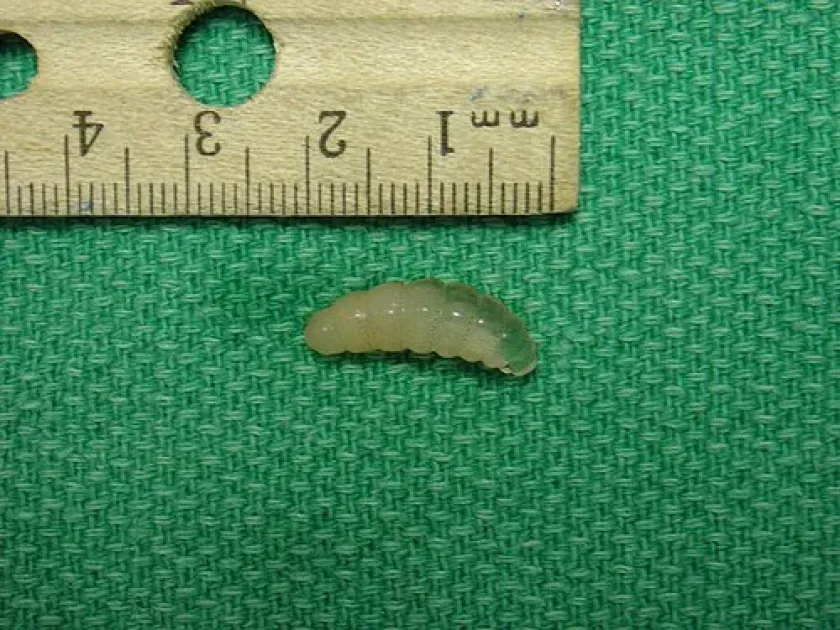
The larval stage is the primary parasitic phase. These larvae are robust, barrel-shaped, and covered in tiny, posteriorly directed spines that anchor them firmly within the subcutaneous tissues of the host.
Taxonomically, this species is an obligate parasite of various lagomorphs and rodents. It is widely recognized in veterinary medicine as a specific cause of cutaneous myiasis in rabbits.
It is crucial to distinguish this parasite from other skin-dwelling pests to implement effective management. While it does not impact botanical crops, its effect on livestock health is significant.
Identification typically involves clinical examination of the host for characteristic breathing holes and the observation of the emerging larva’s morphology.
What it damages
The rabbit botfly is not a plant pest; it is a specialized parasite of animals. It poses no direct threat to agricultural crops, though it significantly impacts rabbit production.
The larvae penetrate the host's skin and create subcutaneous swellings known as warbles. Inside these cavities, the larvae feed on host tissues and fluids, causing localized trauma.
Heavy infestations can lead to systemic stress, anemia, and reduced growth rates in young rabbits, which negatively impacts the economic viability of rabbit farms.
The skin of affected animals is often ruined by the holes created by larvae, causing significant losses for producers who rely on fur or leather goods.
Secondary infections of the larval site can lead to abscesses and, in severe cases, death of the host if the infestation is not addressed promptly.
When it appears
The life cycle is closely tied to the warm seasons. Adult flies are typically active from mid-summer through early autumn, which is when they seek out hosts for oviposition.
Females deposit eggs near rabbit burrows or along frequently used runways. When a host passes by, the larvae hatch and migrate to the rabbit's skin to enter.
The larval development period inside the host usually lasts several weeks. Once the larva completes its final instar, it exits the host and drops to the ground.
After exiting, the larva pupates in the soil. The pupal stage is the means by which the species survives the colder winter months until the next season begins.
Understanding this seasonality is vital for farm management, as protective measures should be most stringent during the summer months when adult flies are breeding.
Signs of infestation
The most prominent sign is the presence of a firm, painful swelling on the rabbit's body, usually on the neck, head, or back, with a visible breathing pore in the center.
Rabbits often exhibit restlessness, frequent scratching, and grooming of the affected area, leading to localized hair loss and inflamed skin.
The movement of the larva inside the swelling can often be felt or observed upon close inspection, which is a key diagnostic indicator.
Systemic signs may include lethargy, loss of appetite, and an overall poor condition if the rabbit is heavily infested by multiple larvae.
If an infection occurs, the area may discharge purulent exudate with a strong, unpleasant odor, indicating severe tissue inflammation and bacterial growth.
Control measures
The primary control method is the manual surgical extraction of the larva by a qualified veterinarian. It is essential not to rupture the larva, as this can trigger a dangerous allergic reaction.
Prevention involves keeping domestic rabbits away from areas where wild rabbits congregate, as wild populations serve as the natural reservoir for the botfly.
The use of fine mesh screens in hutches can prevent adult flies from reaching the animals, significantly reducing the probability of egg-laying near the rabbits.
Regular daily inspections of all rabbits, especially during the peak fly season, allow for early detection and removal of larvae before they cause extensive damage.
Sanitation practices, such as treating the ground in pens to kill pupating larvae, can help lower the local population of the pest for subsequent seasons.
Taxonomy
- Latin name
- Cuterebra cuniculi
- Order
- Diptera (flies)
- Family
- Cuterebridae
- EPPO code
- CUTECU
Discussion
No discussions yet — be the first.