
Meadow tick
Dermacentor reticulatus
Description
How to identify
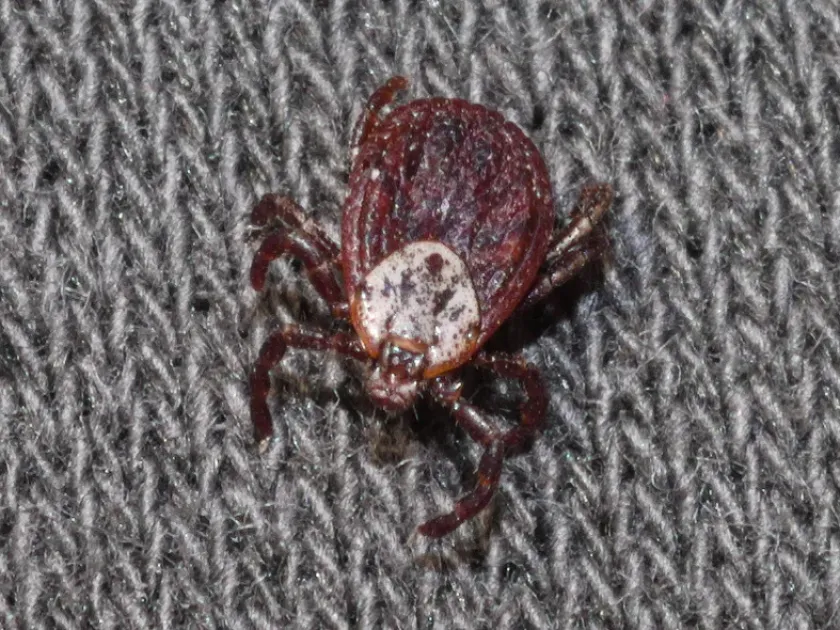
The meadow tick (Dermacentor reticulatus) is a prominent member of the Ixodidae family, widely recognized for its distinct mottled, cream-colored pattern on its dorsal shield.
Adult ticks typically measure 4–5 mm in length, expanding significantly after engorgement. They belong to the order Parasitiformes and possess a sturdy mouthpart, or capitulum, used to anchor securely into the host's skin.
Their life cycle consists of four distinct stages: egg, larva, nymph, and adult. Each active stage requires a blood meal from a mammalian host to proceed to the next developmental phase.
This species is highly adaptable to various environments, though it thrives in moist, open grasslands, meadows, and forest margins where it can wait for passing hosts.
Unlike some other tick species, Dermacentor reticulatus exhibits remarkable resilience to cold, allowing it to remain active at temperatures near freezing.
What it damages
While the meadow tick does not feed on vegetation, it is a significant economic threat to agriculture due to its role as a vector for various pathogens, including the parasite Babesia canis.
These ticks are primarily known for transmitting babesiosis to cattle, horses, and dogs. Such infections can cause high mortality rates, leading to substantial losses in livestock production.
Beyond disease transmission, the act of feeding by large numbers of ticks induces irritation, skin inflammation, and discomfort, which negatively impacts the growth and general health of livestock.
The presence of these parasites can render certain pastures unusable, forcing farmers to implement restricted grazing schedules or incur extra costs for veterinary care.
Because these ticks can harbor zoonotic pathogens, they also represent a potential health risk to farmers and field workers who may come into contact with them during routine operations.
When it appears
The activity of the meadow tick is bimodal, characterized by two major peaks throughout the year: a primary peak in the spring and a secondary peak in late summer to autumn.
Adult activity begins as soon as soil temperatures rise above 3–5 degrees Celsius, typically peaking between April and May. This makes them one of the first pests to emerge after winter.
A second wave of activity occurs in late August and September as new adults emerge from diapause and begin seeking hosts to complete their life cycle.
They are most active during the cooler parts of the day, such as early morning or late afternoon, when humidity levels are optimal for their survival.
Extremes in temperature, particularly hot and dry conditions, force the ticks to seek shelter in the leaf litter or base of the vegetation, temporarily reducing their host-seeking activity.
Signs of infestation
To detect the presence of meadow ticks, farmers use the "flagging" method, which involves dragging a white cloth across the vegetation to collect and count ticks in a given area.
For livestock, the primary signs of infestation include constant scratching, restlessness, and the presence of visible ticks on thin-skinned areas such as the ears, groin, and abdomen.
Clinical signs of tick-borne illness in animals include high fever, lethargy, loss of appetite, and discolored urine (hematuria), signaling the need for immediate veterinary attention.
Regular visual inspections of animals returning from grazing areas are essential, as early removal of the tick can significantly reduce the risk of pathogen transmission.
Persistent grooming behaviors and localized swelling on the animal's hide are strong indicators that the herd is operating in an infested pasture.
Control measures
Effective management of Dermacentor reticulatus requires an integrated approach that focuses on both the animal host and the grazing environment.
Acaricide treatments are the primary defense, administered through spot-ons, sprays, or medicated tags to prevent attachment and provide residual protection for the herd.
Environmental control involves habitat modification, specifically the regular mowing of tall grass and the clearing of brush along fence lines and animal trails to create a hostile environment for the ticks.
Rotational grazing can also be used to break the tick's life cycle by keeping animals away from areas where larvae or nymphs are known to be concentrated.
- Regular inspection of livestock for attached parasites.
- Use of repellents on pastures or animal skin.
- Controlled burning or clearing of heavy scrub land.
- Vaccination of vulnerable livestock against endemic tick-borne diseases.
Taxonomy
- Latin name
- Dermacentor reticulatus
- Family
- Ixodidae
- EPPO code
- DERCRE
Discussion
No discussions yet — be the first.