
Rocky Mountain wood tick
Dermacentor andersoni
Description
How to identify
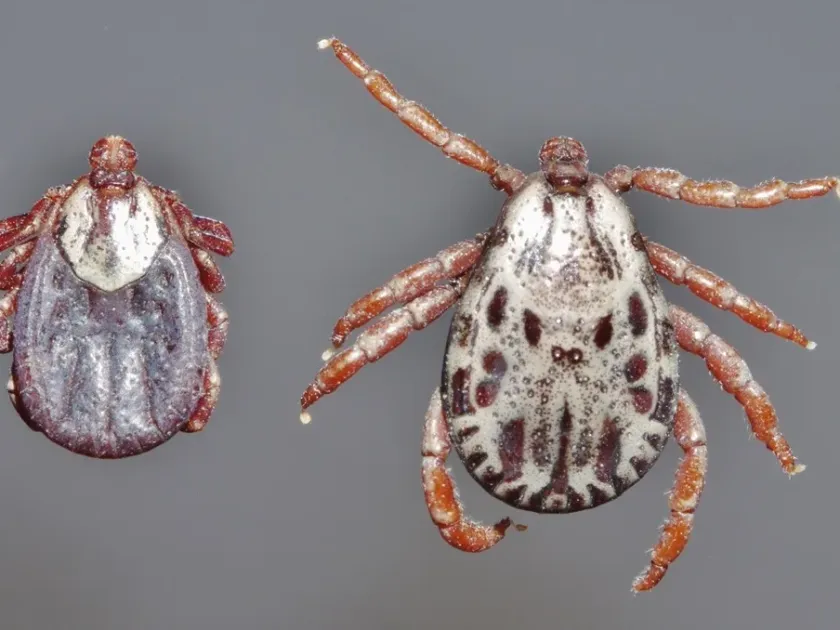
The Rocky Mountain wood tick (Dermacentor andersoni) belongs to the Ixodidae family. This large parasite is characterized by an ornate pattern on the dorsal shield of the adults, which is a key identifying feature for this species.
There is a distinct sexual dimorphism in this species, with males and females showing significant differences in size and morphology. The adults possess a well-developed mouthpart adapted for piercing skin and remaining attached to a host for an extended period.
The tick follows a three-host life cycle that can last up to three years, heavily influenced by regional climatic conditions. Its development involves the egg, larva, nymph, and adult stages, with each active stage requiring a blood meal from a vertebrate host.
The species is primarily active during the warmer months, preferring open landscapes, pastures, and areas with dense vegetation. In northern regions, development may be prolonged due to shorter growing seasons and cooler temperatures.
The biology of this tick is deeply tied to the presence of large wild and domestic animals. For agricultural operations, these ticks represent a significant management challenge due to their parasitic behavior on livestock.
What it damages
The primary impact of Dermacentor andersoni is its parasitism on livestock, including cattle, horses, sheep, and dogs. While the tick does not feed on plant tissues, its presence in pastures creates a hazardous environment for grazing animals.
Agricultural losses stem from decreased animal productivity, weight loss, and the transmission of serious vector-borne diseases. Anemia in young livestock is a common result of heavy tick infestations during peak seasons.
This tick is a known vector for pathogens such as those causing tularemia and Rocky Mountain spotted fever. These diseases pose a severe threat to herd health, potentially leading to mortality if not detected and treated early.
The parasite is also capable of causing "tick paralysis" in livestock due to neurotoxins present in the female's saliva. This condition manifests as progressive muscle weakness, typically starting in the hind limbs and moving forward.
Economic damage includes high costs for veterinary treatments, the necessity for quarantine measures, and general losses in livestock output. Farmers are often forced to restrict grazing on infested land to protect their herds.
Control measures
Management strategies require a multifaceted approach involving pasture maintenance and direct livestock treatment. Regular inspection of animals during peak tick season is essential for early detection and mitigation of infestation.
Acaricides applied via sprays, dipping vats, or ear tags are effective at reducing parasite populations on livestock. These treatments must always be applied in strict accordance with veterinary safety regulations to ensure herd health.
Agrotechnical methods for control focus on habitat modification, such as clearing pastures of dead vegetation, weeds, and dense shrubs. Reducing thick vegetation lowers soil moisture and shade, making the environment less hospitable for larvae and nymphs.
Rotational grazing systems can help disrupt the tick's life cycle by temporarily depriving them of hosts on specific plots. This is a highly effective, nature-based strategy for suppressing pest numbers without reliance on chemicals.
- Routine mowing of tall grass around pasture borders.
- Use of systemic acaricides for preventive herd care.
- Restricting access of wild animals to farm grazing areas.
- Prompt identification and removal of attached ticks.
Taxonomy
- Latin name
- Dermacentor andersoni
- Family
- Ixodidae
- EPPO code
- DERCAN
Discussion
No discussions yet — be the first.