
Winter tick
Dermacentor albipictus
Description
How to identify
The winter tick (Dermacentor albipictus) belongs to the family Ixodidae, known as hard ticks. It is a large ectoparasite that primarily infests large ungulates, particularly moose and elk, during the winter months.
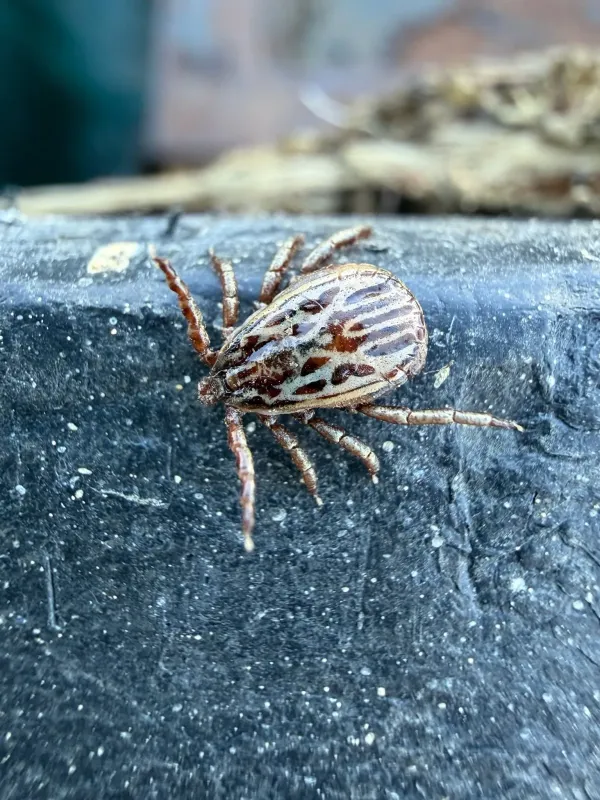
Morphologically, adults exhibit a reddish-brown body with a distinctive pale, ornate pattern on the dorsal shield. The mouthparts are specifically adapted to attach firmly to the host's skin for long-duration feeding.
The most unique aspect of Dermacentor albipictus is its one-host life cycle. Unlike many other tick species, all developmental stages — larva, nymph, and adult — occur on the same individual host, reducing environmental exposure.
Biology is strictly seasonal. The species is widespread in North America, where it thrives in forested habitats, exploiting the thick coats of large mammals to survive cold winters.
Systematically, this tick is recognized as a significant biological stressor for wildlife populations, and in some regions, it has been observed to occasionally infest cattle and horses.
What it damages
Primary hosts include moose, elk, and deer. While it can infest domestic livestock, the economic damage is primarily seen in its impact on animal behavior and physical condition due to heavy tick loads.
The damage stems from constant physical irritation caused by thousands of ticks feeding simultaneously. This induces severe itching, leading the animal to groom excessively by rubbing against trees and shrubs.
This persistent rubbing results in significant hair loss (alopecia), exposing the skin to freezing winter temperatures. In extreme cases, this leads to fatal hypothermia, particularly in young or weakened animals.
Secondary infections often develop in skin lesions caused by scratching. These infections create open sores, increasing the physiological burden on the host's immune system.
For agricultural producers, the presence of these ticks leads to degraded hide quality, reduced weight gain, and diminished overall health in affected livestock, necessitating proactive management.
When it appears
The life cycle begins in the fall, when larvae, hatched from eggs in the forest litter, climb onto vegetation to wait for a passing host. This host-seeking behavior peaks between September and October.
Once the larvae attach to the host, they begin feeding and undergo molting into nymphs and subsequently into adults without ever leaving the host animal. This continuity is a key survival strategy in harsh winters.
The adult stage, including mating and rapid engorgement, occurs during the mid-winter months (December to February). During this time, the ticks extract significant amounts of blood.
By late winter or early spring, adult females drop off the host and retreat into the leaf litter. They deposit large egg masses, which remain dormant throughout the summer until the next cycle begins.
Seasonal dynamics are critical: the impact on the host peaks in late winter, when environmental stresses are highest and the physiological reserves of the animals are depleted.
Signs of infestation
The most prominent sign of infestation is atypical animal behavior, specifically the constant need to scratch. Observers often notice "rubbing trees" or posts with stripped bark and hair accumulation.
Visual inspection reveals thinning hair and large patches of bare skin, especially along the neck, shoulders, and flanks. The coat appears matted, dull, and unkempt due to constant grooming and parasite secretions.
Skin lesions, open wounds, and scabs are frequently visible. In severe cases, inflammation and swelling of the dermis are present in areas where tick clusters are most dense.
Animals appear lethargic, weak, and may exhibit signs of anemia due to the heavy blood loss. Young individuals often show stunted growth and poor body condition in late winter.
- Excessive rubbing against trees and fences.
- Visible hair loss and bald patches.
- Inflamed skin sores and scabs.
- Significant weight loss during winter.
Control measures
Managing the winter tick is challenging due to its life cycle on wildlife. The primary strategy focuses on minimizing contact between domestic livestock and endemic tick-infested forest habitats.
Application of acaricides is the standard approach for livestock protection. It is crucial to apply these treatments before the peak questing season of the larvae in the autumn to prevent initial attachment.
Monitoring herd health during winter is essential for detecting early signs of infestation. If ticks are identified, individual treatment with approved topical acaricides or antiparasitic agents is required.
Pasture management, such as clearing dense brush and maintaining optimal stocking rates, can help reduce the density of tick populations in the environment by limiting favorable microclimates.
Using acaricidal ear tags and systemic treatments provides long-lasting protection. Quarantining new animals introduced to the herd is a vital step in preventing the spread of the parasite.
Taxonomy
- Latin name
- Dermacentor albipictus
- Family
- Ixodidae
- EPPO code
- DERCAL
Discussion
No discussions yet — be the first.