
Dermacentor tick
Dermacentor
Description
How to identify
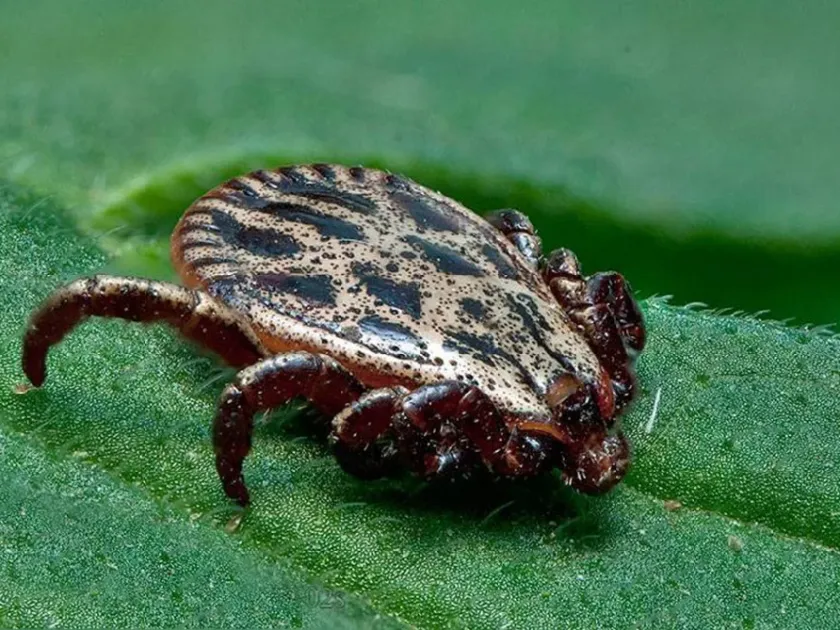
The genus Dermacentor belongs to the family Ixodidae, commonly known as hard ticks. These ticks are recognized by the characteristic ornate, marble-like enamel patterns found on the dorsal shield of the adults.
Adult ticks reach significant sizes, particularly females, which swell considerably after feeding on the host's blood for an extended period.
Their life cycle is three-host based, meaning the tick requires three different animal hosts throughout its development from larva to nymph and finally to the adult stage.
The mouthparts are highly developed and robust, allowing them to remain securely anchored to the host's skin during the entire attachment and feeding process.
These organisms are remarkably resilient, capable of surviving harsh environmental conditions by sheltering in leaf litter, soil, or dense vegetation.
What it damages
While Dermacentor ticks do not directly feed on crops, they represent a major threat to the livestock industry. They parasitize cattle, sheep, horses, and various wild animals.
The primary damage is caused by the depletion of blood, which leads to anemia, weight loss, and reduced productivity in infested livestock.
These ticks are major vectors for various blood-borne pathogens, including protozoan parasites that cause severe diseases like piroplasmosis.
Outbreaks of tick-borne diseases can result in significant mortality rates among young animals and cause substantial economic losses for agricultural businesses.
Additionally, the feeding sites on the skin often become inflamed or infected, lowering the overall quality of hides and impacting animal welfare.
When it appears
The peak activity for adult Dermacentor ticks generally occurs during the spring months, as rising temperatures trigger their emergence from winter dormancy.
A second, typically smaller peak of activity is observed in the early autumn when the next generation of adults becomes ready for host-seeking.
The development of larvae and nymphs is highly dependent on humidity levels; periods of heavy summer rainfall often lead to increased tick populations.
Ticks show higher host-seeking activity on sunny days immediately following rainfall, as the moisture provides the optimal conditions for their survival on vegetation.
In regions with mild winters, the survival rate of the tick population increases, often leading to more severe infestations in the following grazing season.
Signs of infestation
The most reliable sign of a Dermacentor infestation is the direct discovery of ticks attached to the skin of livestock during regular health inspections.
Animals often show signs of irritation, such as constant scratching, rubbing against objects, or restlessness due to the discomfort caused by tick bites.
In cases of tick-borne infection, symptoms like lethargy, fever, loss of appetite, and changes in mucous membrane coloration are frequently observed.
A sudden decline in milk yield or growth rates without changes in feed quality can serve as an indirect indicator of a significant tick burden on the pasture.
Identifying adult ticks on vegetation using white cloth drags across pasture edges helps in assessing the density of the tick population.
Control measures
The cornerstone of control is the regular application of acaricides to livestock to prevent attachment and kill ticks already present on the host.
Agricultural management involves regular mowing of high grass on pastures, which reduces the moisture and humidity levels that are necessary for tick survival.
Implementing rotational grazing schedules prevents cattle from spending too much time in high-risk areas, significantly lowering the exposure rate.
Clearing bushes, shrubs, and dense weeds around pastures limits the habitat available for ticks to survive and reproduce during the off-host stages.
- Using repellent ear tags or topical applications on animals.
- Quarantining and treating newly introduced livestock.
- Biological control through natural predators where applicable.
Taxonomy
- Latin name
- Dermacentor
- Family
- Ixodidae
- EPPO code
- DERCSP
Discussion
No discussions yet — be the first.