
Demetrias atricapillus
Demetrias atricapillus
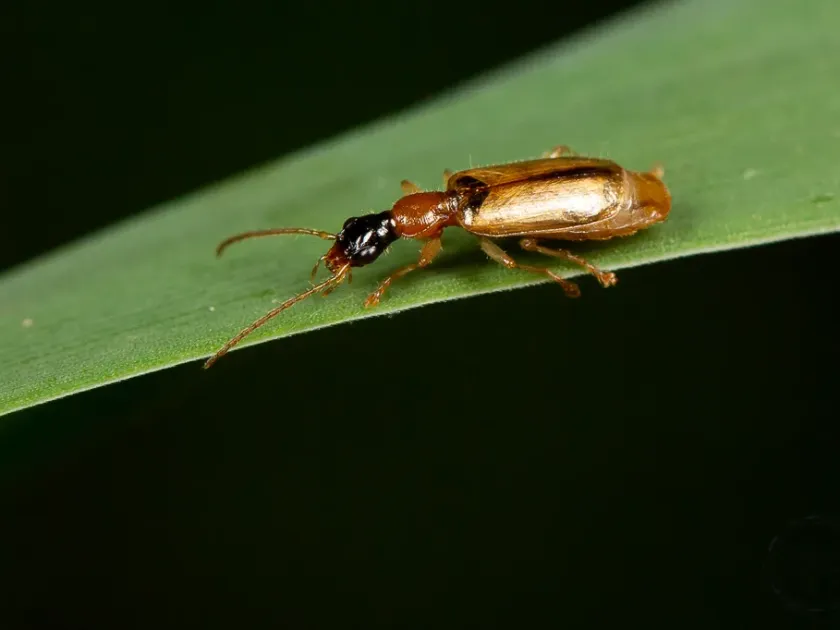
Description
How to identify
Demetrias atricapillus is a species of ground beetle (Carabidae) which is known to exhibit phytophagous behavior, unlike many other predatory carabids.
The adult beetle is small, typically measuring between 4 and 5.5 millimeters in length, making it a subtle but significant pest in cereal fields.
Its body coloration is generally yellowish-brown, but it is easily recognized by the dark or blackish spot located on the posterior part of the elytra.
The head of the beetle also displays dark pigmentation, providing a sharp contrast to the lighter thorax and abdomen structures.
Larvae are elongated and possess the characteristic morphological traits of carabid larvae, adapted for survival in soil environments.
What it damages
This beetle is primarily recognized for its damage to cereal crops, such as wheat and barley, during the grain filling and ripening stages.
Adults feed on the developing grains, hollowing out the soft endosperm during the milk and dough stages of grain development.
By consuming parts of the grain, the pest reduces both the yield weight and the overall quality of the harvested grain crop.
Wild grasses often serve as alternative hosts, allowing the beetle to maintain its population density even when crops are not present.
High infestation levels can lead to significant localized crop damage, requiring careful monitoring during the sensitive growth stages of cereals.
When it appears
The activity of these beetles is closely tied to the growing season of cereal crops, with peak presence occurring during the summer months.
The life cycle encompasses egg, larval, pupal, and adult stages, with overwintering occurring mainly as adults in soil or crop residues.
Emergence from overwintering sites happens in the spring as temperatures increase, followed by movement into agricultural fields.
The most critical period for crops is June and July, when the beetles actively feed on the ripening heads of wheat and barley.
Following the feeding period, adults prepare for hibernation, seeking shelter in soil layers or vegetation debris to survive the winter.
Signs of infestation
The most reliable sign of an infestation is the presence of the beetles themselves when inspecting the ears of grain in the morning.
Damage is characterized by irregular holes and missing portions of the grain, while the surrounding glumes often remain intact.
During crop scouting, observers may notice partially empty or shriveled grains within the spikelets, indicating recent pest activity.
The presence of beetle excrement near the damaged grains is a strong indicator that the damage was caused by this specific species.
General yellowing or premature wilting of specific parts of the ear can sometimes indicate localized feeding damage by a group of beetles.
Control measures
Deep autumn plowing is a highly effective cultural practice to disrupt the overwintering sites of the beetles in the soil.
Maintaining clean field borders by removing weeds reduces the reservoir populations that allow the beetles to thrive between seasons.
If economic thresholds are exceeded, the application of appropriate systemic insecticides can prevent significant yield loss.
Regular scouting using sweep nets is essential to detect early arrivals and assess the necessity of intervention measures.
Crop rotation and selecting resistant varieties or optimal planting times are recommended as part of an integrated pest management strategy.
Taxonomy
- Latin name
- Demetrias atricapillus
- Order
- Coleoptera (beetles)
- Family
- Carabidae
- EPPO code
- DEMEAT
Discussion
No discussions yet — be the first.