
Demetrias
Demetrias
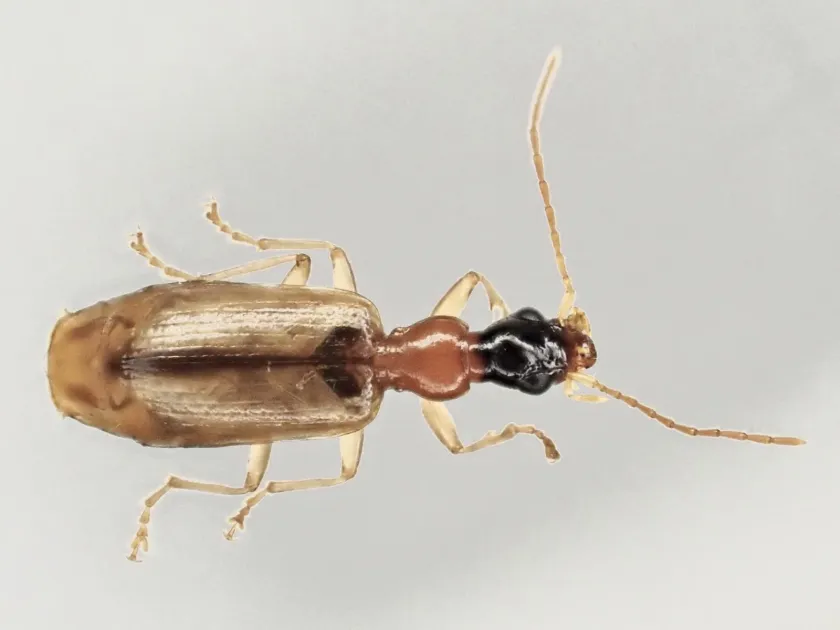
Description
How to identify
The genus Demetrias consists of small beetles belonging to the ground beetle family (Carabidae). They are typically elongated with a flattened body structure.
These insects often exhibit a yellowish-brown coloration with darker patterns on their elytra, which provides effective camouflage in cereal field environments.
The life cycle follows complete metamorphosis, passing through egg, larval, pupal, and adult stages, with adults being the most easily identified members of the population.
They are primarily nocturnal and highly mobile, often hiding deep within the whorls of grass leaves or in soil crevices during daylight hours.
Their morphological adaptations, such as specialized tarsal structures, allow them to navigate efficiently within the narrow spaces of host plants.
What it damages
Demetrias beetles primarily infest cereal crops, including wheat, barley, rye, and oats, by feeding on the tender tissues of young plants.
Adults consume leaf tissue, creating irregular holes and lesions that can weaken the plant and interfere with normal photosynthetic activity.
While often considered beneficial predators in other contexts, in dense crop stands, they can cause economic damage to seedlings, especially during the tillering stage.
Larval stages may also cause minor damage, although their primary impact is often overshadowed by the direct feeding of the adult population on foliage.
Significant infestations lead to thinning of the stand and delayed plant development, which can ultimately result in lower yields if not controlled.
When it appears
Adults typically become active in early spring as temperatures rise, emerging from overwintering sites in soil or under plant debris to search for host plants.
The peak activity period usually coincides with the critical growth stages of cereals, such as germination and early tillering.
The reproduction and population growth are strongly influenced by local climatic conditions, with moisture levels being a primary factor for developmental success.
Overwintering occurs in the adult stage, typically in protected areas such as field edges, ditches, or under thick layers of organic mulch.
During late summer and autumn, a second peak of activity may occur depending on weather patterns and the availability of winter cereal crops.
Signs of infestation
The most visible signs of infestation are small, consumed areas on leaf surfaces, often accompanied by yellowing or necrosis of the surrounding tissue.
Observing the base of the plant or the leaf sheaths during the evening may reveal the presence of the beetles as they become more active.
Disturbed plant growth and irregular patches of stunted cereals within a field often point to a localized concentration of these pests.
Fecal matter and signs of chewing on the inner leaves are diagnostic features that can be confirmed through careful inspection of the plant architecture.
Using sweep nets or sticky traps is an effective method for monitoring and quantifying the beetle population density during the growing season.
Control measures
Integrated pest management (IPM) for Demetrias focuses on cultural practices that minimize the beetle's survival and reproductive success in the field.
Field sanitation, including the destruction of crop residues and effective weed control, reduces the available habitat for overwintering and development.
Chemical control is advised only when pest levels exceed economic thresholds, utilizing registered insecticides that effectively target ground-dwelling beetles.
- Use of systemic seed treatments.
- Timely cultivation to disrupt beetle life cycles.
- Monitoring population spikes with pheromone or light traps.
Proper timing of insecticide applications ensures maximum protection of seedlings while minimizing the impact on non-target beneficial insect populations.
Taxonomy
- Latin name
- Demetrias
- Order
- Coleoptera (beetles)
- Family
- Carabidae
- EPPO code
- DEMESP
Discussion
No discussions yet — be the first.