
Dasysyrphus venustus
Dasysyrphus venustus
Description
How to identify
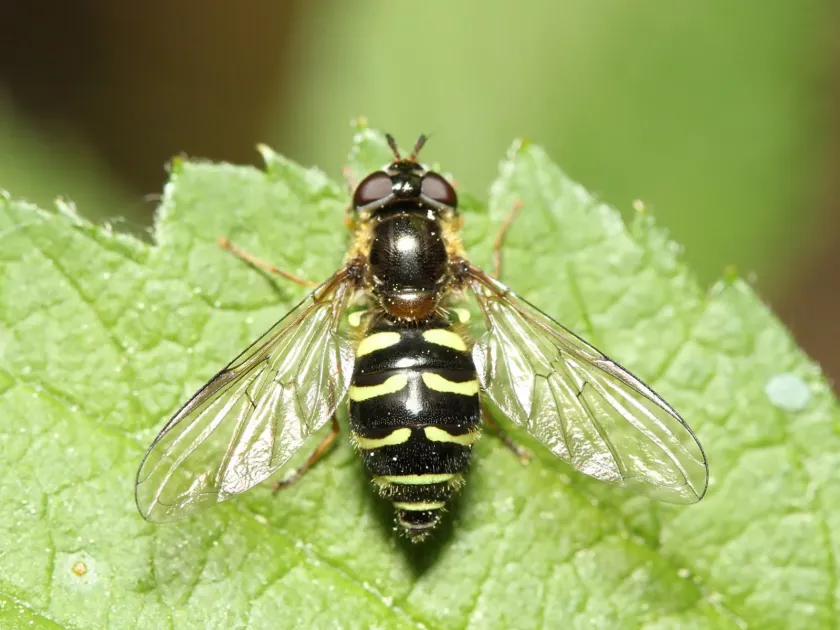
Dasysyrphus venustus is a species of hoverfly belonging to the family Syrphidae, order Diptera. Adult flies are characterized by their wasp-like appearance, featuring distinct yellow abdominal bands and dense body hair that provides protection and mimics stinging insects.
The head of the adult is dominated by large compound eyes, which are particularly prominent in males. They possess transparent wings with complex venation patterns typical for the Syrphinae subfamily, enabling efficient flight and hovering near floral resources.
The larvae are typically legless and elongated, ranging in color from pale green to brownish. This coloration provides effective camouflage against various surfaces, such as leaves and branches, where they actively search for prey.
The life cycle encompasses four main stages: egg, larva, pupa, and adult. The development rate is highly dependent on ambient temperatures and the availability of aphid colonies, which serve as the primary food source for the larval stage.
Understanding the developmental phases is crucial for integrated pest management, as it helps determine the optimal timing for monitoring and potential interventions in an orchard or agricultural setting.
What it damages
While often considered beneficial due to their predatory role, Dasysyrphus venustus can occasionally become a concern in agricultural settings. When aphid populations are depleted, larvae may inadvertently damage tender plant tissues while searching for sustenance.
Primary crops affected include fruit trees and various berry shrubs. The presence of larvae is usually linked to high concentrations of aphids, which makes it difficult to separate the damage caused by the prey and the predatory insect itself.
Signs of potential infestation include curled foliage, stunted shoot growth, and general stress symptoms in young plant tissues. Such damage is usually localized and varies in intensity depending on the local population density of the hoverfly.
In high-density scenarios, the feeding activity may lead to aesthetic and physiological impacts on crops. It is vital to assess the balance between the pest-control service provided by the larvae and the potential damage they inflict under specific conditions.
Economic assessments indicate that while direct crop loss from this species is rare, its influence on the overall ecosystem stability in intensive agriculture remains a subject of ongoing study for agricultural specialists.
Control measures
Management strategies for Dasysyrphus venustus emphasize maintaining biological diversity to ensure natural control. Avoiding the broad-spectrum application of insecticides is paramount to preserving the populations of these natural predators.
Integrated Pest Management (IPM) practices focus on using selective pesticides that target specific pests without harming beneficial insects like hoverflies. Biological control measures are preferred to maintain a stable balance within the field.
Enhancing the agricultural landscape by planting nectar-rich flower strips can attract and sustain adult hoverflies. This approach encourages natural population regulation and reduces the necessity for chemical inputs.
Monitoring is a critical component of control; observing the ratio between aphids and hoverfly larvae allows for informed decision-making. Interventions should only be considered if the threshold for crop damage is clearly exceeded.
- Promote biodiversity through nectar-producing cover crops.
- Prioritize selective insecticides over broad-spectrum products.
- Implement regular monitoring to assess pest-predator dynamics.
Taxonomy
- Latin name
- Dasysyrphus venustus
- Order
- Diptera (flies)
- Family
- Syrphidae
- EPPO code
- SYRPAR
Discussion
No discussions yet — be the first.