
Dasysyrphus
Dasysyrphus
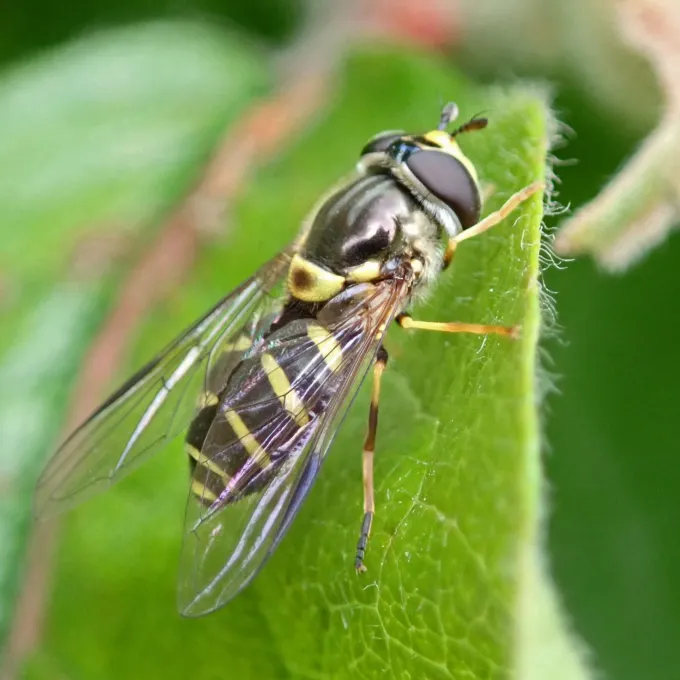
Description
How to identify
Dasysyrphus is a genus of hoverflies belonging to the family Syrphidae, order Diptera. Adults are famous for their mimicry, resembling wasps or bees to deter potential predators.
The key characteristic of this genus is the dense hair covering the body, which gives the insect a fuzzy appearance, distinguishing it from many other syrphid genera.
The larvae are typically elongated and slightly flattened, often displaying green or yellowish shades that provide excellent camouflage against plant surfaces.
Unlike adult flies, the larvae are legless and possess specialized mouthparts designed to grasp and drain the fluids from their prey.
Accurate identification of individual species within this genus often requires microscopic examination of structural features, particularly the genitalia of males.
What it damages
Dasysyrphus is not a plant pest; rather, it is a highly beneficial predator that plays a crucial role in integrated pest management systems.
The primary food source for the larvae is aphids, which are destructive pests that weaken plants by sucking their sap and transmitting viral diseases.
During its larval development, a single individual can consume hundreds of aphids, providing a significant natural reduction of pest populations in agricultural settings.
Adult flies are harmless to crops, as they focus exclusively on nectar and pollen, making them efficient pollinators in gardens, orchards, and agricultural fields.
By protecting these insects, growers can significantly reduce their reliance on chemical insecticides, fostering a healthier and more balanced ecosystem.
When it appears
The activity cycle of Dasysyrphus begins in early spring, as soon as the temperature allows for the emergence of adults and the availability of early-flowering plants.
Throughout the season, several generations may develop, with the timing of their life stages closely synchronized with the population growth of aphids.
Females are highly strategic, laying eggs in close proximity to aphid colonies to ensure that larvae have immediate access to food upon hatching.
The pupal stage typically occurs in protected environments, such as the upper layer of soil or within leaf litter, providing shelter from environmental stressors.
As temperatures begin to drop in late autumn, the insects enter overwintering, usually as pupae, preparing to emerge again when conditions improve.
Signs of infestation
The presence of Dasysyrphus larvae is indicated by their active hunting behavior within aphid-infested areas on leaves or succulent stems of host plants.
Gardeners may observe the larvae moving slowly among the aphids, capturing them and leaving behind small, empty, collapsed exoskeletons of their prey.
Another sign of their presence is the sight of adult flies hovering perfectly still in mid-air near flowers, a classic behavioral trait of the Syrphidae family.
A reduction in aphid density in localized patches without human intervention is a strong indicator of successful predation by these beneficial insects.
The absence of any damage to the host plant itself confirms that the organism is predatory rather than phytophagous, distinguishing it from common plant pests.
Control measures
There is no need for control measures against Dasysyrphus; on the contrary, management practices should be focused on the conservation and support of this species.
To attract and maintain these beneficial hoverflies, it is recommended to plant various nectar-producing flowers, such as dill, coriander, or wildflowers, around the farm.
Reducing the application of broad-spectrum pesticides is essential, as these chemicals are often as lethal to beneficial predators as they are to the pests.
Providing undisturbed areas, such as hedgerows or wild edges, creates critical overwintering habitats that support the local survival of these predators.
Adopting an integrated pest management approach allows natural populations of Dasysyrphus to thrive, creating a sustainable defense against seasonal aphid outbreaks.
Taxonomy
- Latin name
- Dasysyrphus
- Order
- Diptera (flies)
- Family
- Syrphidae
- EPPO code
- DASSSP
Discussion
No discussions yet — be the first.