
Dasysrphus eggeri
Dasysrphus eggeri
Description
How to identify
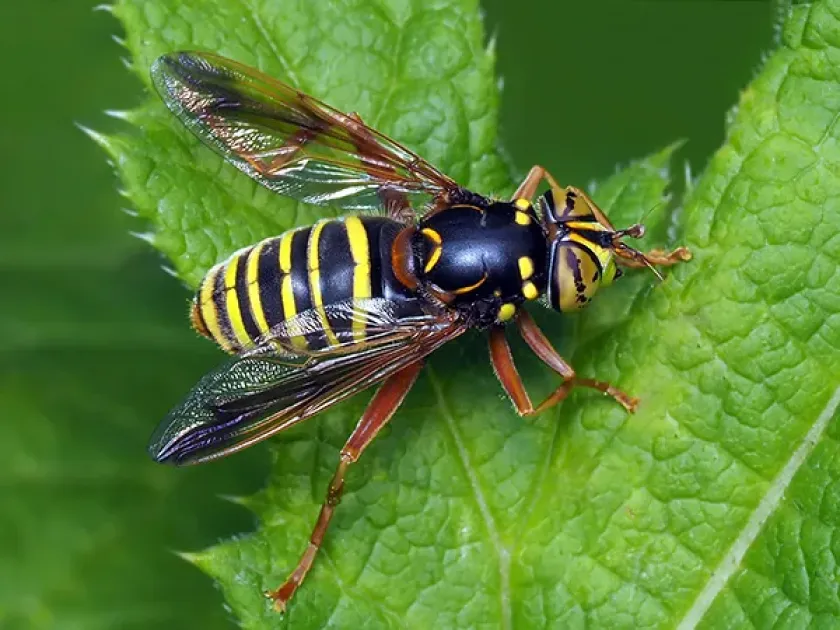
Dasysrphus eggeri is a species of hoverfly belonging to the family Syrphidae, order Diptera. Adults are known for their mimicry, often resembling bees or wasps to deter potential predators.
The adult body is covered with dense setae, and the abdomen usually features distinctive yellow and black transverse stripes, which are characteristic of this genus.
The larvae are legless, maggot-like creatures with a wrinkled appearance, often found blending in with the foliage or bark where they reside during their developmental stages.
Like all Syrphids, this species undergoes complete metamorphosis including the egg, larval, pupal, and adult stages, each playing a role in the insect's life cycle.
Identification often requires careful observation of the abdominal markings and the presence of fine hairs on the body, which distinguish Dasysrphus eggeri from other similar hoverfly species.
What it damages
Although adults are primarily recognized as pollinators and natural enemies of aphids, high densities of larvae may occasionally cause incidental damage to delicate plant tissues.
The presence of large numbers of these insects can lead to the spreading of plant pathogens if the adults carry spores or bacteria between damaged and healthy plant parts.
Young, succulent shoots are the most vulnerable parts of the plant, as larvae might inadvertently pierce the epidermis while foraging for their aphid prey.
Common host plants include various ornamental shrubs, fruit trees, and vegetables where aphid colonies tend to establish and grow significantly.
In most agricultural settings, the impact is considered minor, and the species is often regarded as a beneficial insect rather than a primary agricultural pest.
Control measures
Effective management focuses on Integrated Pest Management (IPM) strategies, prioritizing the preservation of natural predators and avoiding broad-spectrum pesticides.
To encourage the presence of these beneficial hoverflies, farmers should plant nectar-rich flowering borders that provide food sources for the adult insects.
When pest pressure becomes critical, biological control agents should be favored over synthetic chemicals to maintain the ecological balance of the garden or farm.
Proper cultural practices, including sanitation and appropriate pruning, ensure that plants are less prone to heavy aphid infestations, thereby reducing the attractant for hoverflies.
- Implementation of floral strips to support hoverfly populations.
- Selective use of biological insecticides for targeted pest control.
- Regular field scouting to assess beneficial insect density.
Taxonomy
- Latin name
- Dasysrphus eggeri
- Order
- Diptera (flies)
- Family
- Syrphidae
- EPPO code
- DASSEG
Discussion
No discussions yet — be the first.