
Blue blowfly
Cynomya
Description
How to identify
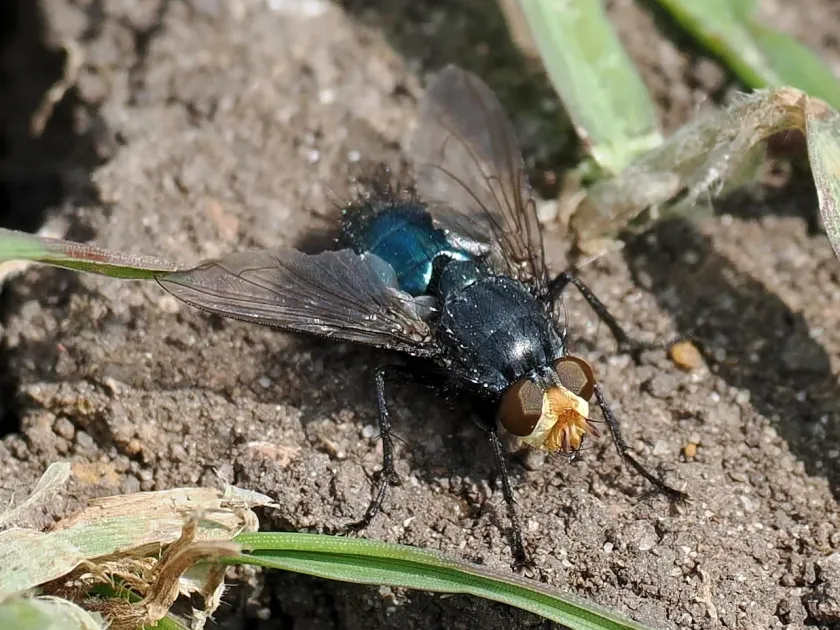
The blue blowfly (Cynomya mortuorum) is a member of the Calliphoridae family, characterized by its distinctive metallic blue sheen on the abdomen and head.
These flies usually measure between 10 and 15 mm in length and possess strong, bristly bodies that help them navigate in various environments.
As members of the order Diptera, they undergo complete metamorphosis, which contributes to their high survival rate in agricultural landscapes.
The adult fly is highly mobile and possesses an excellent sense of smell to detect decaying organic matter, which is their primary breeding ground.
The larval stage is characterized by a creamy-white appearance and rapid feeding habits, essential for their survival in nutrient-rich media.
What it damages
The blue blowfly primarily acts as a vector for various pathogens, potentially contaminating vegetable crops and stored produce.
While they do not feed directly on healthy plant tissue, they can damage fruits by laying eggs on surfaces that have mechanical injuries or splits.
Larval infestation inside fruit causes rapid tissue breakdown and decay, rendering the crop unmarketable and susceptible to further microbial infections.
Beyond crop damage, these flies are known to cause myiasis in livestock, which can indirectly impact farm productivity and management.
The persistent presence of adults around storage facilities increases the risk of product contamination and compromise of sanitary standards.
When it appears
The seasonal activity of the blue blowfly starts in early spring, as temperatures begin to climb above the threshold required for metabolic activity.
Summer months provide the most favorable conditions for population explosions, characterized by rapid generation turnovers due to high temperatures.
Multiple generations occur within a single growing season, ensuring that the pest is a constant concern for farmers throughout the warmer months.
As autumn progresses, adult flies gradually reduce their activity levels, seeking protected areas to overwinter until the next season begins.
Environmental factors like relative humidity and rainfall patterns significantly modulate the speed of their development from egg to adult.
Signs of infestation
The most visible sign of an infestation is the presence of small, white egg clusters deposited on organic waste or damaged plant material.
A foul odor emanating from fruit piles or compost heaps often signals the presence of feeding larvae within the decomposing material.
Mass congregations of adult flies in areas associated with manure storage or waste management are clear indicators of high pest density.
The presence of fecal spots on storage surfaces and structures is another common indication of a large fly population in the vicinity.
Soft, discolored, and necrotic patches on fruits indicate potential egg-laying sites and subsequent larval development.
Control measures
Effective sanitation remains the primary defense; removing organic waste and maintaining clean storage facilities minimizes breeding sites.
The application of approved insecticides in areas frequented by adult flies is a successful strategy to reduce their overall population numbers.
Installing fine-mesh screens on ventilation openings of warehouses prevents the entry of flies into areas where produce is kept.
Using light-based or sticky traps can serve as an effective monitoring tool and help decrease the number of adults in sensitive areas.
Adopting rigorous composting procedures, such as using covered bins, interrupts the life cycle of the blowfly and limits their reproductive success.
Taxonomy
- Latin name
- Cynomya
- Order
- Diptera (flies)
- Family
- Calliphoridae
- EPPO code
- CYNMSP
Discussion
No discussions yet — be the first.