
Green tiger beetle
Cylindera germanica
Description
How to identify
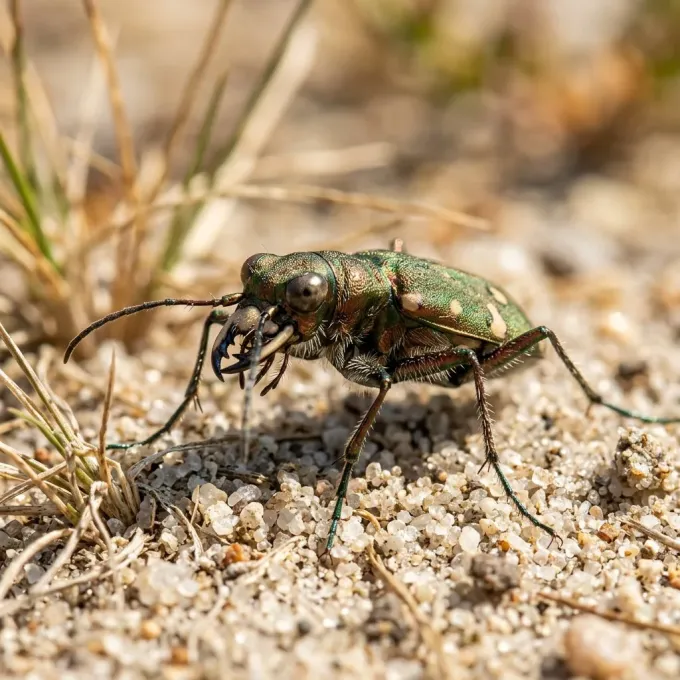
The green tiger beetle (Cylindera germanica) is a member of the ground beetle family (Carabidae) and the order Coleoptera. These beetles are relatively small, typically measuring between 8 and 11 millimeters in length.
They are characterized by a vibrant metallic green color, which serves as camouflage within tall grasses. Their wing covers (elytra) are marked with small light-colored spots, and their legs often exhibit a reddish or yellowish tint.
The beetle's head is relatively large and features powerful mandibles, which are specialized for predatory behavior. Their eyes are large and bulging, providing excellent vision for hunting prey on the ground.
The antennae are filiform and quite long, allowing them to detect vibrations and air currents. Adults are known for their extreme agility, capable of running quickly and taking short, sudden flights when disturbed.
The larvae possess a cylindrical body and a robust head with strong mouthparts used for digging tunnels in the soil. They are ambush predators that stay at the entrance of their burrows, waiting for unsuspecting prey.
What it damages
Both adults and larvae can potentially cause damage to crops. Larvae, living in the soil, often injure the root systems of young cereal plants, leading to stunted growth and nutrient uptake issues.
While adults are primarily carnivorous predators, they can cause secondary damage to agricultural crops when their natural prey population is scarce, occasionally nibbling on tender plant tissues.
Cereal crops like wheat, barley, and rye are the most frequent targets of their activity, especially in environments where the beetles have migrated from adjacent wild meadows.
The damage to the roots by larvae significantly weakens the plants, making them more susceptible to environmental stresses such as drought or secondary fungal infections.
Although they are generally considered beneficial as biological controllers of other pests, high densities of this beetle can result in economic losses in sensitive agricultural areas.
When it appears
The life cycle of the green tiger beetle begins in the spring, once the soil temperature is sufficient to trigger the activity of both the larvae and the emerging adults.
The peak period for adult activity, including mating and flying, occurs between late spring and early summer, when they are most visible on field surfaces.
Larvae remain active in the soil throughout the summer months, feeding and growing until they prepare for the subsequent stages of metamorphosis later in the season.
By autumn, the life cycle of the generation is typically completed, and young adults seek refuge in the soil or under debris to survive the winter months.
Monitoring for this pest is most successful during warm, sunny morning or evening hours, when the beetles are most active and prone to moving across the soil surface.
Signs of infestation
The primary indicator of a larval presence is the appearance of small, vertical, circular holes in the soil near the base of the stems, which serve as their predatory burrows.
Affected plants often appear stunted or wilted, and an inspection of the root zone may reveal signs of injury caused by the larvae feeding near the soil surface.
The presence of numerous adults rapidly running along the soil surface is a clear sign that the population density has increased, warranting a closer look at the crop health.
- Small vertical burrows in the soil.
- Wilting of young cereal seedlings.
- Visible damage to the base of stems.
- High activity of metallic-green beetles during the day.
Control measures
Deep plowing of the fields after the harvest is an effective agrotechnical measure, as it disrupts the larval tunnels and exposes them to adverse conditions and predators.
Implementing a diverse crop rotation scheme is highly recommended to break the life cycle of the beetle and prevent long-term population buildup in specific areas.
Maintaining clean field borders by removing weeds and tall grass reduces the habitats where these beetles thrive, effectively pushing them away from the cultivated crops.
In cases where the population exceeds the economic threshold, targeted application of approved insecticides may be necessary to protect the most vulnerable growth stages.
Encouraging natural predators, such as insectivorous birds and beneficial ground beetles, helps maintain the population at a manageable level without intensive chemical usage.
Taxonomy
- Latin name
- Cylindera germanica
- Order
- Coleoptera (beetles)
- Family
- Carabidae
- EPPO code
- KYLNGE
Discussion
No discussions yet — be the first.