
Cylindera beetle
Cylindera
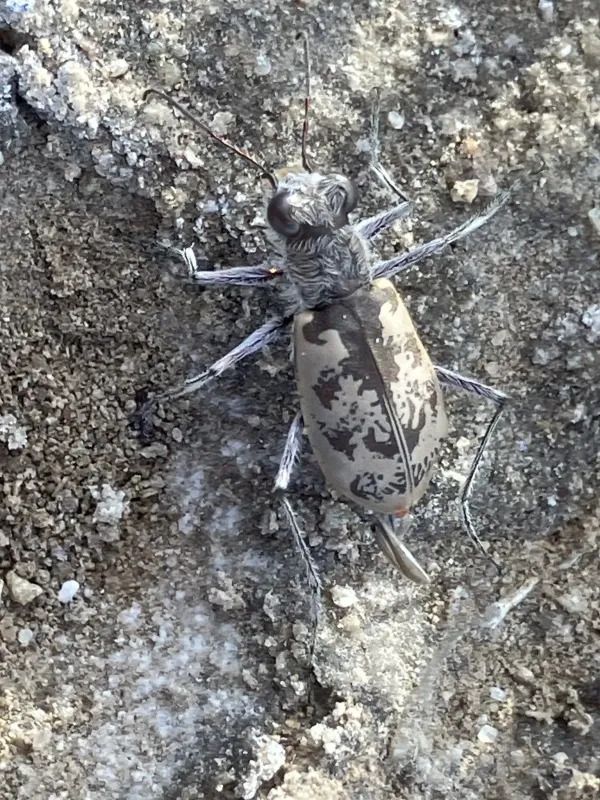
Description
How to identify
The Cylindera beetle belongs to the family Carabidae (ground beetles). These are small, predatory insects often referred to as tiger beetles, characterized by their elongated, cylindrical bodies and prominent, sickle-shaped mandibles.
Adult beetles are highly active, with acute visual senses that allow them to hunt on the open ground. They often display metallic, iridescent coloration, which serves as camouflage in the natural environment.
Larvae have a distinct morphology, living in vertical tunnels within the soil. They possess dorsal hooks on their abdomen, which anchor them within their burrows while they ambush passing prey.
The life cycle encompasses several stages: egg, three larval instars, pupa, and adult. Development is highly sensitive to soil moisture and temperature, dictating the timing of emergence.
While often beneficial as predators in an ecosystem, Cylindera populations can become pests in agroecosystems if their natural prey is scarce, leading them to feed on crop seedlings.
What it damages
Damage is primarily caused by larvae burrowing in the upper soil layers and adults feeding on the stems of young plants near the soil surface.
Crops most susceptible to damage include cereal grains, maize, and certain vegetables. Seedlings are most vulnerable during the emergence and early growth stages.
Adults may gnaw on the epidermis of young stems, leading to desiccation and reduced plant vigor, often resulting in patchy crop stands across a field.
Larvae damage the root system by feeding on the small rootlets, which reduces the plant's ability to absorb water and nutrients, especially under drought conditions.
- Damage to the root collar and seedling base.
- Reduction in stand density.
- Feeding on seeds before germination.
- Compromised plant structural integrity.
When it appears
Adult activity peaks during the warm season, generally from late spring through mid-summer, when soil conditions are optimal for both foraging and reproduction.
The insects are highly responsive to soil humidity; during excessively hot and dry periods, they retreat deeper into the soil to maintain their internal physiological balance.
Overwintering occurs in deeper soil horizons or under dense plant residue, ensuring the survival of both larvae and adults through colder months.
Emergence in the spring is synchronized with rising soil temperatures, marking the beginning of the active feeding and mating phase.
Consistent field monitoring during the growing season is essential to track population dynamics and evaluate the need for protective measures.
Signs of infestation
A primary sign of infestation is the presence of small, circular exit or entry holes on the soil surface, which correspond to the size of the larvae's tunnels.
Localized patches of wilting or stunted seedlings in a field often indicate high larval activity in the rhizosphere of the affected area.
Physical damage to stems, characterized by small, irregular gnaw marks, is a diagnostic sign of adult beetle feeding activity.
Increased sightings of adult tiger beetles in field rows during the day warrant immediate closer inspection of the young plants.
Unexpected yellowing of foliage in young plants, not attributable to drought or disease, should be investigated by examining the soil and root systems for larval presence.
Control measures
Effective soil management, such as thorough plowing and cultivation, physically disrupts the tunnels of the larvae and destroys their habitat.
Crop rotation remains a fundamental strategy to break the life cycle of the pest, preventing the buildup of large populations in a single location.
Seed treatment with high-quality insecticides provides a critical layer of protection for emerging seedlings, ensuring they survive the most vulnerable period of their growth.
Chemical control via foliar insecticide applications may be necessary if monitoring reveals that the pest density has exceeded the economic injury level.
Sanitation practices, such as removing dense weed cover and crop residues, reduce the available overwintering sites and inhibit the population growth of the Cylindera beetle.
Taxonomy
- Latin name
- Cylindera
- Order
- Coleoptera (beetles)
- Family
- Carabidae
- EPPO code
- KYLNSP
Discussion
No discussions yet — be the first.