
Italian snail-eating beetle
Cychrus italicus
Description
How to identify
The Italian snail-eating beetle (Cychrus italicus) belongs to the family Carabidae, commonly known as ground beetles. This species is highly specialized for a predatory lifestyle within damp environments.
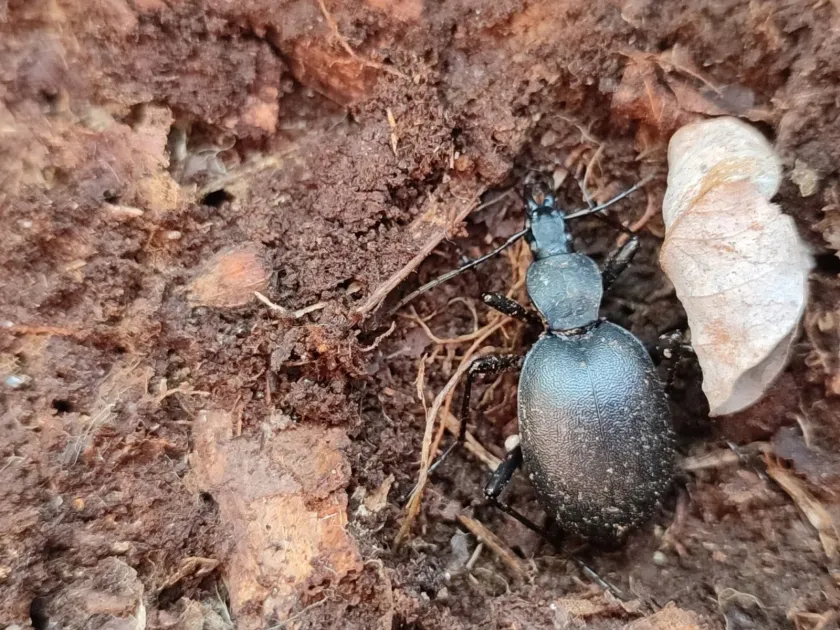
Morphologically, the beetle is characterized by an elongated body and a narrow head, which is an evolutionary adaptation for reaching deep into the shells of terrestrial snails and slugs.
The adults are typically black or dark brown with a granular texture on the elytra. They are nocturnal hunters, spending the daylight hours concealed in leaf litter, under stones, or in moist soil crevices.
Their distribution is closely tied to habitats with high humidity, such as woodlands, hedgerows, and well-mulched gardens. They are not known to consume any plant material at any stage of their life cycle.
As a predatory insect, it serves as a valuable biological control agent rather than a pest. Mistaking it for a threat often leads to counterproductive pest control efforts.
What it damages
Cychrus italicus causes no damage to crops. It is strictly a predator and does not possess mouthparts capable of damaging plant tissues, roots, or fruits.
Its primary diet consists of land mollusks, including various species of slugs and snails that are notorious garden pests. By preying on these organisms, the beetle actively protects plants from damage.
Unlike generalist predators, this beetle is highly adapted to extract mollusks from their shells, making it an efficient controller of snail populations that might otherwise devastate young seedlings.
Observations of plant damage in areas where these beetles are found are typically caused by the very slugs and snails that the beetles are hunting, not by the beetles themselves.
There are no recorded instances of this species harming commercial or ornamental crops, making it a welcome guest in any sustainable agricultural system.
Control measures
No control measures are necessary or recommended. In fact, farmers and gardeners should take active steps to conserve and protect this species to foster a balanced ecosystem.
The primary way to support these beneficial beetles is to minimize the use of broad-spectrum insecticides, which can significantly reduce the populations of natural predators.
Maintaining diverse habitats such as hedgerows, leaf piles, and areas with native vegetation provides the necessary microclimate for these beetles to thrive during the summer months.
When implementing slug control, prefer mechanical traps over chemical molluscicides to ensure the safety of beneficial ground beetles that share the same habitat.
By protecting Cychrus italicus, agriculturalists can leverage biological control to manage pest populations naturally, reducing the overall economic and environmental cost of crop protection.
Taxonomy
- Latin name
- Cychrus italicus
- Order
- Coleoptera (beetles)
- Family
- Carabidae
- EPPO code
- CYCHIT
Discussion
No discussions yet — be the first.