
Cychrus attenuatus
Cychrus attenuatus
Description
How to identify
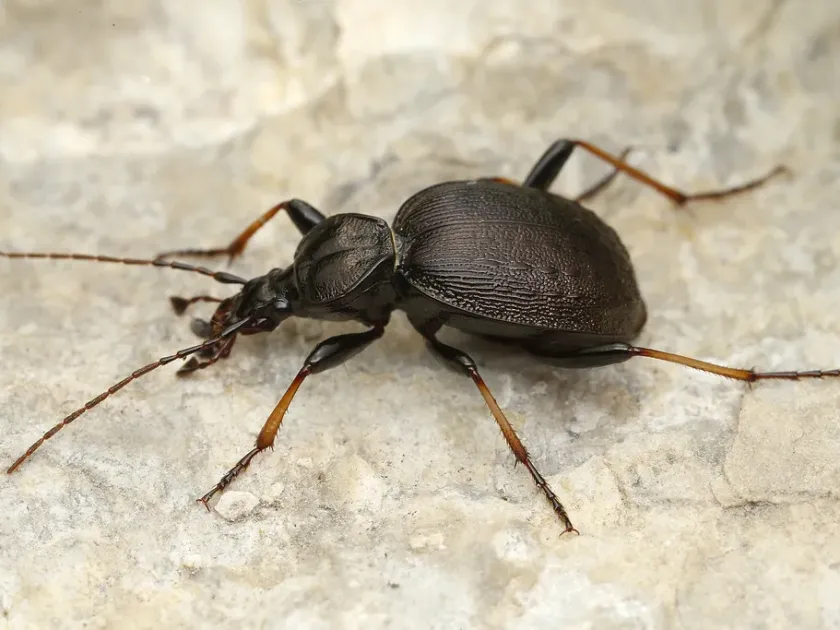
Cychrus attenuatus is a species of ground beetle belonging to the Carabidae family. It is morphologically adapted to a specialized diet, featuring an elongated body and a narrow head.
The beetle typically measures between 15 and 20 mm in length. Its coloration is usually dark brown or black, often with a subtle metallic or matte finish on the elytra.
The head is significantly elongated, a unique adaptation that allows the beetle to reach deep into the shells of terrestrial gastropods to extract their soft tissues.
Larvae are agile and possess a well-developed predatory instinct, typical for carabid larvae, with strong mouthparts designed for hunting and consumption of snails and slugs.
Adults are commonly found in damp forest soils, garden borders, and areas with high humidity, which are the natural habitats of their primary prey.
What it damages
Cychrus attenuatus is not a plant pest. In fact, it is considered a highly beneficial insect in both agricultural and horticultural settings due to its predatory habits.
It feeds extensively on snails and slugs, which are major pests that destroy seedlings, vegetables, and ornamental plants by grazing on their foliage and fruits.
By consuming these mollusks, the beetle serves as a crucial natural biocontrol agent, helping to manage slug populations without the need for chemical molluscicides.
There is no evidence of this beetle feeding on crops, roots, or seeds; therefore, it poses absolutely no threat to agricultural productivity or plant health.
Farmers and gardeners should encourage the presence of this predator to maintain a healthy ecological balance in their cultivation systems.
When it appears
The beetle is active from early spring to late autumn, mirroring the activity periods of its primary prey, which requires moist and cool conditions to survive.
Adults overwinter in protected spots, such as under logs, thick leaf litter, or deep within the soil profile, surviving the winter in a state of diapause.
The lifecycle includes complete metamorphosis: eggs are laid in moist soil, followed by active predatory larval stages and a pupation period in the ground.
Peak activity often coincides with periods of heavy rainfall, as the beetle relies on the movement and availability of slugs, which also prefer high-humidity conditions.
This beetle is well-adapted to stable microclimates, and its lifecycle is tightly integrated with the availability of organic matter and shelter in the environment.
Control measures
No control measures are required for this species. As a predator of slugs, it is a valuable asset to integrated pest management (IPM) strategies.
To protect and encourage this species, it is recommended to minimize the use of broad-spectrum insecticides that could inadvertently kill beneficial predatory beetles.
Maintaining soil health, providing organic mulch, and ensuring the presence of non-crop vegetation can significantly boost the local population of Cychrus attenuatus.
Adopting sustainable farming practices, such as reducing tillage, helps protect the overwintering sites and larval habitats of these useful predatory insects.
- Avoid non-selective insecticide use.
- Provide habitat diversity and leaf litter.
- Use IPM to manage slug populations naturally.
Taxonomy
- Latin name
- Cychrus attenuatus
- Order
- Coleoptera (beetles)
- Family
- Carabidae
- EPPO code
- CYCHAT
Discussion
No discussions yet — be the first.