
Cybocephalus nipponicus
Cybocephalus nipponicus
Description
How to identify
Cybocephalus nipponicus belongs to the family Cybocephalidae, commonly known as round-headed beetles, characterized by their distinct hemispherical body shape.
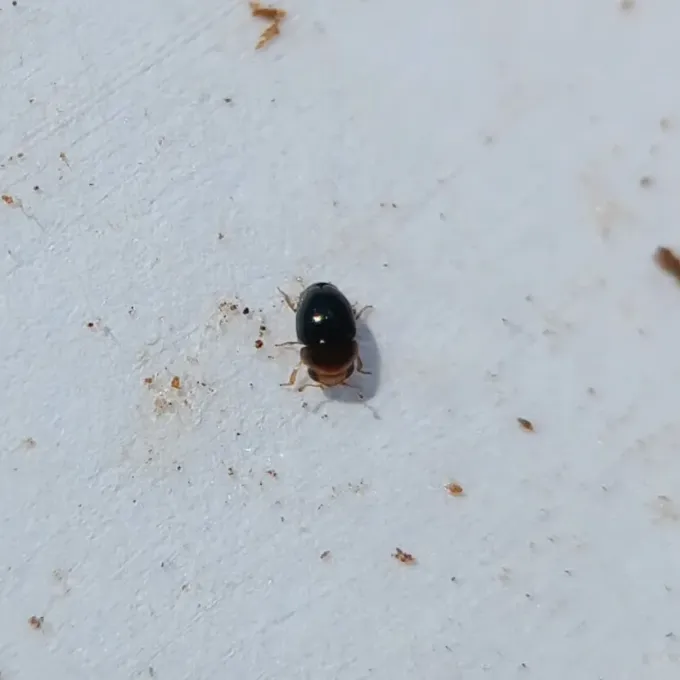
Adult beetles are very small, typically ranging from 1 to 2 mm in length, with a shiny black or dark brown exoskeleton that is highly convex.
Their head is deeply retracted into the prothorax, which is a key diagnostic feature for separating them from similar-looking species in the orchard.
Larvae are flattened and active, perfectly adapted for crawling under the protective covers (scales) of coccids, where they spend most of their developmental stage.
Field identification usually requires a hand lens, as their size and habit of remaining immobile make them difficult to spot on textured tree bark.
What it damages
This species is primarily a predator of scale insects (coccids), including the San Jose scale, which is a major pest for pome and stone fruit trees.
They infest apple, pear, peach, and various citrus species, as well as several ornamental woody plants that harbor high populations of scale insects.
While primarily predatory, high populations of these beetles in the absence of prey can cause minor feeding damage to young succulent plant tissues.
The damage is mostly indirect, as they disrupt the protective layer of the scales, which can lead to secondary infections or localized necrosis of the tree bark.
Economic damage is most significant in poorly managed orchards where scale insect populations are left unchecked, leading to tree decline.
When it appears
Adults emerge from their overwintering sites in early spring as soon as temperatures exceed 10°C, coinciding with the reactivation of host plants.
The population peaks during the summer months, following the life cycle of the scale insects, which serve as their primary food source.
They overwinter as adults, seeking refuge in deep bark crevices, under old fruit mummies, or in dry leaf litter at the base of the tree trunk.
Multiple generations occur throughout the growing season, depending on the availability of prey and favorable warm weather conditions.
In late autumn, the beetles move toward protected niches to enter a state of dormancy (diapause) to survive the winter months.
Signs of infestation
Presence is typically marked by the physical disturbance of scale insect colonies, which appear ragged or hollowed out under close inspection.
Small, shiny black beetles can often be observed scurrying over the bark or dropping off branches when the tree is disturbed.
Declining vigor of the tree, characterized by leaf yellowing and stunted shoot growth, is a sign of severe underlying infestations by coccids.
The presence of exuviae (cast skins) of the beetle larvae around scale colonies is a strong indicator of successful reproduction and active predation.
Localized weeping of sap or small bark cracks at the site of scale clusters often reveals the presence of both the pest and its associated predatory beetle.
Control measures
The best control strategy involves preserving existing populations of these beetles, as they serve as natural biological control agents against scale pests.
Chemical control should be avoided when these beetles are active, as broad-spectrum insecticides will inadvertently kill beneficial predatory species.
- Scrubbing rough bark to remove overwintering sites for pests.
- Pruning to maintain an open canopy, reducing humidity that favors scale.
- Applying horticultural oils in early spring to suppress scale insects.
- Monitoring populations using visual inspection and sticky traps.
- Implementing Integrated Pest Management (IPM) to balance predator populations.
By focusing on the health of the tree, growers can ensure that natural predator-prey dynamics are maintained without the need for intensive chemical applications.
Effective management requires a long-term approach to orchard hygiene, reducing the need for reactive pest control measures against scale insect complexes.
Taxonomy
- Latin name
- Cybocephalus nipponicus
- Order
- Coleoptera (beetles)
- Family
- Nitidulidae
- EPPO code
- CYBONP
Discussion
No discussions yet — be the first.