
Grain ground beetle
Curtonotus
Description
How to identify
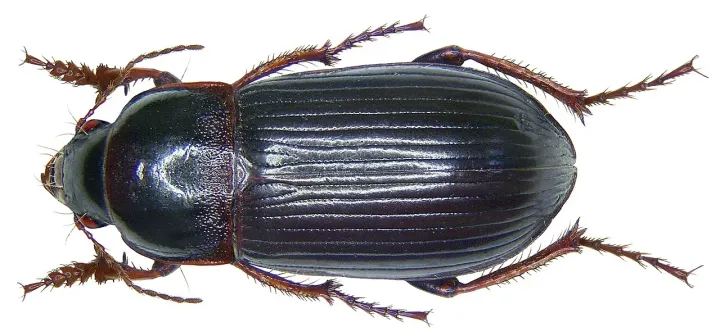
The grain ground beetle (genus Curtonotus) belongs to the Carabidae family of the Coleoptera order. These beetles are robust, typically measuring 12–16 mm in length, and are often dark or brownish in color.
The larvae are campodeiform with a well-developed head capsule and strong mandibles designed for chewing plant tissues. They live in the soil and are particularly active in the rhizosphere of cereal crops.
Adult beetles are nocturnal and are characterized by high mobility. They are opportunistic scavengers and predators but cause significant damage when focusing on agricultural crops during specific growth stages.
The lifecycle involves complete metamorphosis: egg, larva (three instars), pupa, and adult. Most species in this genus undergo one generation per year, which is closely synchronized with the cultivation of autumn-sown cereals.
Identification often requires careful inspection of the soil around damaged seedlings, as the larvae are highly elusive and prone to hiding deep within the soil profile during daylight hours.
##damage##This pest primarily threatens autumn-sown cereal crops, including winter wheat, rye, and barley. The damage occurs both during the seedling stage and later during grain filling.
Larvae are the most destructive stage, feeding on the emerging seedlings. They often gnaw through the stems or consume the leaves, leaving behind only the fibrous veins of the plants.
Adult beetles may climb onto the ears of the plants during the milk-ripe stage to consume the developing grains, which significantly reduces both the yield quantity and the quality of the harvested produce.
High larval populations can lead to thin crop stands and even complete crop failure in localized areas of the field, necessitating costly reseeding operations.
Furthermore, feeding damage creates entry points for various soil-borne pathogens, leading to secondary infections such as root rot, which further exacerbates the stress on the plants.
When it appears
Adult activity peaks in late summer and early autumn. This is when mating occurs, and females lay their eggs in the soil, favoring fields with crop residues or newly sown cereals.
Larvae hatch in the autumn and immediately begin feeding on the young seedlings of winter crops, which provides them with the energy required to survive the winter period.
Winter is spent in the larval stage, buried within the soil profile. The depth of hibernation depends on soil moisture and temperature, with larvae remaining dormant until spring.
As soon as temperatures rise in the spring, larvae resume feeding on the tillering cereal plants. This is a critical period for crop development, making the damage particularly severe.
Pupation occurs in the soil during late spring and early summer. The adults emerge soon after, completing the annual cycle before the next crop planting window opens.
Signs of infestation
The most evident sign of a grain ground beetle infestation is the appearance of bare patches or thinned areas in the field where seedlings have been destroyed.
- Leaves showing shredded or "combed" appearance with missing tissue between veins.
- Presence of larvae in the soil when digging around affected roots.
- Poor plant establishment and uneven growth across the field after winter.
- Wilting and yellowing of younger shoots during the early spring growth phase.
- Adult beetles found under soil clods or crop debris during nighttime monitoring.
Control measures
Integrated pest management (IPM) is essential for controlling this beetle. Crop rotation is the most effective preventative measure, as it disrupts the life cycle of the pest.
Deep plowing with moldboard inversion effectively destroys larvae and pupae within the soil, significantly reducing the population density for the upcoming season.
Seed treatment with systemic insecticides is a critical prophylactic measure. It provides the necessary protection for the fragile seedlings during the autumn period when larvae are most active.
In cases where the economic threshold is exceeded in the spring, chemical intervention using contact or stomach insecticides is necessary to suppress the larval population.
Regular field scouting and soil sampling in the autumn are crucial for predicting potential damage levels and making informed decisions regarding chemical application.
Taxonomy
- Latin name
- Curtonotus
- Order
- Coleoptera (beetles)
- Family
- Carabidae
- EPPO code
- CURNSP
Discussion
No discussions yet — be the first.