
Beech scale
Cryptococcus fagisuga
Description
How to identify
The Beech scale (Cryptococcus fagisuga) belongs to the order Hemiptera and the family Eriococcidae. The adult female is a sedentary insect, oval in shape, and measures approximately 0.5 to 1 mm in length.
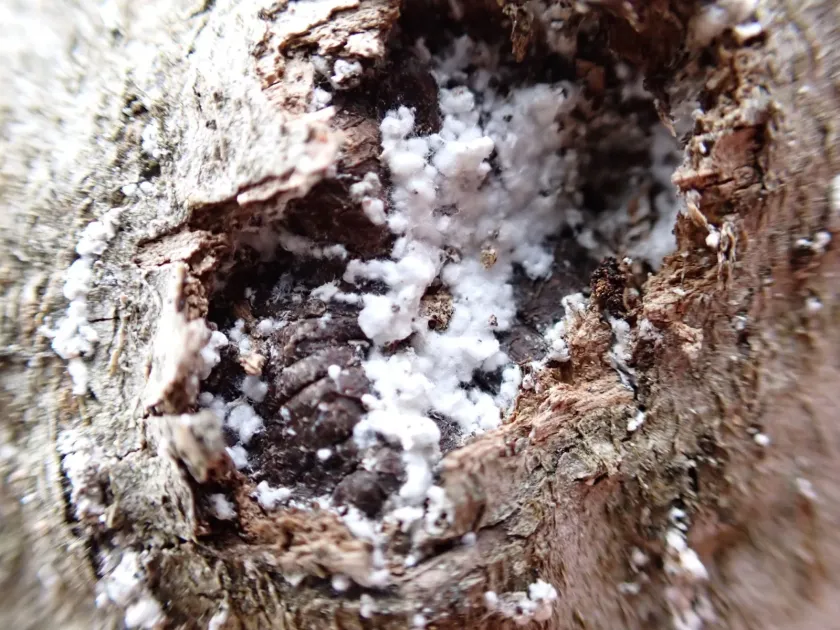
The insect's body is protected by a dense, white, waxy secretion that looks like cotton wool or felt. This distinctive white fluff makes colonies highly visible on the dark bark of beech trees.
Males are extremely rare, and reproduction is primarily parthenogenic. The first-instar nymphs are mobile, possess legs, and can crawl to new areas of the tree or be carried by the wind to neighboring trees.
Once settled, the nymphs lose their mobility, molt, and begin producing their characteristic waxy filaments. They spend their entire life cycle in a fixed position on the bark of the host tree.
This pest is widespread across Europe and North America, causing significant damage by stressing trees and facilitating secondary fungal infections.
What it damages
The primary host is the European beech (Fagus sylvatica). The insect prefers to settle in bark crevices, where the microclimate is ideal for the development of the colony.
By feeding on the sap, the scale insect injects toxic saliva into the tree's tissues. This causes cell death and the formation of necrotic areas, which eventually develop into deep cracks.
As colonies grow, the bark loses its elasticity and forms open sores. These wounds serve as entry points for pathogens, most notably the fungus Nectria coccinea.
The combined impact of the insect and the fungus is known as "beech bark disease." This condition can cause severe dieback and even mortality in beech stands.
Young trees are especially vulnerable, as heavy infestations can lead to rapid exhaustion and a total disruption of sap flow within the tree trunk.
When it appears
The life cycle of the Beech scale consists of one generation per year. Population growth begins in the spring following the winter dormancy period of the nymphs.
During the summer months (June and July), the mobile nymphs emerge to colonize new parts of the tree bark. This is the period when the infestation spreads most rapidly.
By autumn, the nymphs become sessile, feed intensively, and cover themselves with waxy threads, which provide protection against low winter temperatures.
Weather conditions significantly influence survival rates. A mild, humid autumn contributes to higher survival of the nymphs before the onset of winter.
Monitoring for this pest is most effective in spring or early summer, when the bright white waxy secretions are most apparent against the gray bark.
Signs of infestation
The most prominent sign of infestation is the appearance of white, woolly patches on the trunk and branches. These patches are clusters of waxy secretions covering the females.
If the waxy layer is removed, small yellowish insects can be found underneath. Infected bark often appears rougher and discolored compared to healthy surfaces.
In advanced cases, the trunk may exhibit dark, weeping spots, which indicate that the bark's integrity has been severely compromised and sap is leaking.
Yellowing of leaves, premature leaf drop, and the gradual dieback of the crown are classic symptoms of a severe infestation affecting the tree's health.
Peeling bark and visible necrotic lesions are signs of secondary fungal colonization, which is a lethal phase of the beech bark disease process.
Control measures
Controlling Beech scale in forestry settings is difficult due to the large scale of infestations and the insect's ability to hide in deep bark crevices.
For ornamental trees in parks and gardens, systemic insecticides can be applied. These are absorbed by the tree and kill the sap-sucking insects from within.
Mechanical cleaning of the bark to remove mosses and lichens is a useful preventative measure, as it eliminates potential hiding spots for the nymphs.
Maintaining healthy forest stands is crucial. Systematic sanitary thinning to remove heavily infested trees helps curb the spread of the pest to healthy ones.
Natural predators, such as ladybird beetles (coccinellids), play an important role in regulating the population density of Beech scale in balanced ecosystems.
Taxonomy
- Latin name
- Cryptococcus fagisuga
- Order
- Hemiptera (bugs, aphids, leafhoppers)
- Family
- Eriococcidae
- EPPO code
- CRYCFA
Discussion
No discussions yet — be the first.