
Creontiades signatus
Creontiades signatus
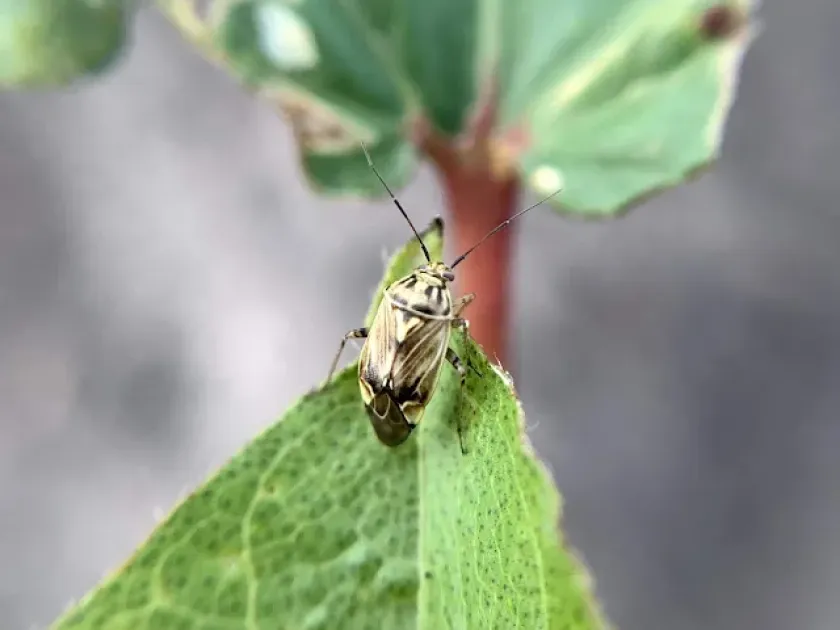
Description
How to identify
Creontiades signatus is a species of plant bug belonging to the family Miridae, order Hemiptera. These insects are characterized by their elongated bodies and relatively delicate appearance, typical of mirids.
Adults possess fully developed wings, facilitating efficient dispersal between fields. The body color is typically shades of yellow, brown, or green, providing excellent camouflage against host plant foliage.
The life cycle encompasses eggs, five nymphal instars, and the adult stage. Females use their ovipositors to insert eggs directly into the plant tissues, shielding them from environmental extremes.
Nymphs are smaller versions of the adults, wingless, and highly mobile. This stage is particularly damaging as they actively feed to fuel their rapid growth and development.
This species thrives in warm climates, frequently causing issues in greenhouse environments or field crops during the peak growing season where they can reproduce rapidly.
What it damages
This pest is a significant polyphage, impacting a variety of economically important agricultural crops. It is particularly notorious for causing damage to Solanaceous and Leguminous species.
Crops such as tomatoes, peppers, and various beans are primary targets. The bug also utilizes diverse weed species as alternative hosts, which supports survival between crop cycles.
By using its piercing-sucking mouthparts, the insect injects saliva containing enzymes into the plant tissue, which breaks down the cell structure to facilitate feeding.
The most severe damage occurs when the bug feeds on reproductive parts, including buds and flowers, often causing them to drop, which directly reduces fruit set and overall yield.
When feeding on developing fruit, the bug causes visible lesions, deformations, and corky areas, rendering the produce unmarketable in commercial settings.
Signs of infestation
Initial signs of infestation appear as minute, pale or necrotic stippling on the leaves, resulting from the bug’s feeding punctures in the epidermal tissue.
A classic indicator of high infestation levels is the premature abscission of buds and flowers, which is often misinterpreted as nutritional deficiency or moisture stress.
Developing fruits exhibit irregular growth, indentations, or hardened spots where the tissue was damaged during the fruit's early enlargement phase.
Stunted growth of apical shoots is observed in heavily infested plants, leading to weakened plant structure and reduced overall photosynthetic capacity.
Direct scouting of the underside of leaves and inside the growing tips, particularly during the early morning hours, often reveals the presence of both nymphs and adults.
Control measures
An effective management strategy relies on integrated pest management (IPM), starting with rigorous monitoring using yellow sticky traps to track adult migration.
Cultural practices should focus on weed control in and around production areas to minimize reservoir populations that may move into the main crop.
Biological control, including the release of predators like Orius species, has proven successful in reducing populations of Creontiades signatus in greenhouses.
Chemical control should be applied only as a last resort when populations reach economic injury levels, ensuring the use of selective products to preserve natural enemies.
Monitoring for insecticide resistance is essential if chemical control is used frequently, as many mirids have demonstrated the ability to develop tolerance to common classes of insecticides.
Taxonomy
- Latin name
- Creontiades signatus
- Order
- Hemiptera (bugs, aphids, leafhoppers)
- Family
- Miridae
- EPPO code
- CREOSI
Discussion
No discussions yet — be the first.