
Cossus suffuscus
Cossus suffuscus
Description
How to identify
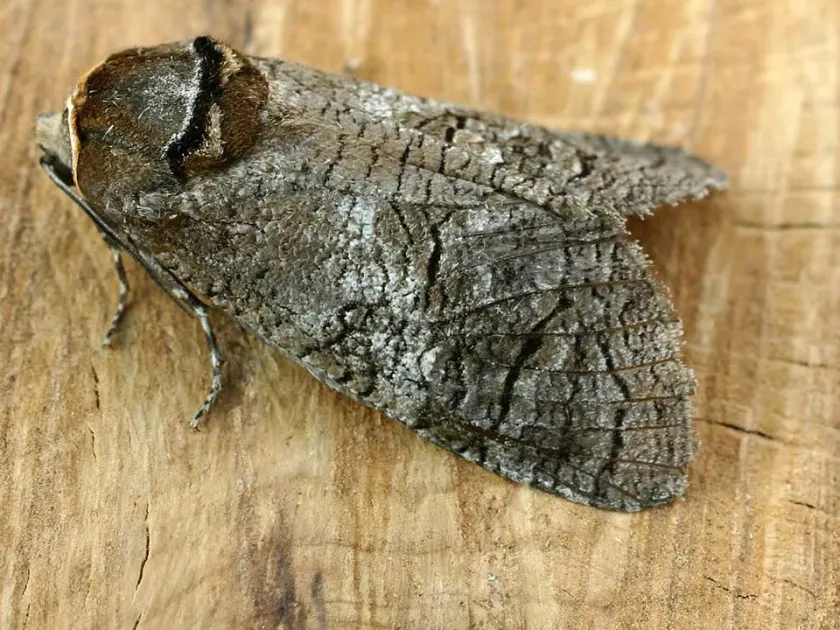
Cossus suffuscus belongs to the order Lepidoptera and the family Cossidae. These moths are known for their robust, hairy bodies and greyish, mottled wings that provide excellent camouflage against tree bark.
Adult moths typically have a wingspan ranging from 60 to 80 millimeters, making them relatively large insects within their ecosystem during the summer months.
The larvae are the most recognizable stage of this pest; they are large, fleshy caterpillars with colors ranging from deep red to bright orange, often reaching 10 centimeters in length.
This species follows a complete metamorphosis life cycle, consisting of egg, larva, pupa, and adult, with the larval stage being the primary cause of economic damage.
Unlike some of its relatives, Cossus suffuscus is well-adapted to drier habitats, which significantly influences its distribution across various forest and garden ecosystems.
What it damages
The moth primarily targets deciduous tree species, including fruit trees like apples and pears, as well as forest trees such as oaks, poplars, and willows.
Larvae bore deep, meandering galleries into the trunk and large branches, effectively disrupting the plant's vascular system, which hinders the transport of water and nutrients.
Severe infestations often result in the death of branches, stunted growth, and a significant decrease in fruit production, making the tree structurally weak.
In young orchards or nurseries, the damage caused by these larvae can lead to the rapid death of the host plant if the main trunk is girdled by the boring activity.
Furthermore, the physical damage caused by larval boring creates entry points for secondary pathogens, such as fungi and bacteria, leading to rot and decay.
When it appears
Adult moths typically emerge during mid-summer, specifically in June and July, when climatic conditions are optimal for mating and oviposition.
Females deposit eggs in crevices of the bark or around existing wounds, choosing sites that provide protection for the newly hatched larvae as they begin to bore.
The larval stage is often multi-year, meaning the caterpillars spend several seasons inside the tree, gradually growing and expanding their feeding galleries.
Pupation generally occurs within the larval galleries or in the soil near the base of the tree, preparing the insect for its emergence as an adult moth.
Because adults are nocturnal, their presence is often overlooked unless detected through light trapping or signs of adult activity during the summer peak.
Signs of infestation
A primary indicator of infestation is the presence of frass, which appears as brownish, sawdust-like piles accumulating at the base of the trunk or in branch crotches.
Holes visible on the bark surface, sometimes leaking sap or gum, are clear signs that larvae are active deep within the heartwood of the tree.
The sudden wilting or yellowing of branches during the peak growing season indicates that the internal vascular pathways have been severely compromised by larval activity.
Bark cracking and necrotic patches around entrance holes signify long-term colonization by the pest, which can be observed during routine orchard inspections.
The presence of large moths flying near lights at night during early summer serves as a warning for arborists to perform a closer inspection of their trees.
Control measures
Mechanical control involves the careful removal of damaged bark and the manual extraction of larvae from galleries, followed by the application of antifungal sealants.
Injecting approved systemic insecticides directly into the entry holes of the larvae is currently one of the most effective methods to target the pest internally.
Pheromone traps and light traps are excellent tools for monitoring the population density of adult moths and can help time the application of protective measures.
Regular sanitation, including the removal of dead or dying branches, reduces the attractiveness of the site for egg-laying females and prevents pest outbreaks.
- Maintaining tree vigor through proper irrigation and soil nutrition.
- Applying prophylactic insecticide-laced trunk washes in the early spring.
- Encouraging natural predators such as woodpeckers and parasitic wasps.
Taxonomy
- Latin name
- Cossus suffuscus
- Order
- Lepidoptera (butterflies)
- Family
- Cossidae
- EPPO code
- COSSSU
Discussion
No discussions yet — be the first.