
Goat moth
Cossus cossus
Description
How to identify
The goat moth (Cossus cossus) is a moth of the Cossidae family, known for being a destructive wood-boring pest in forestry and gardening.
The adult moth is quite large, with a wingspan ranging from 80 to 100 mm, featuring mottled gray and brown patterns for effective camouflage on tree bark.
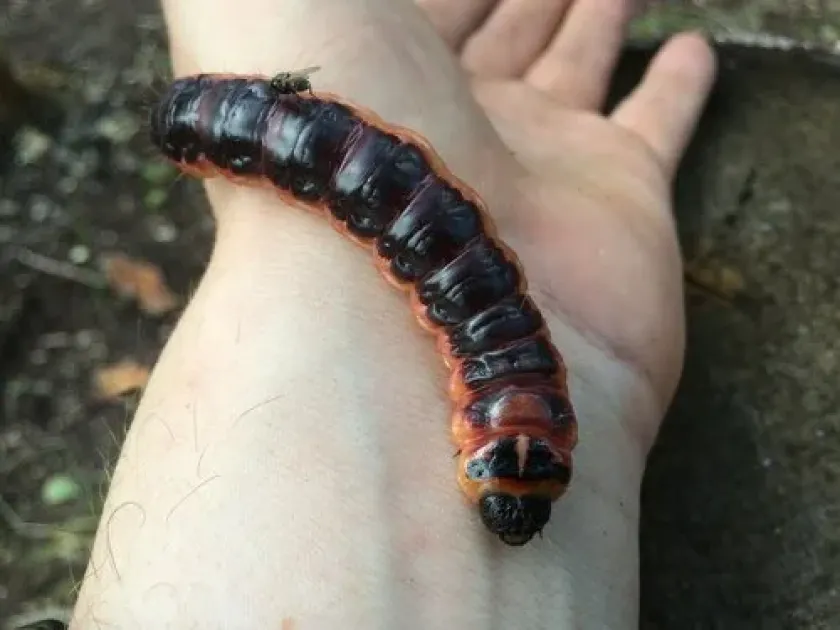
Its larvae, which are the main cause of damage, can grow up to 12 cm long and have a distinct deep red or cherry-colored back with pale sides.
Pupation occurs within a tough cocoon made of wood fragments and silk, usually constructed deep inside the larval tunnels or in the soil near the tree.
The name "goat moth" originates from the strong, goat-like scent produced by the larvae during their growth period, which often helps in detecting their presence.
What it damages
The goat moth is a polyphagous pest, attacking various deciduous trees including apple, pear, plum, and cherry, as well as poplar, willow, and birch.
The larvae bore long, complex galleries deep into the wood of trunks and thick branches, significantly disrupting the tree's vascular system.
Infested trees suffer from weakened structural integrity, inhibited nutrient transport, and are prone to becoming brittle and susceptible to wind damage.
Repeated infestation over several years leads to extensive internal damage that causes the tree to slowly decline, leading to eventual death if left untreated.
Young trees are particularly vulnerable, as even a few larval galleries can cause enough structural damage to kill the entire plant within a single season.
When it appears
Adult moths are nocturnal and typically emerge for their flight period between late May and mid-July, making them difficult to spot during daylight hours.
Females deposit eggs in groups within crevices of the bark, near pruning wounds, or near the base of the trunk where the bark is rough and provides cover.
The life cycle of the goat moth is long, typically lasting two years, during which the larvae complete their development inside the host tree.
After hatching, the larvae initially feed on the outer layers under the bark before moving deeper into the heartwood to continue their development and overwinter.
Once the larvae reach maturity in their second year, they prepare for pupation, which completes the development cycle and leads to the emergence of the next generation.
Signs of infestation
Visible brown frass (wood dust mixed with excrement) accumulating at the base of the trunk or in branch forks is the most reliable indicator of an active infestation.
Sap bleeding from small holes in the bark is a common symptom, which often indicates that the larvae have compromised the tree's internal circulation system.
The distinctively unpleasant, pungent smell emitted from the tree trunk serves as a clear warning sign that a colony of larvae is actively feeding inside.
Trees affected by the goat moth show noticeable decline, including thinning foliage, yellowing leaves, and the premature drying of entire branches or the canopy.
Bark shedding or the appearance of large, dark patches where the larvae have eaten through the vascular tissue are signs of advanced and severe infestation.
Control measures
Effective management begins with proper cultural care, ensuring trees are healthy and wounds are sealed with grafting wax or wound paint to deny egg-laying sites.
For existing infestations, inject contact insecticides directly into the larval holes using a syringe and seal the openings to ensure the larvae are eliminated inside.
Light traps or pheromone traps deployed during the adult flight period help in reducing the population and serve as an important monitoring tool for orchard owners.
Applying systemic or contact insecticides to tree trunks in early summer can kill young larvae before they penetrate the bark and enter the wood.
- Remove and destroy severely infested wood or dead trees to prevent the pest from spreading to neighboring healthy plants.
- Conduct routine inspections of tree trunks during the spring and summer to identify early signs of boring activity.
Taxonomy
- Latin name
- Cossus cossus
- Order
- Lepidoptera (butterflies)
- Family
- Cossidae
- EPPO code
- COSSCO
Discussion
No discussions yet — be the first.