
Goat moth
Cossus
Description
How to identify
The Goat moth (Cossus cossus) is a large moth belonging to the Cossidae family, known for its larvae which are significant pests of trees.
Adult moths have a wingspan of 80–100 mm and exhibit cryptic coloration with grey and brown patterns resembling tree bark for camouflage.
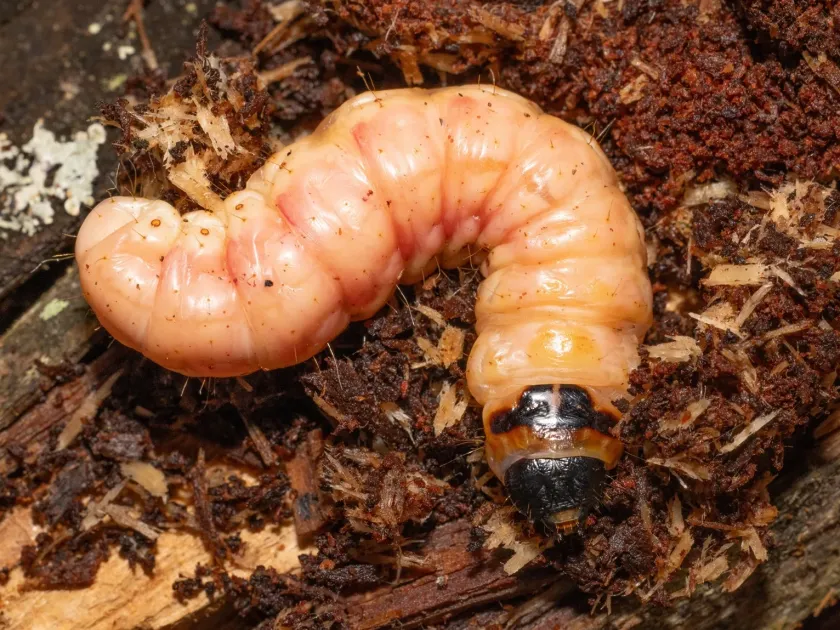
The larvae, or caterpillars, are bright red or dark pink on the back with yellowish sides and can grow up to 10–12 cm in length.
These insects are named for the distinctive pungent, goat-like scent emitted by the caterpillars as a defense mechanism.
The species is widespread throughout Europe and Asia, posing a serious threat to various hardwood species in orchards and forests.
What it damages
The larvae infest a wide range of broad-leaved trees, including apple, pear, cherry, willow, poplar, and oak species.
Caterpillars bore galleries deep into the wood of the trunk and main branches, severely disrupting the vascular system of the tree.
Infested trees lose vigor, show signs of stunted growth, and become highly susceptible to secondary pathogens and fungal diseases.
Young trees are particularly at risk, as the burrowing activities of multiple larvae can lead to complete girdling and eventual death.
Severe infestations weaken the structural integrity of the wood, which may lead to limb breakage during storm events.
When it appears
Adult moths emerge from late May through August, with peak activity occurring during the dusk and night hours.
Females lay eggs in clusters within crevices of bark, typically on the lower trunk or near existing scars on the tree.
Newly hatched larvae bore into the bark and enter the wood, where they remain for a life cycle that lasts between two and three years.
Pupation typically takes place either within the galleries in the wood or in the soil near the base of the tree.
Due to the long-term larval stage, a single tree may host caterpillars of different ages simultaneously.
Signs of infestation
The most reliable sign of an infestation is the accumulation of frass, which looks like reddish-brown sawdust, at the base of the tree.
Dark, weeping patches of sap on the trunk or branches often indicate the presence of entry holes bored by the larvae.
Yellowing leaves, canopy dieback, and reduced foliage density are typical signs of advanced internal damage.
In infested areas, bark may split or peel away, revealing the tunnels and damage caused by the maturing caterpillars.
The distinctively unpleasant, vinegary or goat-like odor is often detectable near heavily infested trees during the warm summer months.
Control measures
Preventative care, such as maintaining tree health through proper watering and pruning, is essential to prevent infestations.
Pheromone traps are effective tools for monitoring adult moth populations and timing control efforts during the peak flight season.
In cases of visible infestations, injecting targeted insecticides into the boreholes and sealing them with putty is a recommended practice.
Removal and destruction of heavily infested limbs or trees are necessary to prevent the spread of the moth to healthy plants.
Regular inspections of the trunk base for frass and exit holes allow for early detection and mitigation of the damage.
Taxonomy
- Latin name
- Cossus
- Order
- Lepidoptera (butterflies)
- Family
- Cossidae
- EPPO code
- COSSSP
Discussion
No discussions yet — be the first.