
Grape trunk borer
Coryphodema tristis
Description
How to identify
The grape trunk borer (Coryphodema tristis) is a moth belonging to the Cossidae family, known for its larvae that dwell within the wood of various woody plants, including grapevines.
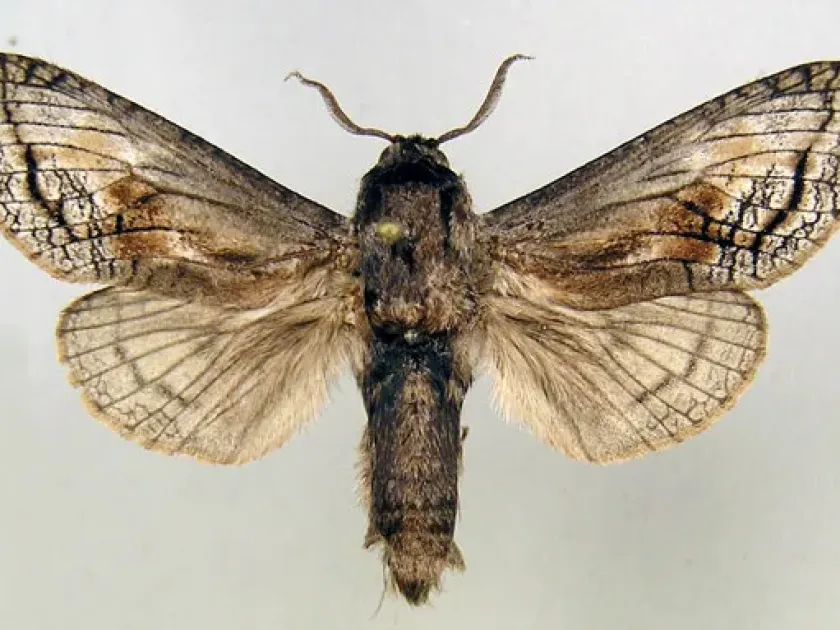
The adult moth is characterized by cryptic, mottled grayish-brown coloration, which provides excellent camouflage against the bark of the host plant, making them difficult to detect during the day.
The larvae are typically creamy-white with a sclerotized head, equipped with powerful mandibles capable of boring deep into the xylem and phloem of the plant stem.
Its life cycle involves complete metamorphosis, but because it spends a significant amount of time as a larva inside the vine, it is often classified as a hidden or wood-boring pest.
Monitoring the adult population is essential, as the eggs are laid on the surface of the bark, providing the only window of opportunity for external intervention.
What it damages
The larvae primarily feed on the interior wood of grapevines, excavating extensive galleries within the trunk and woody cordons, which disrupts the vascular system.
While grapes are the primary host, this borer species can also infest other woody shrubs and fruit trees in the vicinity, exhibiting a degree of polyphagy depending on the environment.
By severing xylem and phloem vessels, the larvae cause chronic stress, leading to poor vigor, reduced leaf size, and ultimately the dieback of infested vines.
The structural integrity of the vine is severely compromised, making the infested parts prone to breakage under the weight of the crop or during mechanical vineyard operations.
In cases of high infestation, the borer can lead to the death of entire vines, resulting in significant economic loss for the vineyard owner over several seasons.
When it appears
Adult moths typically emerge during the warmer months, with peak activity varying by climate but generally occurring from late spring through the mid-summer period.
The larvae remain active within the wood throughout the year, overwintering inside the tunnels to continue their development across multiple growing seasons.
Environmental stress, particularly drought, is known to make grapevines more susceptible to borer attacks, as the plants struggle to maintain their natural defense mechanisms.
Pupation occurs within the galleries near the exit hole, shortly before the adult moth emerges to initiate the next generation's lifecycle.
Timing control measures correctly requires tracking the seasonal emergence of adults to target the larvae before they penetrate the bark and enter the wood.
Signs of infestation
The most reliable sign of an infestation is the presence of frass, a sawdust-like mixture of wood shavings and excrement, accumulating at the base of the vine or in branch crotches.
Symptoms of an established infestation include wilting leaves, yellowing foliage, and a noticeable decline in the annual vegetative growth of the vine.
Upon closer inspection, small, circular entrance or exit holes may be visible on the trunk, indicating where larvae have entered or left the woody tissue.
Sections of the vine may show necrotic patches or longitudinal cracks in the bark, often revealing the entry point of the borer larvae.
Vines that appear stunted or show uneven bud break in the spring should be carefully inspected for borer galleries, as these are classic markers of wood-boring pest activity.
Control measures
Physical control remains the most effective strategy, which involves pruning out and destroying heavily infested vine portions to eliminate the larvae entirely.
For valuable vines, targeted systemic insecticide injections into the larval tunnels, followed by sealing the entrance hole, can effectively kill the larvae inside.
Maintaining vine health through proper irrigation and nutrition prevents the stress that often predisposes plants to colonization by the grape trunk borer.
- Routine inspection for signs of wood debris or frass.
- Using pheromone traps for early detection of adult moth presence.
- Applying preventative trunk paints or wraps to inhibit egg-laying.
Chemical protection is most effective if timed precisely to the larval hatching stage before they bury themselves into the vine wood, ensuring better surface contact.
Taxonomy
- Latin name
- Coryphodema tristis
- Order
- Lepidoptera (butterflies)
- Family
- Cossidae
- EPPO code
- CYPOTR
Discussion
No discussions yet — be the first.