
Cordylobia anthropophaga
Cordylobia anthropophaga
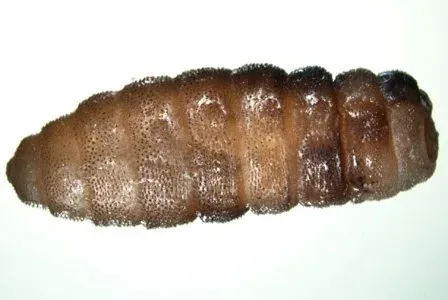
Description
How to identify
Cordylobia anthropophaga, commonly known as the tumbu fly, is a member of the Calliphoridae family (blowflies) within the order Diptera. Adults are yellowish-brown flies measuring approximately 10–12 mm in length.
Morphologically, these flies resemble common houseflies but exhibit specific adaptations for locating hosts. Their larvae are obligate parasites that spend their developmental stage within the subcutaneous tissues of mammals.
The species is primarily distributed in tropical regions of Africa, where high humidity and warm temperatures facilitate the rapid completion of their life cycle.
The life cycle involves complete metamorphosis, consisting of eggs, three larval instars, pupae, and adults. Females deposit eggs in soil contaminated with organic matter or on damp clothing left to dry outdoors.
Upon making contact with a host, the larva penetrates the skin and creates a cavity, feeding on host tissues and fluids for 10–12 days before emerging to pupate in the soil.
What it damages
It is crucial to clarify that this organism is not a plant pest and does not feed on or damage agricultural crops, roots, fruits, or horticultural plants.
In an agricultural context, this fly is classified as a veterinary pest rather than an agricultural one, posing a significant threat to livestock and domestic animals kept on farms.
Infestation in livestock causes severe discomfort, stress, and secondary bacterial infections, which can lead to reduced animal performance and poor overall health.
Livestock owners in affected regions face economic challenges due to the necessity of treating infected animals and implementing prophylactic measures to protect herds.
While not affecting crop yields, the management of this parasite is an essential component of farm biosecurity and livestock welfare programs.
Signs of infestation
The primary clinical sign of an infestation is the development of painful, boil-like nodules under the skin, often with a small central opening.
Affected animals typically show signs of irritation, constant scratching, or localized grooming in an attempt to alleviate the intense itching caused by larval movement.
Palpation of the nodule reveals a firm, moving obstruction beneath the epidermis, which increases in size as the larva continues its development.
Surrounding tissue may exhibit localized inflammation, redness, and elevated skin temperature, indicating an active immune response to the parasite.
In neglected cases, secondary suppuration can occur, potentially leading to deep tissue infections that require professional veterinary intervention for removal.
Control measures
The most effective strategy for managing Cordylobia anthropophaga is the maintenance of strict hygiene in animal housing areas, ensuring that surfaces remain clean and dry.
Preventative measures include ironing clothing and fabrics with high heat after line-drying, which is highly effective in destroying any eggs deposited by the fly.
Frequent physical inspections of livestock and pets are recommended, particularly in endemic zones, to identify and treat early stages of infestation before they progress.
The use of insecticides in animal enclosures can help reduce the population of adult flies, thereby lowering the risk of egg deposition near the host.
- Regular removal and replacement of contaminated bedding.
- Application of safe repellents to livestock during fly season.
- Surgical or mechanical extraction of larvae under veterinary supervision.
Taxonomy
- Latin name
- Cordylobia anthropophaga
- Order
- Diptera (flies)
- Family
- Calliphoridae
- EPPO code
- CRLBAN
Discussion
No discussions yet — be the first.