
Nitidulid beetles
Colopterus
Description
How to identify
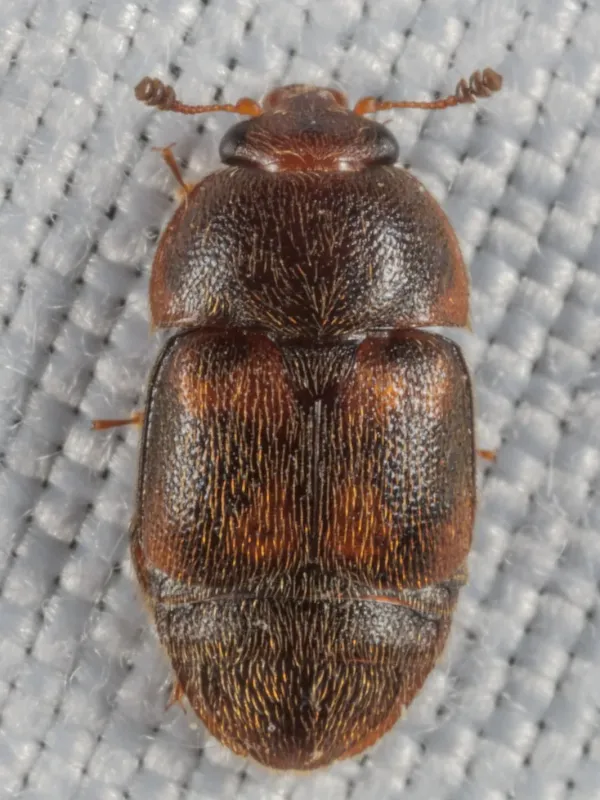
Nitidulid beetles of the genus Colopterus belong to the family Nitidulidae, commonly known as sap beetles. These small insects typically measure between 3 and 5 millimeters in length.
Their body is characterized by a flattened, oval shape, with colors ranging from light brown to deep black. A defining feature is their short elytra, which leave the end of the abdomen exposed.
The mouthparts are robust and adapted for feeding on sugary substances and fruit tissues. They possess clubbed antennae, which is a classic diagnostic feature of this beetle family.
The larvae are whitish, elongated, and highly mobile, often found feeding deep within the tissues of rotting or damaged fruits where they thrive in humid conditions.
These beetles are primarily nocturnal or crepuscular, hiding in cool, damp crevices during the heat of the day and becoming active during periods of high humidity or fruit ripening.
What it damages
The primary diet of these beetles consists of overripe, bruised, or decaying fruits, particularly stone fruits like peaches and plums, as well as strawberries.
They damage crops by feeding directly on the fruit tissue, which not only causes physical loss but also invites colonization by various yeasts and fungal pathogens.
These beetles are major vectors for diseases such as brown rot (Monilinia spp.), which can quickly spread through an entire orchard once the beetles have breached the fruit skin.
In high-density fruit production systems, if left uncontrolled, these pests can cause significant economic losses by rendering fruits unmarketable and accelerating post-harvest decay.
They are also notorious pests in fruit packing houses and storage facilities, where they can migrate between fruit containers and quickly spoil entire batches of product.
When it appears
The peak activity period for these beetles coincides with the ripening of fruit, when sugar content is at its highest, providing an ideal food source for the adults.
Adult beetles emerge from hibernation sites as temperatures rise in the spring and immediately begin seeking out suitable host materials in the orchard environment.
The number of generations per year is highly dependent on climate, with warmer regions allowing for continuous reproduction throughout the entire growing season.
Hibernation occurs in protected locations such as loose bark, leaf litter, or topsoil, where the beetles enter a state of diapause to survive the winter months.
Populations tend to surge in mid-to-late summer, coinciding with the buildup of fallen fruit on the ground, which serves as a massive breeding ground for subsequent generations.
Signs of infestation
Visible signs of infestation include small, irregular holes on the fruit surface, often accompanied by soft, watery decay and a sour, fermenting odor.
If you inspect the affected areas, you will often find the beetles themselves, sometimes clustered inside the cavities they have chewed into the fruit.
The presence of fungal growth around entry holes, even on fruits that appear relatively healthy, is a strong indicator of early infestation by sap beetles.
At dusk, you may notice increased movement of small, dark beetles on the surface of ripening fruits as they begin their active feeding cycles.
- Small entry holes on the fruit skin.
- Fermented, sour smell emitting from the fruit.
- Presence of small dark beetles near fallen or damaged fruit.
Control measures
The most important control strategy is strict orchard sanitation, which involves the prompt removal and disposal of all fallen, bruised, or damaged fruits to break the life cycle.
Minimizing mechanical injury to fruit during harvesting and handling is critical, as preventing skin damage significantly reduces the potential for infestation.
Deploying bait traps using fermenting liquids like molasses or wine can help monitor population levels and reduce the number of adults active in the orchard.
Chemical control should be reserved for periods of high pressure and must be applied in accordance with pre-harvest intervals to ensure food safety standards are met.
Proper maintenance of storage facilities, including cooling and rigorous sanitation, is essential to prevent these beetles from infesting packed fruits after they have been moved from the orchard.
Taxonomy
- Latin name
- Colopterus
- Order
- Coleoptera (beetles)
- Family
- Nitidulidae
- EPPO code
- CLPTSP
Discussion
No discussions yet — be the first.