
Moorland Clouded Yellow
Colias palaeno
Description
How to identify
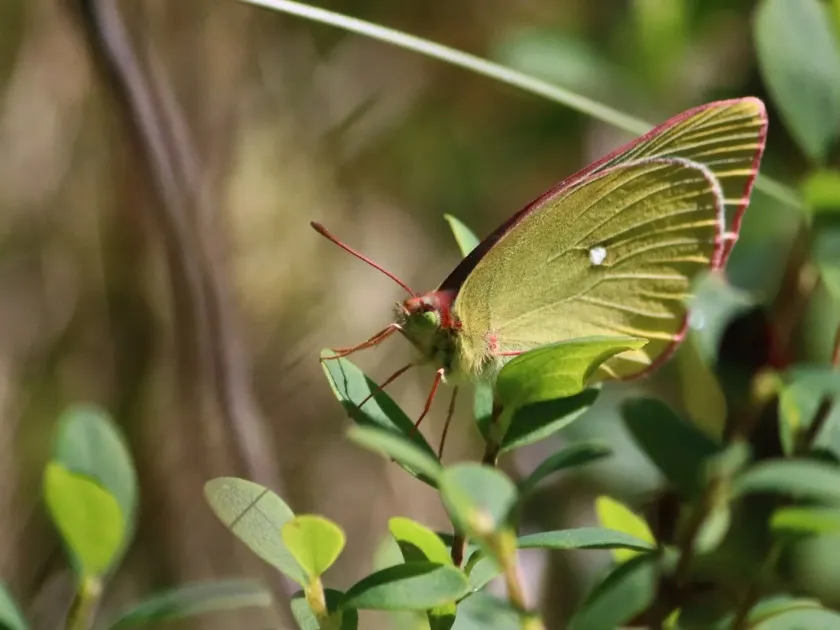
The Moorland Clouded Yellow (Colias palaeno) is a butterfly belonging to the Pieridae family, often found in boggy and marshy habitats across the northern hemisphere.
The adults are recognizable by their distinct yellow or pale lemon wings, adorned with a significant black border, which is a key identification feature for this species.
Larvae (caterpillars) are velvet green with pale lateral stripes, an adaptation that provides excellent camouflage within their primary food source plants.
The species is strictly associated with specific ecological niches, particularly peatlands where shrubs from the Ericaceae family are abundant.
The life cycle encompasses four stages: egg, larva, pupa, and imago, with the pupal stage typically attached to the stems of host plants.
What it damages
The primary food source for the larvae of this species is the bog bilberry (Vaccinium uliginosum), which is closely related to commercial blueberries.
In regions where industrial blueberry fields are established on reclaimed peat bogs, this insect can emerge as an occasional pest of the crop.
Larvae feed on the leaf tissues, skeletonizing them or consuming entire leaves, which stunts the plant's growth and affects fruit yield.
Severe infestations can lead to a significant loss of foliage, reducing the plant's ability to store energy for the subsequent season.
While not a major pest in standard orchards, its presence in northern berry production areas warrants monitoring and appropriate management.
When it appears
The species completes one generation per year, a developmental trait adapted to the cooler climates of its natural moorland habitats.
Adult butterflies are active during the peak summer months, typically emerging from late June through mid-August when the weather is stable.
Oviposition occurs on the leaves of host plants, followed by the hatching of larvae that feed throughout the late summer and early autumn.
The species overwinters in the larval stage, often sheltering within the thick moss or plant debris found at the base of the bushes.
Growth resumes in the spring as temperatures rise, leading to pupation before the adult cycle begins again in the early summer.
Signs of infestation
Signs of infestation include irregular holes or chewed leaf margins on blueberry bushes, characteristic of lepidopteran larvae feeding activity.
The accumulation of frass (larval droppings) on the leaves or at the base of the plant is a clear indicator of the presence of the pests.
Gardeners and farmers can identify larvae by examining the underside of leaves or the stems, though their green coloration makes them difficult to spot.
Withered tips or sudden leaf drops in localized patches of the field are secondary indicators of active larval damage.
Observing the flight pattern of adults above the fields during sunny days serves as a warning sign to inspect plants for eggs.
Control measures
Managing the surrounding landscape by clearing wild host plants such as wild blueberries or Labrador tea can significantly reduce the local pest population.
Biological control using Bacillus thuringiensis is highly recommended as it provides effective larval suppression while minimizing environmental impact.
Chemical intervention should be reserved for high-density outbreaks, with all applications following strictly defined safety intervals before harvest.
Maintaining proper field drainage can help, as this species prefers the naturally wet conditions found in peat bogs which should be avoided on farms.
- Systematic field inspections during the butterfly flight season.
- Manual removal of larvae in small-scale plantings.
- Integration of biological insecticides for sustainable management.
Taxonomy
- Latin name
- Colias palaeno
- Order
- Lepidoptera (butterflies)
- Family
- Pieridae
- EPPO code
- COIAPA
Discussion
No discussions yet — be the first.