
Alfalfa butterfly
Colias electo
Description
How to identify
The Alfalfa butterfly (Colias electo) is a member of the Pieridae family, specifically recognized as a significant pest affecting various leguminous crops.
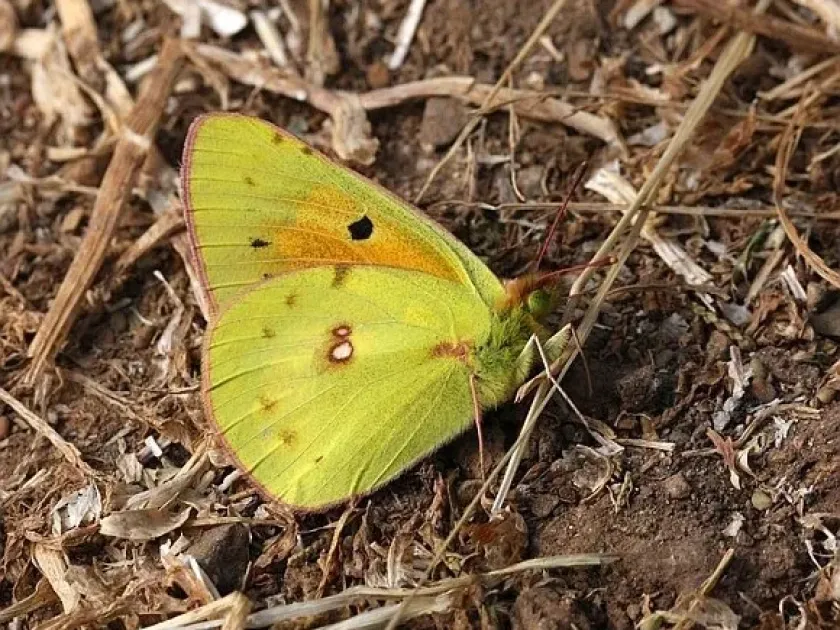
Adult butterflies are characterized by bright yellow or orange wings with distinctive wide black borders, making them easily identifiable in agricultural fields.
Larvae, or caterpillars, are typically bright green with faint longitudinal lines, providing excellent camouflage against the foliage of host plants.
The head of the caterpillar is rounded, and its body is covered in fine hair, which is a common morphology for the larval stage of this lepidopteran species.
Pupae are green in color and attach themselves to host plant stems using silk threads, a survival strategy that protects them during the transformation process.
##damage##The larvae cause primary damage by consuming the leaves and young shoots of alfalfa, which significantly impacts the biomass yield of the crop.
In addition to alfalfa, the pest often infests other legumes such as clover, sweet clover, vetch, and soybeans, leading to reduced overall pasture productivity.
During outbreaks, large populations of larvae can completely defoliate plants, leaving only bare stems, which severely stunts the plant's growth and root development.
Beyond physical consumption, the pest reduces the nutritional value of the forage by lowering its protein and carotene content, affecting feed quality.
Heavy infestation weakens the plant structure, making the crop more susceptible to environmental stress and opportunistic diseases during the following season.
When it appears
The life cycle of the Alfalfa butterfly is highly dependent on local climatic conditions, with some regions experiencing multiple generations throughout the growing season.
Adult activity usually begins in early spring as temperatures rise, aligning with the onset of the active growth phase of perennial forage crops.
Females deposit eggs on the underside of host plant leaves, ensuring that hatching larvae have immediate access to a food source for their development.
Throughout the summer, different stages of the butterfly's life cycle overlap, resulting in continuous pressure on crops during the peak vegetative months.
Overwintering typically occurs in the larval or pupal stage, depending on the environmental conditions and the geographical location of the agricultural site.
Signs of infestation
Early signs of infestation include small, irregular holes in the center of leaves, caused by the feeding activity of younger larval instars.
As larvae mature, they consume the edges of the leaves, eventually stripping them down to the main veins, which gives the plant a skeletal appearance.
The presence of larval frass on the soil or lower plant parts serves as a clear indicator of a significant infestation level within the field.
A high density of bright yellow butterflies hovering over the field during the flowering stage is a critical signal for immediate field assessment.
Slow regrowth of the crop after harvesting is often a strong indicator that larvae are feeding on the remaining shoots and interfering with plant recovery.
Control measures
Effective agricultural management involves timely harvesting of the alfalfa crop, which disrupts the life cycle of the larvae and removes their primary food source.
Fall plowing is a recommended practice to destroy pupae overwintering in the soil, effectively reducing the population size for the following spring.
When the economic injury level is exceeded, the application of registered insecticides with selective action against Lepidoptera is necessary for crop protection.
Promoting the presence of natural predators, including parasitic wasps and predatory insects, is a key component of an integrated pest management strategy.
- Routine field scouting using sweep nets to monitor larval populations.
- Implementation of crop rotation to break the pest's developmental cycle.
- Utilization of biological control agents and entomopathogenic bacteria.
Taxonomy
- Latin name
- Colias electo
- Order
- Lepidoptera (butterflies)
- Family
- Pieridae
- EPPO code
- COIAEL
Discussion
No discussions yet — be the first.