
New World screwworm fly
Cochliomyia hominivorax
Description
How to identify
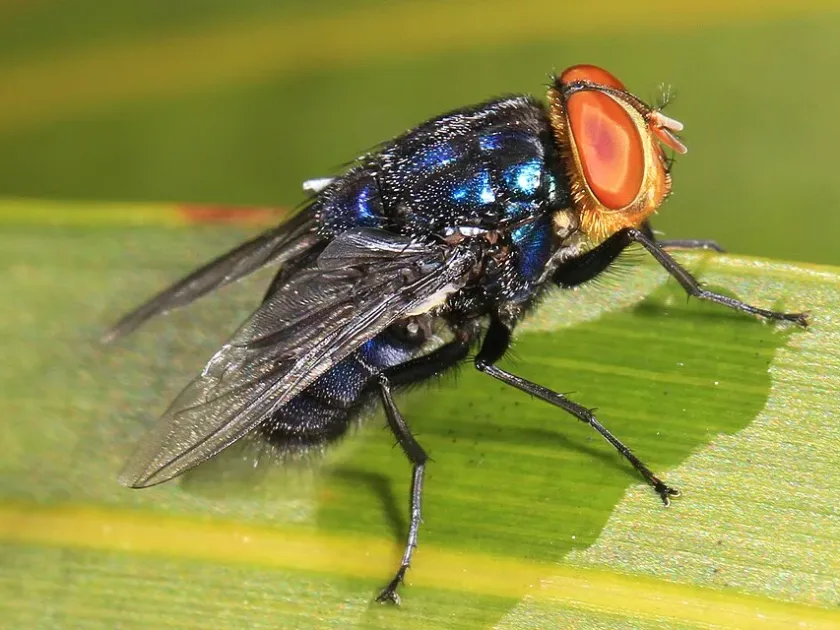
The New World screwworm fly (Cochliomyia hominivorax) is a dipteran parasite of the family Calliphoridae. Adults are metallic blue-green in color with three distinct dark stripes on the dorsal thorax, which serves as a primary diagnostic feature for identification.
The adult fly is similar in size to a house fly but possesses distinct behavioral traits that make it a dangerous obligate parasite. It does not feed on decaying organic matter but rather seeks out living tissue to sustain its offspring.
The larva, known as a "screwworm," is tapered and equipped with prominent chitinous hooks. These hooks allow the larva to anchor itself into the host's flesh and burrow deeper into healthy tissues, which is characteristic of this species' destructive behavior.
The life cycle encompasses four main stages: egg, three larval instars, pupa, and adult. In warm climates, this cycle completes rapidly, allowing the species to reproduce and spread aggressively when conditions are suitable for their development.
Females deposit masses of hundreds of eggs near open wounds or mucous membranes. These clusters are glued firmly to the surface, and upon hatching, the larvae immediately begin feeding, leading to the rapid development of a necrotic wound.
What it damages
While not a plant pest, the screwworm fly is a severe threat to the agricultural sector, particularly livestock industries. It is an obligate parasite of warm-blooded animals, causing a condition known as screwworm myiasis.
The damage is primarily caused by larvae feeding on living flesh, which creates deep, painful wounds. These lesions are prone to secondary bacterial infections, significantly weakening the host and often leading to death if left untreated.
Economic losses include reduced livestock production, increased veterinary costs, mortality rates in herds, and loss of animal value. In endemic regions, this pest necessitates strict quarantine measures and high investment in prophylactic care.
The wounds produced by the larvae do not heal properly because the constant movement and feeding of the maggots prevent tissue regeneration. This makes the host susceptible to further infections and attracts more flies to the site.
Infested animals show a significant decrease in growth, milk yield, and overall health. In many cases, the physical damage to the tissue is irreversible, requiring emergency veterinary surgical intervention to save the animal.
When it appears
The screwworm fly thrives in tropical and subtropical environments where temperatures remain consistently high. High humidity is also essential for the successful pupation of the larvae after they leave the host's body.
Seasonal patterns of outbreaks are often linked to periods of warm, moist weather. In temperate regions with cold winters, the fly population is typically eradicated or forced into a very limited range due to the insect's inability to survive freezing temperatures.
Agricultural practices influence the impact of the fly. For instance, branding, dehorning, or castration of livestock during peak fly activity periods significantly increases the risk of infestation, as these procedures leave vulnerable open wounds.
During the warmer months, the flies become highly active, searching for host animals across vast territories. Their migration capability allows them to expand their range quickly if suitable hosts and environmental conditions are present.
Monitoring for the presence of the fly is critical in areas prone to seasonal invasions. Farmers are advised to concentrate their management efforts during months when high temperatures accelerate the fly's reproductive cycle.
Signs of infestation
The primary sign of infestation is an animal’s constant agitation or discomfort, often accompanied by licking or biting the affected area. Such behavior is a response to the painful feeding of the larvae within the tissues.
Upon examination, a characteristic wound will be visible, filled with a foul-smelling, bloody discharge. One can observe the larvae embedded deep within the flesh, moving in unison, which is a hallmark of the species.
- Agitated, restless behavior in livestock.
- Presence of deep, necrotic wounds emitting a foul odor.
- Constant discharge from an open lesion.
- Visible larvae with dark hooks embedded in the tissue.
- Rapid decline in the animal's physical health and appetite.
In advanced cases, the animal may become lethargic and feverish due to the systemic absorption of toxins from the necrotic wound. Secondary infections frequently complicate the clinical picture, leading to rapid deterioration.
Even small wounds, such as tick bites or minor scratches, can serve as entry points for the fly. A thorough daily check of the herd is essential to catch early-stage infestations before they grow into large, debilitating lesions.
Control measures
The most successful control method is the Sterile Insect Technique (SIT), which involves releasing large numbers of radiation-sterilized male flies. This interrupts the reproductive cycle, leading to the collapse of the population.
Prophylactic veterinary measures, including the application of insecticidal wound dressings and repellent sprays, are crucial for protecting herds. Keeping wounds clean and treated prevents flies from laying eggs.
Good farm management, including the prompt disposal of carcasses and proper waste management, denies the flies additional breeding grounds. Reducing the number of potential sites for development is vital for long-term population control.
Systemic parasiticides, such as avermectins, provide significant protection for livestock. These drugs make the host's body fluids toxic to the larvae, effectively preventing them from maturing if they attempt to feed.
Strict quarantine and inspection of livestock during transport prevent the human-aided spread of the pest between regions. Controlling animal movement remains a fundamental pillar of screwworm eradication programs worldwide.
Taxonomy
- Latin name
- Cochliomyia hominivorax
- Order
- Diptera (flies)
- Family
- Calliphoridae
- EPPO code
- COCLHO
Discussion
No discussions yet — be the first.