
Screwworm fly
Cochliomyia
Description
How to identify
The screwworm fly (lat. Cochliomyia hominivorax) is a member of the order Diptera, family Calliphoridae. It is a highly dangerous obligatory parasite that feeds on the living tissues of warm-blooded animals.
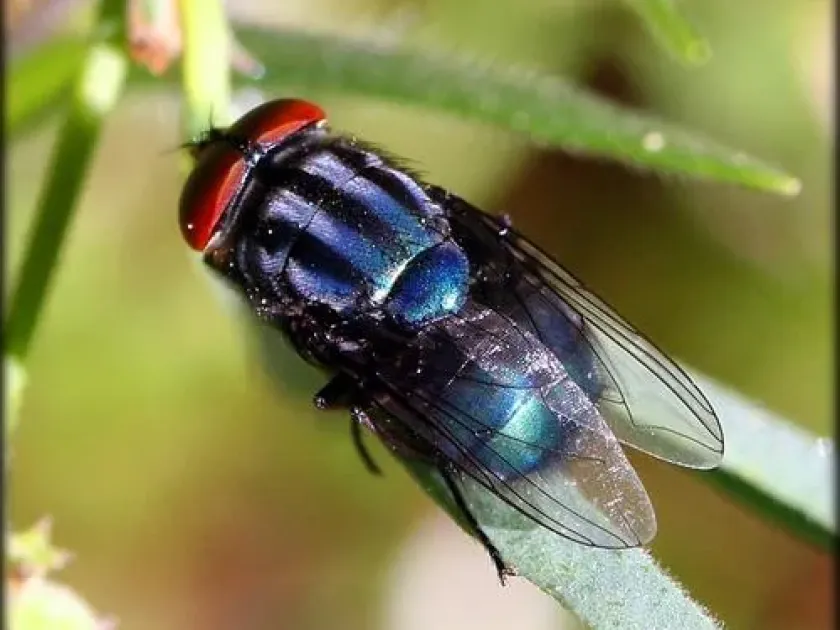
Adult flies are metallic blue-green in color, characterized by three distinct dark longitudinal stripes on the dorsal side of the thorax. Their head is notably orange, which helps in identifying this species.
The life cycle encompasses four stages: egg, larva (three instars), pupa, and adult. A single female can deposit hundreds of eggs in batches on open wounds or mucous membranes of a host.
Larvae possess circular bands of robust spines, which allow them to burrow deeply into healthy flesh. This screw-like appearance is the origin of the common name "screwworm".
The entire development cycle is rapid, allowing the population to explode quickly once they find an available host in favorable climatic conditions.
What it damages
The screwworm fly is not a plant pest; however, it is one of the most economically devastating pests in the global livestock industry due to the condition known as myiasis.
Livestock such as cattle, sheep, goats, horses, and swine are the primary targets. The larvae feed on the host's living tissue, causing extensive and painful damage to muscles and underlying layers.
Left untreated, the infestation causes severe septicemia, tissue necrosis, and often leads to the death of the animal within a few days or weeks.
Besides direct mortality, the infestation leads to massive financial losses due to reduced meat, milk, and wool production, as well as high veterinary treatment costs.
The pest poses a significant challenge to animal welfare, as the burrowing action of larvae causes extreme distress and prolonged suffering for the afflicted animals.
When it appears
The screwworm fly is a tropical and subtropical species, and its activity is strictly limited by ambient temperature and humidity levels.
Peak activity and reproductive rates occur during warm, humid seasons when temperatures are consistently above 20 degrees Celsius, accelerating the metabolic cycle.
Freezing temperatures are lethal to all stages of the screwworm fly, which limits its permanent habitat to warmer climate zones or seasonal infestations during summer months.
The danger is highest during grazing seasons, particularly when animals sustain small lacerations or abrasions, providing the perfect site for egg deposition.
With an optimal life cycle of roughly three weeks, multiple generations can emerge during a single summer, creating a compounding threat to herds if not monitored.
Signs of infestation
Initial signs include a small wound that does not heal properly and produces a persistent, foul-smelling serosanguinous discharge.
Close inspection of the wound often reveals a mass of white larvae tightly packed in a spiral pattern, moving actively within the tissue cavities.
Infested animals show signs of significant agitation, often licking or scratching the affected area incessantly due to the pain and intense itching.
As the larvae burrow deeper, a pronounced swelling and inflammation develop around the wound site, often leading to necrotic tissue around the entry point.
Systemic symptoms may include fever, loss of appetite, and lethargy, as the toxins from the larval waste and secondary bacteria begin to affect the animal's overall health.
Control measures
Effective management requires a combination of clinical treatment and strategic preventative measures to minimize the risk of infestation across the herd.
Proactive care involves treating any skin injury, no matter how minor, with approved insecticides to prevent the attraction of adult flies.
The Sterile Insect Technique (SIT), which involves releasing sterilized males, has been historically successful in eradicating populations over large geographic areas.
Livestock owners must avoid performing elective procedures like castration or branding during peak seasons of fly activity to prevent creating open wounds.
- Regular herd inspection for early detection of infestation.
- Application of long-acting insecticidal sprays or gels on wounds.
- Maintaining strict hygiene and pest control in barns and animal holding areas.
Taxonomy
- Latin name
- Cochliomyia
- Order
- Diptera (flies)
- Family
- Calliphoridae
- EPPO code
- COCLSP
Discussion
No discussions yet — be the first.