
Coccidula scutellata
Coccidula scutellata
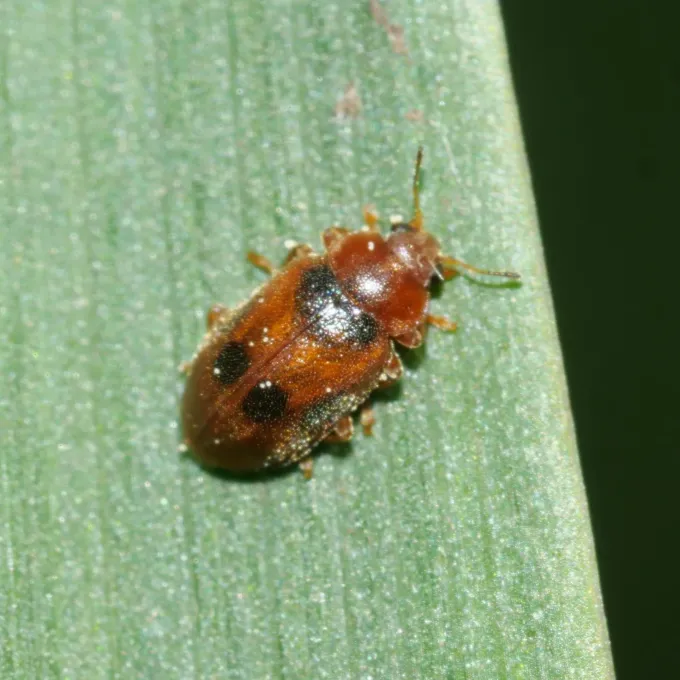
Description
How to identify
Coccidula scutellata is a species of ladybird beetle (Coccinellidae) belonging to the order Coleoptera, known for its distinct elongated body shape.
Unlike many rounded ladybird species, this beetle is relatively slender, measuring approximately 3 to 4 millimeters in length.
The elytra are typically yellowish-brown to reddish-brown, often featuring darker markings near the scutellum, which provides its common name.
The head and pronotum are usually darker in color, creating a striking contrast with the rest of its body during field observation.
The larvae are mobile and possess the typical morphology of predatory ladybird larvae, allowing them to traverse stems efficiently.
What it damages
It is crucial to clarify that Coccidula scutellata is not a plant pest; it is a specialized predator of aphids and other small prey.
The species primarily inhabits wetland areas, reeds, and sedges, where it performs biological control by feeding on sap-sucking insects.
There are no recorded instances of this insect causing direct damage to cultivated agricultural crops in standard farming systems.
Its presence is actually beneficial to farmers, as it serves as a natural regulator of aphid populations in aquatic and semi-aquatic habitats.
Misidentifying this predator as a pest can lead to the unnecessary and harmful application of insecticides in the field.
When it appears
The seasonal activity begins in the spring when rising temperatures stimulate adult emergence from their overwintering sites.
During the summer months, beetles are most active and visible, which corresponds with the peak aphid population growth cycles.
The lifecycle follows a complete metamorphosis including egg, larval, pupal, and adult stages, adapted to the wet environments they frequent.
As autumn approaches, adults seek shelter in dry vegetation, leaf litter, or tree bark to endure the winter months in diapause.
The timing of these stages is highly dependent on local moisture levels and the availability of their primary prey in their natural habitat.
Signs of infestation
Since the species is predatory, you will not find leaf chewing, tunneling, or tissue necrosis associated with its feeding activities.
The only sign of its presence is the visual confirmation of the beetles themselves, usually found among dense aphid colonies on plants.
Finding this insect on your crops should be considered a positive sign of biological control rather than a threat to production.
In most cases, the beetle is discovered while actively hunting on the undersides of leaves or along the stems of wetland plants.
Farmers should look for these beetles in conjunction with declining aphid numbers, which indicates effective natural predation.
Control measures
No control measures are necessary for Coccidula scutellata, as it does not constitute a threat to agricultural productivity.
Efforts should focus on preserving these beneficial populations by avoiding the overuse of broad-spectrum chemical insecticides.
Integrating biological control methods into your pest management strategy helps protect these beetles from accidental eradication.
Maintaining riparian buffers and natural vegetation near water sources supports the stability of the local beneficial insect community.
- Avoid non-selective insecticide spraying near wetlands.
- Promote biodiversity to encourage predator habitation.
- Monitor aphid populations before considering any chemical intervention.
Taxonomy
- Latin name
- Coccidula scutellata
- Order
- Coleoptera (beetles)
- Family
- Coccinellidae
- EPPO code
- COCASC
Discussion
No discussions yet — be the first.