
Coccidula rufa
Coccidula rufa
Description
How to identify
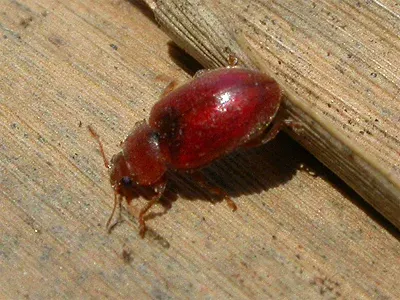
Coccidula rufa is a species of ladybird beetle (family Coccinellidae, order Coleoptera). These beetles are small, typically ranging from 2.5 to 3.5 mm in length, and are easily identified by their solid reddish-brown color, lacking the characteristic black spots found on many other ladybird species.
The body shape of Coccidula rufa is elongated and slightly flattened, distinguishing it from the more spherical ladybugs. The pronotum is generally paler than the wing covers, and the overall appearance is quite uniform, which can sometimes lead to confusion with other small beetles.
The larvae are also elongated and covered with small hairs or spines, which they use to navigate through vegetation while hunting. They are highly active predators, moving quickly across stems and leaves in search of aphids and other soft-bodied prey.
This species is most commonly found in damp areas, such as wetlands, riverbanks, or near agricultural fields with high moisture content. Because they inhabit areas where pests often congregate, they are frequently mistaken for pests by untrained observers.
Adult beetles have hardy chitinous covers, which help them survive in humid environments. They spend most of their life cycle searching for food, effectively patrolling the vegetation and helping to maintain the ecological balance of their habitat.
What it damages
Coccidula rufa is not a crop pest. It is actually a beneficial insect, serving as a natural predator of aphids and other minor pests. Its presence in an agricultural field is a positive indicator of natural biological control.
The beetle does not feed on plant tissues, such as leaves, fruits, or roots. It poses no threat to crop yield or quality. Misidentifying this insect as a pest can lead to unnecessary and harmful pesticide applications that destroy useful biodiversity.
By consuming aphids, Coccidula rufa provides valuable service to farmers by reducing the population of sap-sucking insects that can transmit viruses to crops. This natural control helps farmers reduce their reliance on synthetic chemicals.
There are no recorded instances of Coccidula rufa causing damage to agricultural produce. Their role in the ecosystem is strictly predatory, and they help limit the damage caused by aphids and other minor arthropods.
Farmers and agronomists should recognize this insect as a natural ally. Protecting such species is a cornerstone of sustainable and integrated pest management practices, ensuring long-term health for the agricultural environment.
When it appears
The activity cycle of Coccidula rufa begins in early spring as temperatures rise, allowing the beetles to emerge from their overwintering sites in leaf litter and dry vegetation. They start hunting for aphids almost immediately upon waking.
The reproductive peak occurs throughout late spring and early summer, when prey populations are at their highest. During this period, multiple generations may develop, creating a persistent and efficient predatory pressure on aphids.
Larval development is tightly synced with the growth of aphid colonies. After hatching, the larvae immediately begin feeding, which ensures a high survival rate for the beetle population while simultaneously suppressing the pest population.
By mid-summer, as aphid populations decline, the beetles move toward more humid microclimates where they can find alternative food sources or shelter. They are less active during the hottest parts of the summer to avoid dehydration.
As autumn arrives, adult beetles prepare for the winter. They seek out sheltered spots, such as under logs, in thick grass, or within organic mulch, where they can safely hibernate until the next growing season begins.
Signs of infestation
The most common sign of Coccidula rufa presence is the sight of aphid colonies that appear to be dwindling or actively hunted. If you see small, reddish beetles amidst these colonies, they are likely the agents responsible for the reduction in aphid numbers.
Another indicator is the presence of larval exuviae (shed skins) on the leaves of plants near aphid infestations. This is a clear sign that the beetles are successfully reproducing and feeding in the area.
Lack of leaf damage, despite the presence of many insects, is a primary way to differentiate this beetle from a true pest. While pests leave necrotic spots or holes, the activity of Coccidula rufa leaves the plants healthy.
Observers can find these beetles by inspecting the basal parts of plants, especially in moist or shaded areas of a field. Their active, hurried movement is quite different from the slow movement of many plant-feeding beetles.
Seeing these beetles in your field is a great sign. It means that the natural regulatory mechanisms of your farm are functional, and you may be able to delay or eliminate chemical treatments for aphids in that specific area.
Control measures
No control measures are needed for Coccidula rufa, as it is a beneficial insect. In fact, attempts to "control" or eliminate this species are harmful to the long-term health and productivity of the agricultural ecosystem.
The best strategy is to foster an environment where these beetles can thrive. This includes maintaining hedgerows, field margins, and other semi-natural habitats that provide winter refuge and alternative food sources.
Integrated Pest Management (IPM) should prioritize the conservation of such predators. Farmers should be educated to identify beneficial ladybirds to avoid the accidental spraying of harmless or beneficial species.
When chemical control is absolutely necessary for other pests, farmers should choose selective pesticides that have minimal impact on non-target predatory insects like Coccidula rufa.
- Avoid the use of non-selective broad-spectrum insecticides.
- Preserve field borders and wild strips to harbor beneficial insects.
- Incorporate pest monitoring to ensure chemicals are used only as a last resort.
Taxonomy
- Latin name
- Coccidula rufa
- Order
- Coleoptera (beetles)
- Family
- Coccinellidae
- EPPO code
- COCARU
Discussion
No discussions yet — be the first.