
Coccidula
Coccidula
Description
How to identify
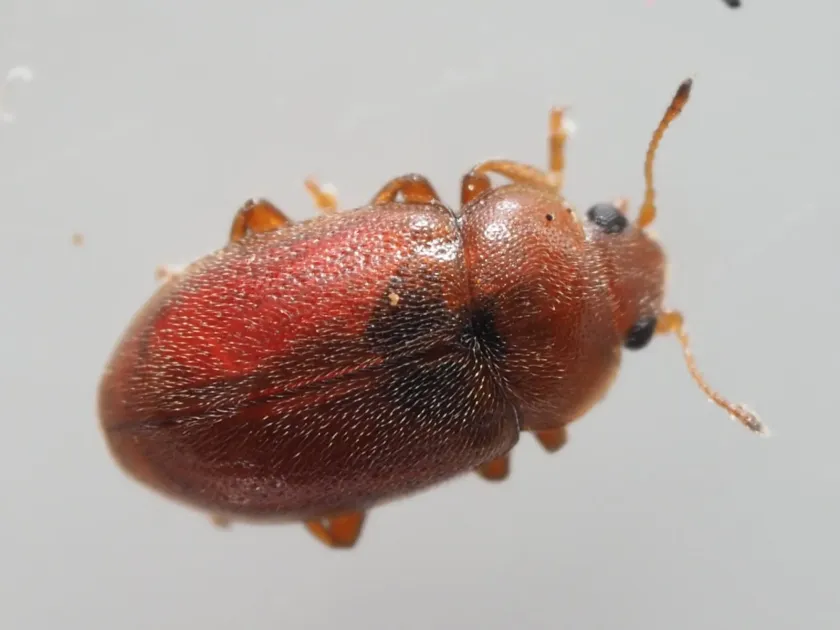
The genus Coccidula belongs to the ladybird beetle family (Coccinellidae), but unlike typical predatory members of this family, some species exhibit phytophagous behavior. These are small beetles, typically 3-4 mm in length, characterized by an oval body shape and a reddish-brown or yellowish color with dark markings on the elytra.
The body is moderately convex and covered with fine hairs. The head is small and partially hidden under the pronotum, while the antennae are short with a distinct club at the end. The life cycle involves complete metamorphosis: egg, larva, pupa, and adult.
Larvae are elongated and often dark-colored with visible bristles. They live a cryptic lifestyle, often hidden within the leaf sheaths or dense vegetation of their host plants, making early detection difficult.
Adults overwinter in plant debris, under tree bark, or in forest litter adjacent to agricultural fields. As temperatures rise in spring, they migrate to host plants for feeding and oviposition.
Systematically, this genus is placed in the subfamily Coccidulinae. It is crucial to correctly identify these beetles to distinguish them from beneficial predatory ladybirds to avoid unnecessary application of insecticides.
What it damages
The pest primarily affects plants of the grass family (Poaceae) and sedges (Cyperaceae). In agricultural settings, cereal crops may be attacked, particularly if they are already stressed or managed with poor agronomic practices.
Feeding by adults and larvae involves chewing leaf tissue and young shoots. In cases of high population density, these damages can significantly reduce the photosynthetic area of the plant.
Beyond direct tissue destruction, Coccidula can facilitate the transmission of fungal or viral pathogens by creating micro-wounds on the leaf epidermis.
The highest damage levels are usually observed in floodplain areas or waterlogged field sections, which provide optimal environmental conditions for the development of the population.
Economic damage thresholds for Coccidula are rarely established, as the damage is usually localized and typically does not justify large-scale chemical intervention across entire fields.
When it appears
The emergence of overwintering adults begins in the spring when average daily temperatures reach +10...+12 degrees Celsius.
Peak activity occurs during the late spring and early summer, corresponding with the period of intensive vegetative growth of host plants and the development of larval stages.
One or two generations can occur within a single growing season, depending on regional climatic conditions and the availability of suitable host plants.
During mid-summer, following the larval development phase, a temporary decline in adult activity is common as they prepare for summer diapause or migration.
Autumn activity is primarily associated with searching for suitable overwintering sites, often coinciding with harvest activities and soil tillage operations.
Signs of infestation
The first sign of an infestation is the presence of characteristic "notches" or decorative chewing patterns along the margins of grass leaves, resembling the work of leaf-eating insects.
Clusters of eggs can sometimes be found on the underside of leaves, serving as an early warning sign for scouting and monitoring the field.
During early morning inspections, adults may be observed; they exhibit a "thanatosis" behavior, dropping to the ground and remaining motionless when threatened, which helps them blend into the soil.
The presence of larval frass on the leaf surface is a reliable indicator of active feeding and confirms the need to evaluate the intensity of the infestation.
Severe infestations may result in yellowing and wilting of foliage, which can lead to the stunting of individual shoots, especially in dry weather conditions.
Control measures
The primary control measure is agronomic management: the removal of weeds, especially sedges and wild grasses around field borders, which act as primary reservoirs for the pest.
Implementing effective crop rotation and optimizing sowing dates helps prevent the synchronization of the pest's peak activity with the most vulnerable development stages of the crop.
Biological control, including the use of entomopathogenic fungi or bacterial formulations, can be effective against larval stages during periods of high humidity.
Chemical control with contact-stomach insecticides is only justified when the infestation exceeds critical thresholds and must be performed using products registered for specific crops.
Deep plowing after harvest significantly disrupts the overwintering habitat of the beetles, effectively reducing the potential population size for the following season.
Taxonomy
- Latin name
- Coccidula
- Order
- Coleoptera (beetles)
- Family
- Coccinellidae
- EPPO code
- COCASP
Discussion
No discussions yet — be the first.